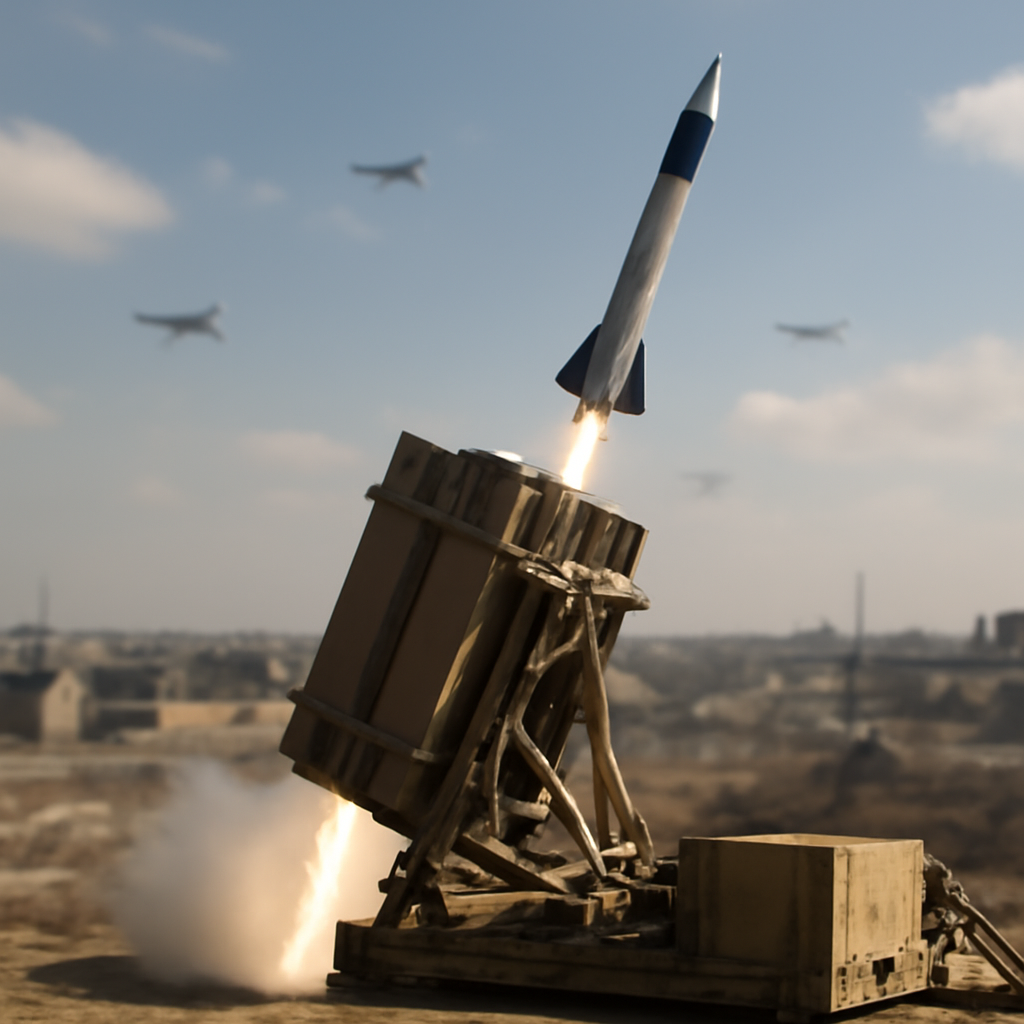
What does it mean to say a weapon is "Australian" when every critical part still comes from overseas? That question landed squarely in public view after a recent announcement about Lockheed Martin GMLRS rockets assembled in Australia but, crucially, not yet made there.
What happened
Lockheed Martin GMLRS missiles that were assembled in Australia were recently test-fired on Australian soil. Those missiles were the first delivered from an Australian factory, and the shots were noted in a 13 April announcement. At the same time, reporting on the program has stressed the distinction: assembled in Australia, but made in America (so far).
Background and the assembly-versus-manufacture distinction
The core factual thread is simple. Components and manufacturing origin are not the same as final assembly. In this case the missiles bearing the GMLRS name were put together in Australia and then used in tests there, yet the underlying production footprint — the source of parts and major manufacturing steps — remains tied to the United States, at least for now. The phrasing "made in America (so far)" captures that separation.

The cyber insurance questionnaire just landed. Now what?
SOC 2, HIPAA, insurance renewals - someone has to own security strategy. Nubivance provides fractional CISO leadership without the full-time salary.
Get a security leadWhy the distinction matters
- Industrial capability: Assembling systems locally builds jobs and facilities, but it does not automatically substitute for domestic manufacture of subsystems, components or the underlying intellectual property.
- Supply chains and sovereignty: A program that relies on foreign-made components remains exposed to external supply-chain risks and export controls, even if final assembly occurs domestically.
- Perception and politics: Delivering systems "from an Australian factory" can be presented as evidence of local capability, yet closer scrutiny of where major value is created will shape public and policymaker judgments.
- Operational readiness: Test-firing assembled systems locally demonstrates progress in integration and use, but it does not, on its own, indicate a fully sovereign production capability.
Who should care — and what they might ask
Technologists will focus on what steps remain to shift manufacture toward local sources and whether local supply chains can meet quality, cost and throughput requirements. Policymakers will want clarity on which components remain foreign, what constraints that creates, and how quickly that dependence can be reduced. Users — in this case defence planners and operators — will weigh whether assembled-but-not-made-here systems meet operational, sustainment and logistics needs. Potential adversaries and observers will read the announcement for signals about industrial depth and dependence.
The announcement of test shots and the milestone of first deliveries from an Australian factory are tangible steps. Yet the blunt fact captured in the reporting remains: assembled in Australia, but made in America (so far). How long "so far" lasts will determine whether this becomes a short-term stopgap or the start of a genuinely local manufacturing capability.