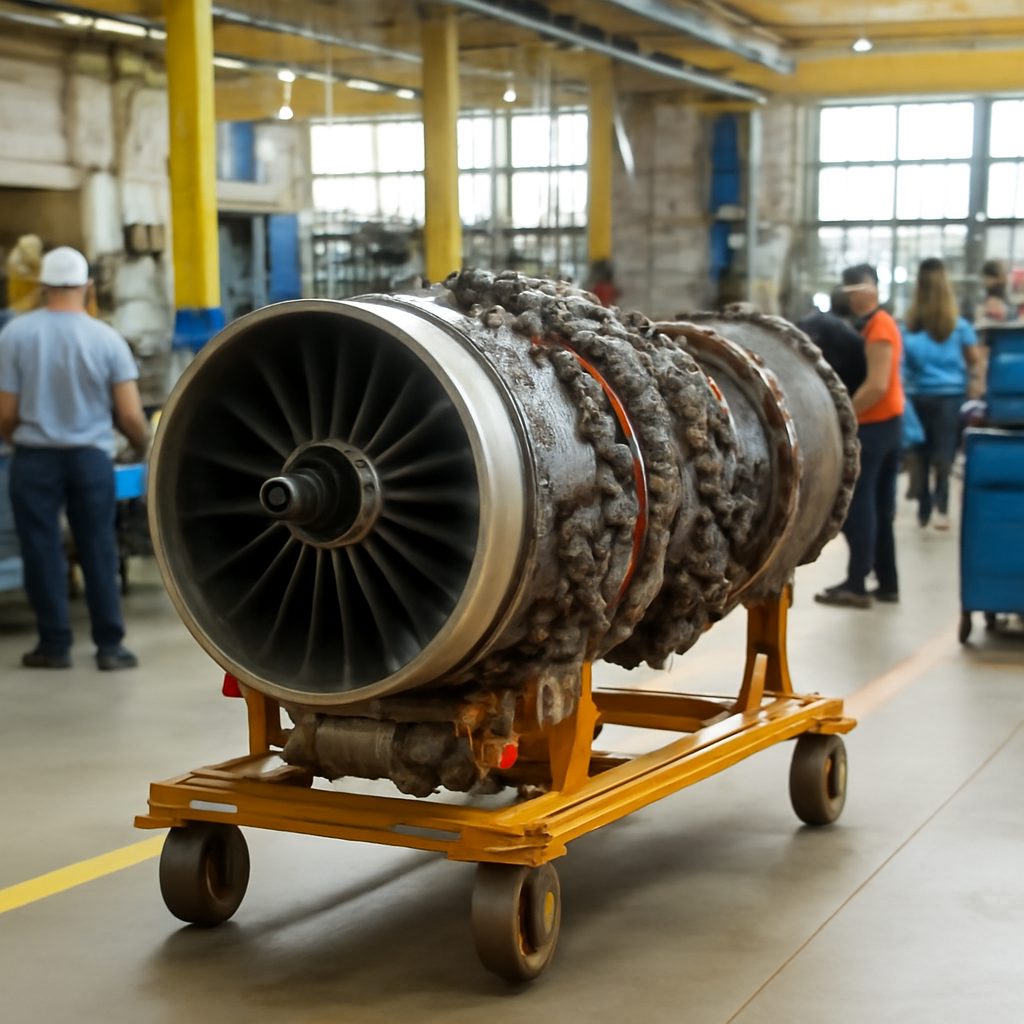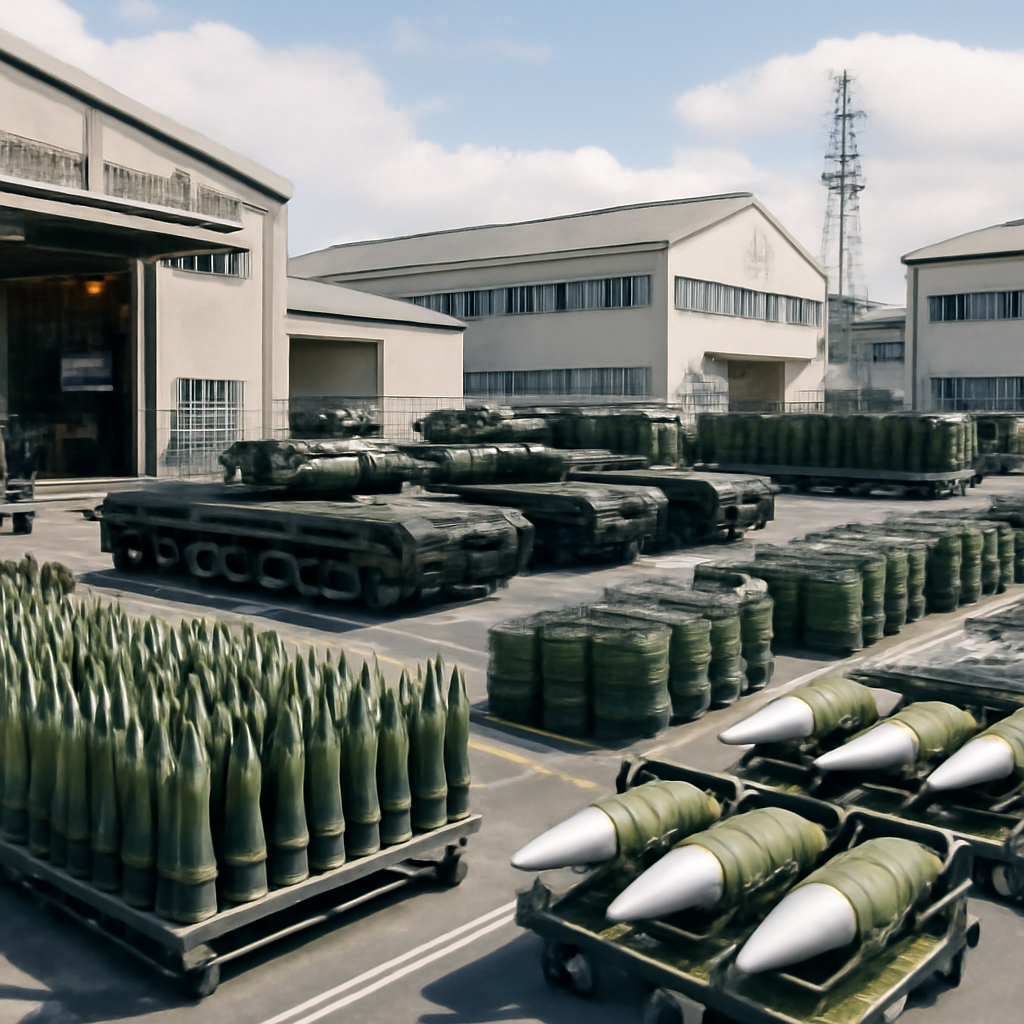
"Production capacity itself is deterrence," the ministry said — a phrase that neatly captures why Tokyo's latest defense filing is as much about factories and stockpiles as it is about jets and missiles.
An opening bid: 8.9 trillion yen and 160 item requests
On August 31 Japan’s Ministry of Defense submitted a fiscal year 2027 budget request of roughly 8.9 trillion yen ($55.5 billion). But the ministry made clear that that sum is not a final price tag: at a media briefing three days earlier officials said around 160 entries in the request were marked as "item requests" (jiko yokyu), for which no specific funding amount has yet been assigned.
Those unpriced items exist because Prime Minister Takaichi Sanae’s government plans to revise Japan’s three key security documents — the National Security Strategy, National Defense Strategy, and Defense Buildup Program — by the end of 2026. The request will now go to the Finance Ministry for consideration, with a final budget decision expected in late December. Observers in the ministry say the fiscal 2027 figure currently marks a 15th consecutive annual increase and a 13th consecutive record high, and the final figure is widely expected to exceed 10 trillion yen for the first time.
Fiscal year 2027 is also the final year of Japan’s current five-year Defense Buildup Program, which set total defense spending at roughly 43 trillion yen from FY2023 through 2027. Ministry officials warned the security environment has changed faster and more complexly than anticipated when those plans were drafted, so the request should be read as a bridge to the next phase of Japan’s defense transformation rather than as completion of the current buildup.
Three pillars and nine priority areas
The ministry organized the request around three main pillars and nine priority areas. The first pillar — adapting to "new ways of warfare" — covers artificial intelligence, unmanned systems, stand-off capabilities, integrated air and missile defense, space, and cyber. The second pillar focuses on sustained response capabilities, including Pacific and sea-lane defense. The third centers on the foundations of defense: the defense industrial and technological base and personnel.

Audit-ready is a season. It shouldn't be.
Evidence in spreadsheets, controls drifting between audits, frameworks multiplying on flat headcount. Nubivance runs continuous compliance on Rapid7 Cyber GRC - SOC 2, HIPAA, ISO 27001, PCI, CMMC.
End the scrambleAI, unmanned systems, and the Global Combat Air Program
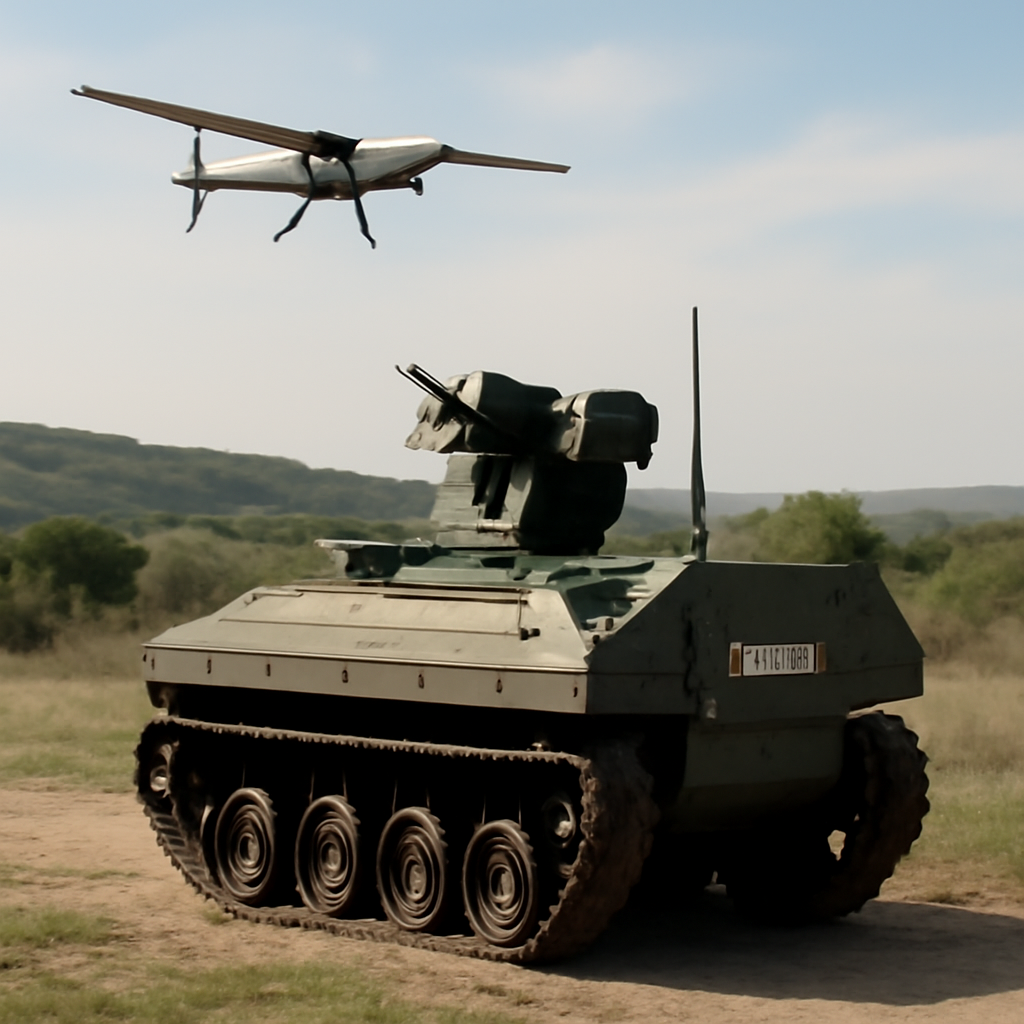
Artificial intelligence and unmanned systems are central to the transformation outlined in the request. The ministry plans an AI-based decision-support system for the Self-Defense Forces’ Joint Operations Command, together with a next-generation AI platform and secure cloud infrastructure. Procurement request items include UAVs for intelligence, surveillance, reconnaissance, and targeting, attack UAVs, and small unmanned ground vehicles. The request also funds research into a stand-off missile launch module for unmanned underwater vehicles.
Japan is also pressing ahead on its next-generation fighter under the Global Combat Air Program (GCAP) with the United Kingdom and Italy. The Acquisition, Technology, and Logistics Agency requested 234 billion yen ($1.5 billion), plus an item request, to advance the fighter program — funding explicitly intended to support Japan’s contribution to the GCAP International Government Organization (GIGO), joint design work, and maturation of technologies Japan is developing independently.
Separately, ATLA requested 9.7 billion yen ($61 million), plus an item request, to accelerate research and development of collaborative unmanned aircraft equipped with deception and electronic warfare capabilities and capable of autonomous decision-making while operating alongside the next-generation fighter.
Stand-off weapons, sustainment, and quantity
The ministry emphasized a "high-low mix" approach for stand-off capabilities: pursue sophisticated domestically developed missiles while also developing lower-cost stand-off weapons at home and acquiring foreign-made systems to field capability more quickly. Officials cited U.S. defense company Anduril Industries’ Barracuda as one system under consideration for a concept involving lower-cost stand-off weapons released from transport aircraft. The logic is simple in the ministry’s filing: lower-cost weapons allow greater numbers, while transport aircraft diversify launch platforms.
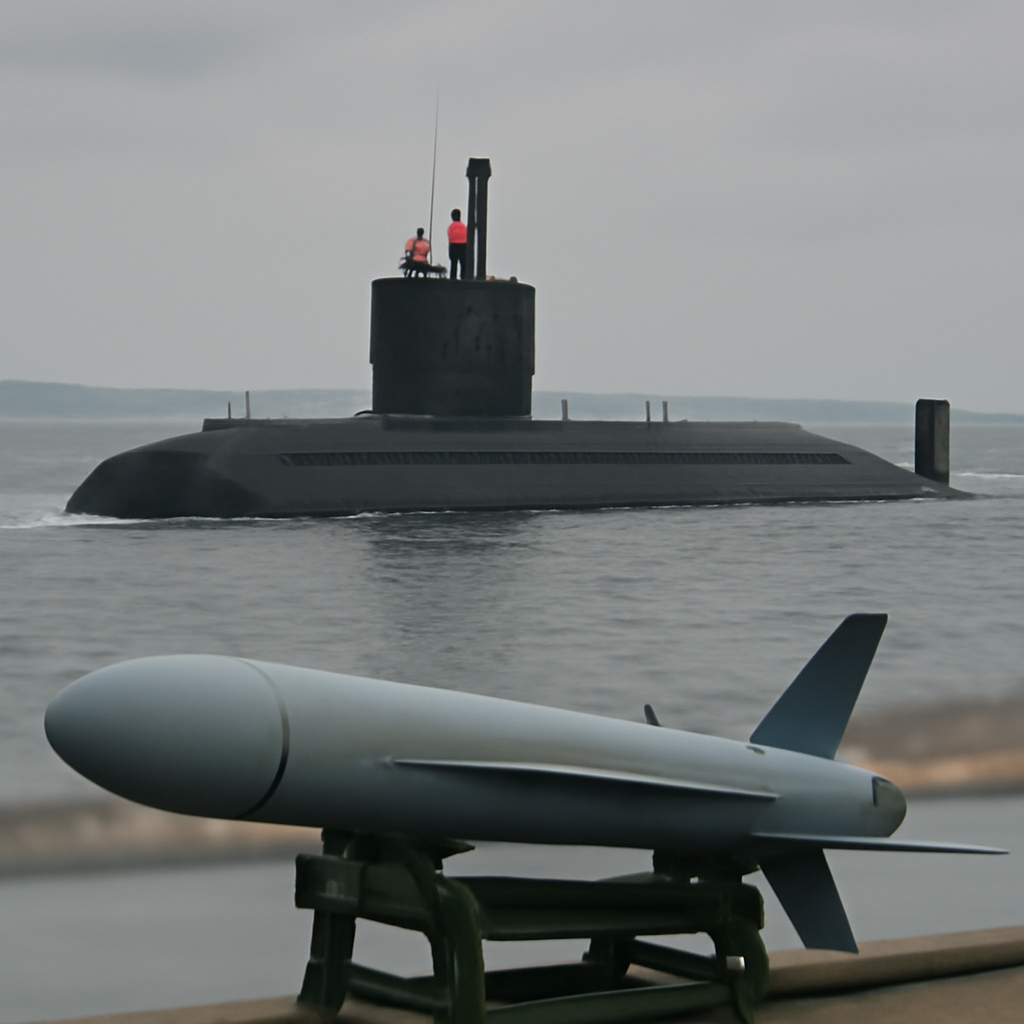
The ministry also plans to begin development of an underwater-launched hypersonic guided missile and is pursuing a Ground Self-Defense Force Close-Range Air Defense System (CRADS) that combines guided missiles, an autocannon, and lasers to counter a spectrum of airborne threats including low-cost swarming drones. Japan is separately pursuing high-power microwave technology against UAVs and expanding the use of decoys.
Staying power is threaded through the request. With Russia’s invasion of Ukraine now in its fifth year, the ministry argues that the ability to sustain a prolonged conflict is important for deterrence. The request places greater emphasis on ammunition and guided missiles, fuel, food, transportation, and logistics, and studies transport vessels equipped with autonomous navigation technologies. To bolster Pacific maritime awareness and capacity, the ministry requested 292.2 billion yen ($1.8 billion), plus an item request, to acquire 17 MQ-9B SeaGuardian UAVs, further modifications to Izumo-class destroyers, surveillance facilities on Kitadaito Island in Okinawa Prefecture, and a study of cargo-handling facilities on Iwo To to improve maritime transport.
What this means for technologists, policymakers, and the Self-Defense Forces
- Technologists and security teams: Expect a heavy demand for AI platforms, secure cloud infrastructure, collaborative unmanned systems with deception and electronic-warfare features, high-power microwave systems, and autonomy software for transport and maritime vessels — all within timelines linked to the revision of Japan’s three security documents.
- Policymakers and procurement leaders: The Finance Ministry must reconcile an opening 8.9 trillion yen request with roughly 160 unpriced item requests and a volatile exchange-rate environment (the request was calculated at 149 yen to the dollar compared with the 108 yen benchmark used in 2022), while completing revisions to the National Security Strategy, National Defense Strategy, and Defense Buildup Program by year-end.
- The Self-Defense Forces: The SDF will be asked to operate a more unmanned, networked force reliant on stand-off weapons and increased stockpiles of ammunition and sustainment supplies, while integrating new platforms such as MQ-9Bs, Izumo-class modifications, CRADS, and next-generation fighter systems under GCAP.
The ministry has framed FY2027 less as a closing chapter and more as an opening bid: 8.9 trillion yen on paper, 160 unpriced requests on file, and a national security framework due for revision by the end of 2026. The only certain next steps are procedural — the Finance Ministry review and a December decision — but the request already signals a clear direction: more unmanned systems, more stand-off firepower, and a deliberate move to make production capacity itself a pillar of deterrence.
Source: The Diplomat — Japan’s Record 2027 Defense Budget Request Is Only the Opening Bid