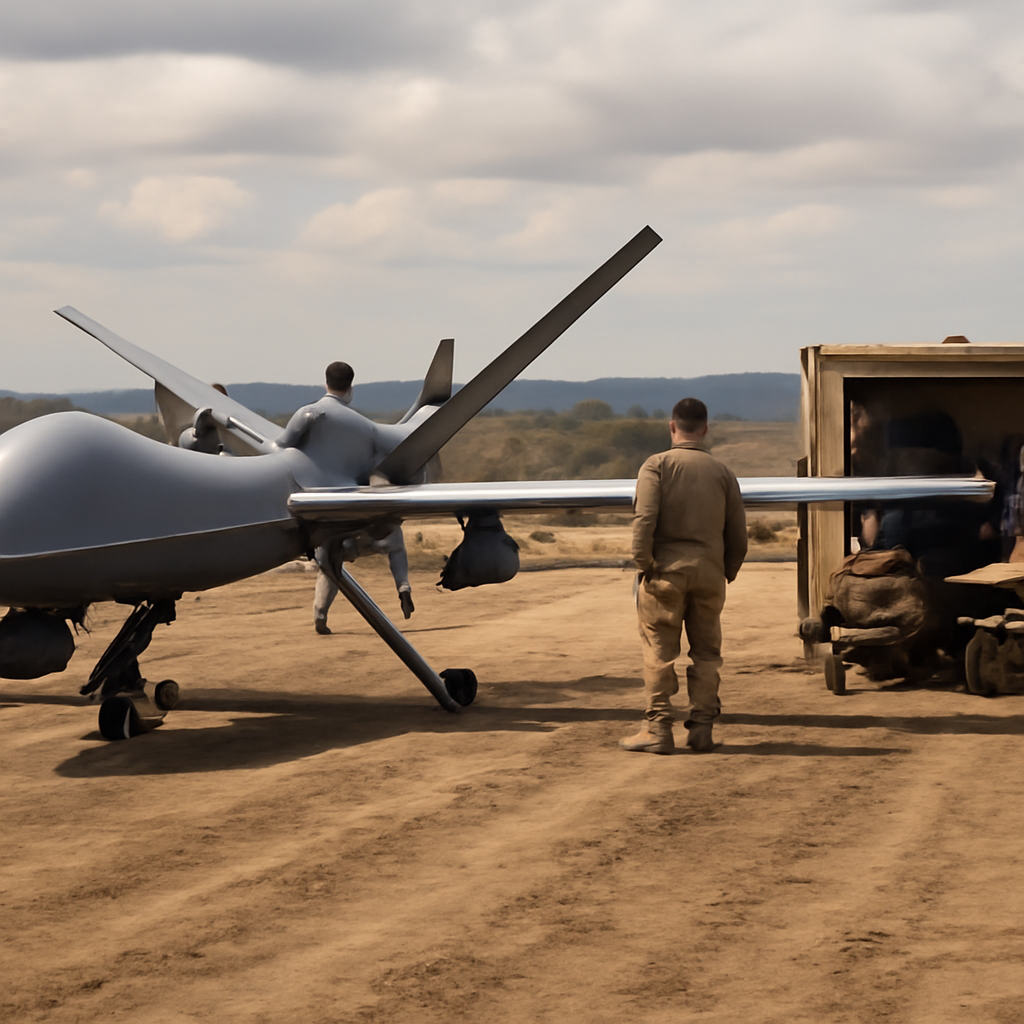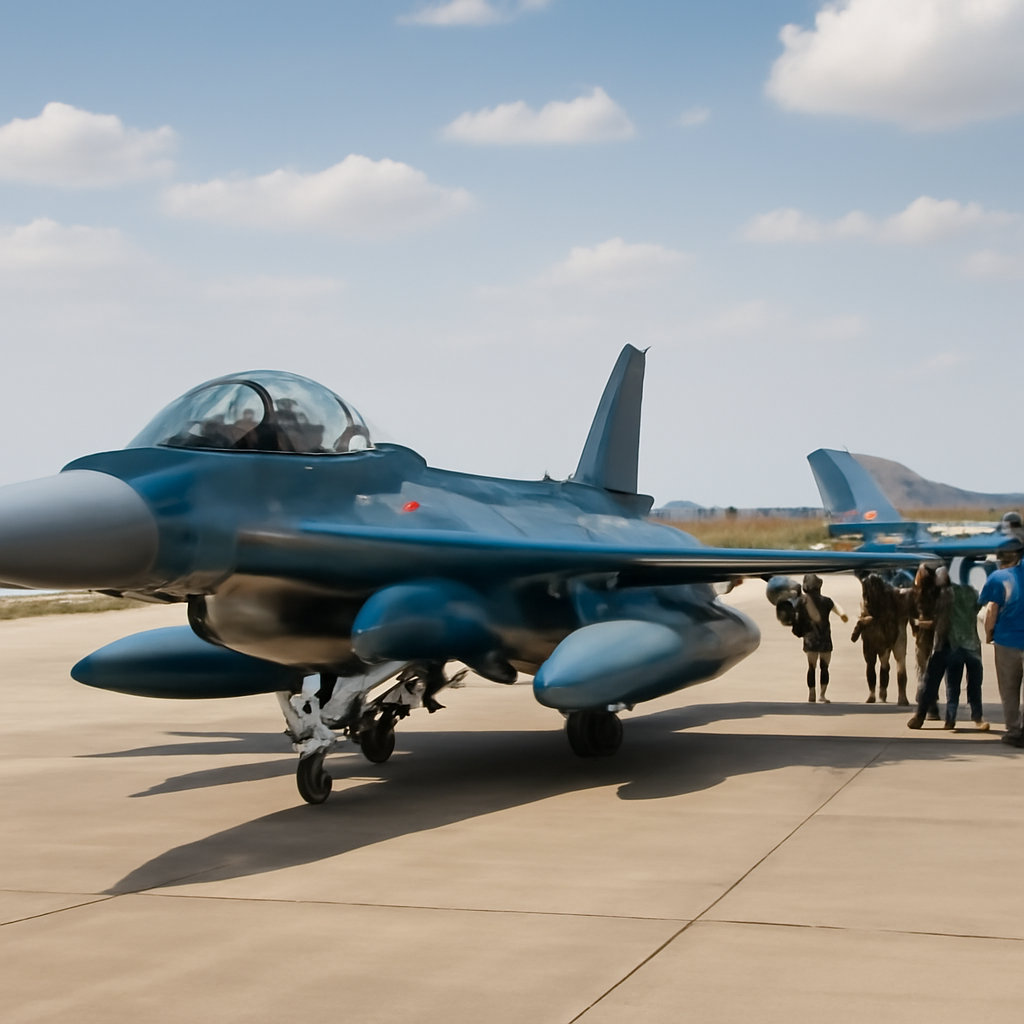
Three F-2A fighters and about 110 personnel from the Japan Air Self-Defense Force will deploy to India in September, a first for JASDF fighter aircraft and a visible sign of deeper Tokyo–New Delhi defense ties.
Deployment plan, dates, and route
The JASDF announced on August 25 that the bilateral exercise Veer Guardian 26 will run from September 9 to 21 at Jodhpur Air Force Station and in surrounding airspace, with an overall deployment period — including transit — scheduled from September 1 to 30. The force element committed is three F-2A fighters from the 8th Air Wing at Tsuiki Air Base in Fukuoka Prefecture and roughly 110 personnel.
The routing to India will take the F-2As from Tsuiki via Naha Air Base in Okinawa and a stop in Thailand before reaching Jodhpur. The U.S. Air Force will provide support for the deployment, including aerial refueling; the JASDF did not disclose which Thai base will be used, which segment will receive U.S. refueling, or the type of U.S. tanker involved. Jodhpur lies about 5,600 kilometers from Tsuiki in a straight line, underscoring the logistical scale of the mission.
Operational aims and JASDF preparations
JASDF Chief of Staff General Morita Takehiro framed the mission as more than a short tactical exchange. He told reporters at a press conference on August 25 that deploying fighters to distant locations involves not only long-distance flight operations but also “maintenance, logistics, and personnel transportation, all of which must be conducted ‘in an integrated and systematic manner.’”
Morita said the JASDF is preparing for the India deployment by securing spare aircraft, strengthening its aerial refueling support system, reviewing transit locations, and closely coordinating with relevant countries. He also noted that long-distance deployments require planning for contingencies such as bad weather and aircraft malfunctions.

Audit-ready is a season. It shouldn't be.
Evidence in spreadsheets, controls drifting between audits, frameworks multiplying on flat headcount. Nubivance runs continuous compliance on Rapid7 Cyber GRC - SOC 2, HIPAA, ISO 27001, PCI, CMMC.
End the scrambleVeer Guardian lineage and recent JASDF missions
Veer Guardian 26 is the second iteration of the bilateral fighter exercise. The inaugural Veer Guardian 23 was held in Japan in January 2023. During that earlier exercise, the Indian Air Force sent four Su-30MKI fighters, two C-17 transport aircraft, an IL-78 aerial refueling tanker, and about 150 personnel to Japan; the JASDF contributed four F-2 and four F-15 fighters.
Three years after VG23, the direction of travel will be reversed: JASDF fighters are going to India for the first time. The India deployment follows the JASDF’s first fighter deployment to Europe in 2025, when four F-15 fighters flew from Chitose Air Base in Hokkaido to the United Kingdom and Germany via Eielson Air Force Base in Alaska and Canadian Forces Base Goose Bay, with support from tanker and transport aircraft. The JASDF characterized that mission as an opportunity to strengthen cooperation with allies and like-minded countries.
Defense ministers’ meeting and wider bilateral cooperation
Japan’s Defense Minister Koizumi Shinjiro and India’s Defense Minister Rajnath Singh met in New Delhi on August 20 and welcomed progress in preparations for Veer Guardian 26, specifically noting that JASDF fighters would visit India for the first time. The ministers agreed to deepen bilateral exercise cooperation by increasing drill complexity, integrating unmanned systems, and pursuing short-notice joint exercises when opportunities arise.
The August 20 meeting also highlighted an expansion of exercises across all three services, naming the army exercise Dharma Guardian and the maritime exercise JAIMEX. The two ministers signed a memorandum on maritime security cooperation and reaffirmed their commitment to strengthening defense cooperation in pursuit of a “free and open Indo-Pacific.”
Regional security context and official framing
The announcement comes as both Japan and India confront security concerns involving China. The JASDF has expressed increasing concern about Chinese military activities in the East China Sea and around Japan’s southwestern islands, and about the People’s Liberation Army’s expanding operations beyond the First Island Chain and into the Western Pacific. India continues to manage a long-running territorial dispute with China along their Himalayan border.
When asked whether Veer Guardian 26 was being conducted with China in mind, a JASDF spokesman told The Diplomat that the exercise “is not aimed at any specific country.”
What this means for the JASDF, the Indian Air Force, and the U.S. Air Force
- JASDF: The deployment will test long-range fighter deployment skills beyond flight operations alone — logistics, maintenance, spare-aircraft management, and contingency planning will be exercised in a real-world transit to Jodhpur.
- Indian Air Force: Hosting JASDF fighters for the first time expands tactical exposure to Japan’s fighter community and continues the bilateral pattern established during Veer Guardian 23 in Japan.
- U.S. Air Force: By providing aerial refueling and other support, the U.S. will play a logistical enabling role in the deployment, though the JASDF did not disclose which tanker types or the exact refueling segments.
The deployment window — September 1 to 30, with the exercise running September 9–21 — leaves little ambiguity about timing. Beyond those dates, the mission will be judged on how effectively three F-2As and roughly 110 personnel operate, sustain, and recover so far from home, and on how closely Tokyo, New Delhi, and Washington can coordinate the logistical elements that make a long-range fighter deployment possible.
https://thediplomat.com/2026/08/jasdf-fighter-jets-to-visit-india-for-first-time/