"Japan lives in a very dangerous neighbourhood, one where its close proximity to the Taiwan Strait is but one of several longstanding security concerns," said Adam Liff, an expert on Japan at Indiana University.
Japan's new platforms: carriers, submarines and large destroyers
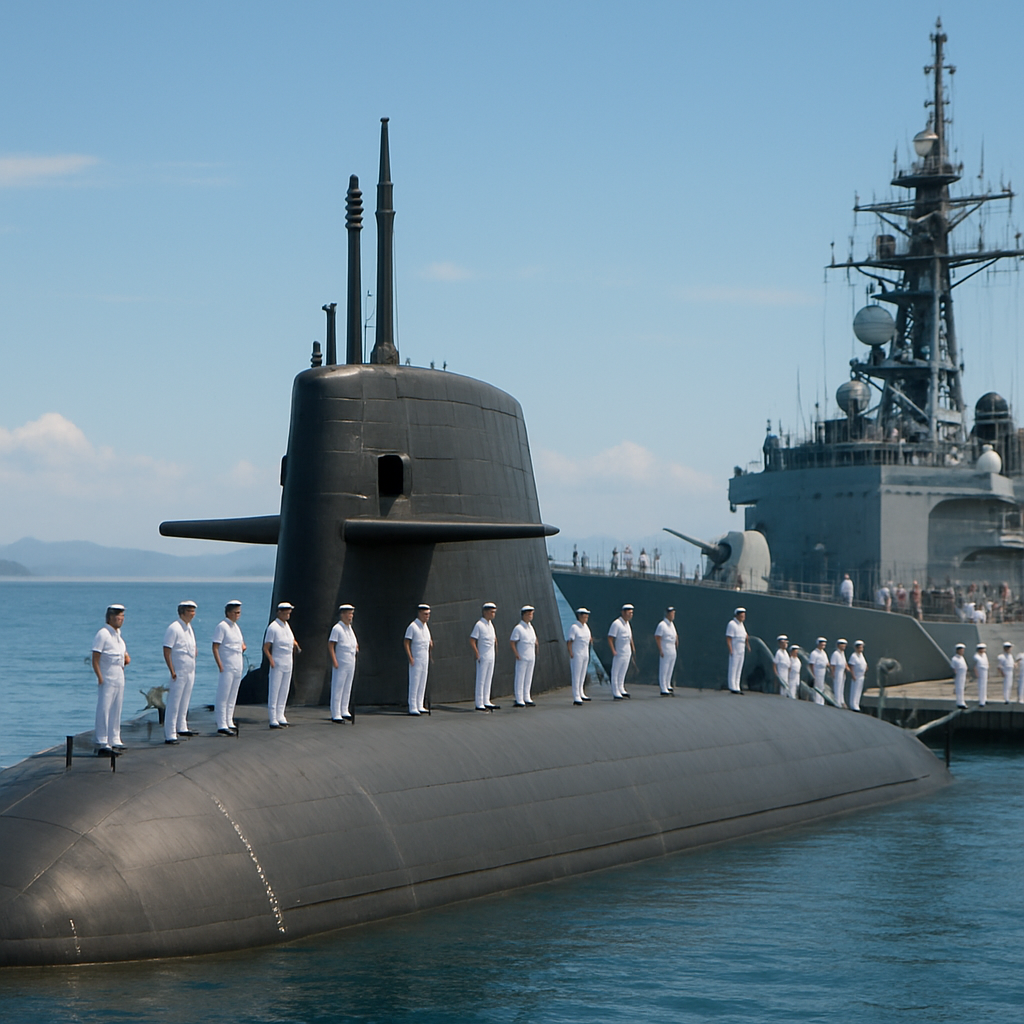
In recent years Tokyo has converted two helicopter carriers into aircraft carriers capable of embarking Lockheed Martin F-35 Lightning jets and has expanded its flotilla of non-nuclear submarines. Over the next three years the fleet plans to commission two 12,000-ton missile-defence destroyers — described as among the biggest surface combatants in the world. These platform changes represent a fast-moving shift in Japan’s maritime posture.
Missiles, ranges and the Ryukyu installations
Tokyo is buying 400 US-made Tomahawk land-attack cruise missiles and plans to load them onto destroyers for strikes hundreds of kilometres inside enemy territory. Japan’s new Type 25 anti-ship missile family comes in two variants — a cruise missile and a hypersonic ballistic missile — and can range as far as 1,000 km from recently expanded installations on the Ryukyu island chain. Those batteries, the article argues, could be used to trap a Chinese fleet in the East China Sea and prevent it breaking out into the Philippine Sea and the wider Pacific Ocean.

Audit-ready is a season. It shouldn't be.
Evidence in spreadsheets, controls drifting between audits, frameworks multiplying on flat headcount. Nubivance runs continuous compliance on Rapid7 Cyber GRC - SOC 2, HIPAA, ISO 27001, PCI, CMMC.
End the scrambleBudget choices and shifting procurement priorities
Japan is funding this rearmament with a defence budget that swelled to 9 trillion yen (A$80 billion) for this year. Planners are making explicit choices about force structure: abandoning increasingly obsolete systems such as crewed helicopters and prioritising missiles and drones. That trade-off reflects a move toward longer-range fires and distributed strike capabilities rather than legacy rotary-wing platforms.
Limits on Tokyo’s willingness to defend Taiwan
Despite the hardware that could aid Taiwan, the report stresses Tokyo’s acquisitions are primarily for the defence of Japan and do not automatically translate into a commitment to defend Taiwan. Adam Liff says the only realistic scenario for Japanese involvement in Taiwan’s defence is one where the United States responds first. Bonnie Glaser, managing director of the Indo‑Pacific Program at The German Marshall Fund of the United States, echoed that assessment: "Japan would only participate in collective defence of Taiwan alongside the United States."
The piece is explicit: "If the US wouldn’t or couldn’t come to Taiwan’s aid, Japan wouldn’t either. Nor, most likely, would Australia, the Philippines or any other country." That conditionality places the United States’ actions at the centre of any prospect for allied intervention.
What this means for Taiwan’s leaders, Tokyo planners, and Washington policymakers
- Taiwan’s leaders and defence planners should prepare to hold out alone against a Chinese attempt at subjugation, the article advises — at least until international help can be marshalled — and should plan to fight on their own if required.
- Tokyo’s planners will continue to equip forces for an array of nearby threats: China, Russia and the Korean Peninsula are all cited as security concerns within 200 miles of Japanese soil, and Japan’s missile defences are explicitly a response to North Korea’s missile capabilities and to disputed maritime claims such as those involving the Senkaku Islands about a little more than 320 km west of Okinawa.
- Washington policymakers are described as pivotal: the report argues the US must come first if allied intervention is to follow. It also warns that President Donald Trump’s military action in Latin America and his "war on Iran" are diverting attention and critical munitions from any near‑term defence of Taiwan, and that Mr Trump "gives signs that he doesn't care much about Taiwan."
The central, sobering thrust of the reporting is straightforward: Japan is rearming at scale, fielding carriers, submarines, large destroyers, long‑range Tomahawks and the Type 25 missile family from Ryukyu bases — and yet those capabilities do not equal a guaranteed rescue for Taiwan. Tokyo’s forces would matter greatly if they entered a conflict, but the conditions for such entry — most importantly a prior American response — are political and not automatic. The article concludes that Taipei should plan accordingly and prepare to hold out as long as it can while diplomacy and external forces — if they come — are marshalled.
https://www.aspistrategist.org.au/holding-out-japan-rearms-impressively-but-taiwan-cant-count-on-it/