"He likened intelligence sharing to the flow of juice, which was precious and only possible if the countries involved were confident that each had legally and technically sturdy cups to store the juice securely," said Shigeru Kitamura.
What Tokyo has legislated: a council and a new central agency
In May the Diet approved legislation to create a National Intelligence Council, chaired by the prime minister, to direct Japan’s intelligence mission. The same law establishes a National Intelligence Agency (sometimes translated as the National Intelligence Bureau) to serve as the council’s secretariat and to replace the Cabinet Intelligence and Research Office. The agency could be up and running "as soon as this month" with around 700 inaugural staff — roughly the same size as the office it will replace.
Who keeps their intelligence roles — and what the new bodies are expected to do
The Ministry of Defense, the Ministry of Foreign Affairs, the National Police Agency and the Public Security Intelligence Agency will retain their intelligence functions. The new peak bodies are intended to deliver more integrated and effective intelligence by reducing bureaucratic turf wars between main collection agencies and by directing alignment of intelligence standards with international partners.

The cyber insurance questionnaire just landed. Now what?
SOC 2, HIPAA, insurance renewals - someone has to own security strategy. Nubivance provides fractional CISO leadership without the full-time salary.
Get a security leadFurther legal and operational reforms on the calendar
Tokyo is preparing additional reforms. Officials expect a first-ever National Intelligence Strategy by the end of this year, to sit separately from an updated National Security Strategy. An expert panel will consider options for an anti-spy law that could expand criminal penalties for corporate and research espionage beyond the limited powers in the 2022 Economic Security Promotion Act. Most notably, the government is weighing the creation of a covert human intelligence capability, tentatively called the Foreign Intelligence Agency, with operations potentially including officers operating under assumed identities; planners are budgeting for a start by March 2027.
Japan–Australia cooperation and international signals
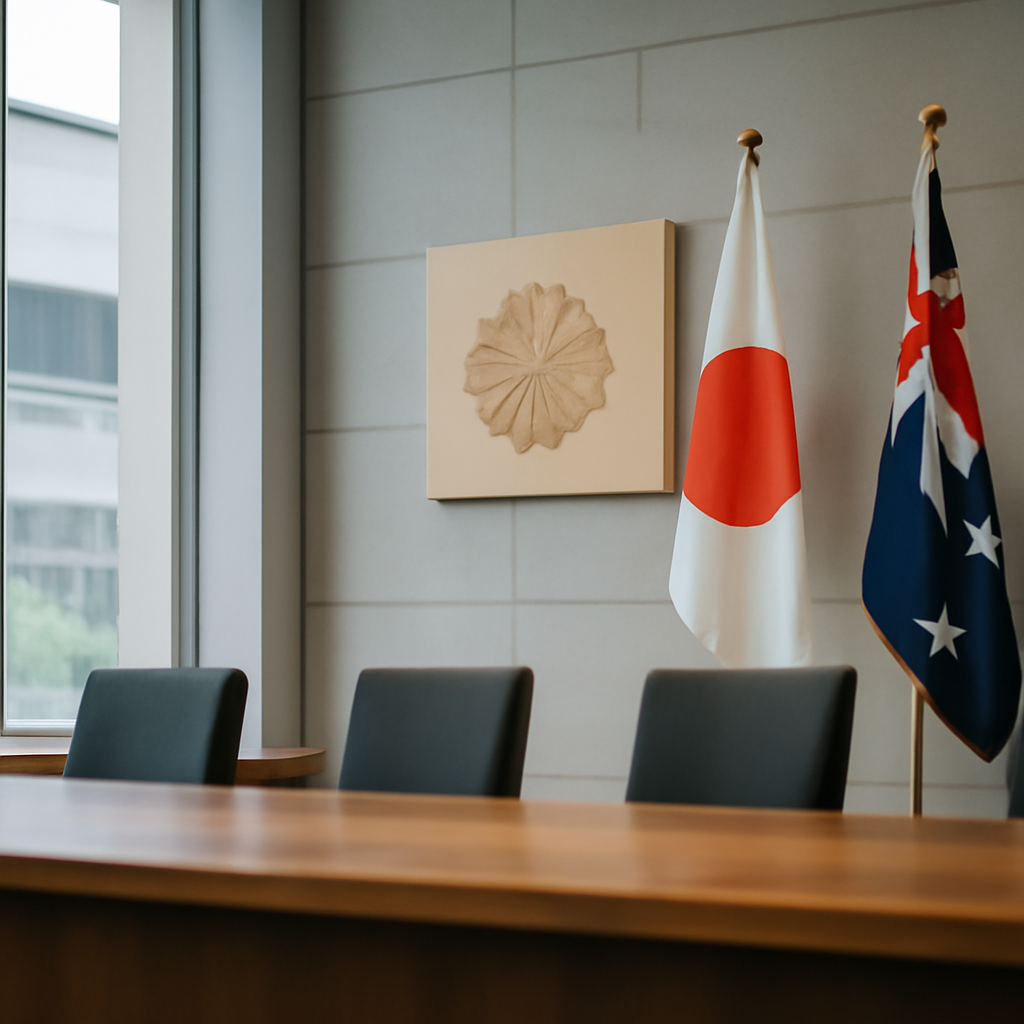
The restructuring has been framed, publicly, as an opportunity to deepen cooperation with Australia. During Prime Minister Sanae Takaichi’s visit to Australia in May, a joint statement underlined the value of the new central agencies for closer bilateral intelligence collaboration as part of a "special strategic partnership." The two leaders recalled commitments to intelligence sharing within bilateral mechanisms, including regular foreign and defence ministerial consultations.
Australia’s ambassador-designate to Japan, Andrew Shearer — who previously led Australia’s Office of National Intelligence — has consulted with the LDP’s headquarters for intelligence strategy and is described as playing a conspicuous role in developing intelligence policy. A June report by ASPI and Japan Nexus Intelligence identified a closer Japan–Australia intelligence partnership as a way to reinforce strategic alignment between Tokyo, Canberra and a wider global network.
Domestic politics, disinformation and oversight pressures
Takaichi’s resounding general election victory in February gave political momentum to the reforms, which were set out in last October’s coalition agreement between the Liberal Democratic Party, led by Takaichi, and the Japan Innovation Party. Nevertheless, opposition parties in the Diet are pressing for stronger safeguards for the public’s right to know how government intelligence activity is conducted.
Abroad, the government faces a concerted disinformation campaign, partly attributed to Beijing, that misrepresents the reforms as a reversion to imperial-era militarism. The source material notes that domestic considerations will likely shape decision‑making more than foreign reactions, but it also urges that those false narratives be contested.
What this means for Australia, the United States, and Japan’s intelligence agencies
- Australia: Canberra is "front and centre" as a model and partner; Australia’s legislative examples — the Office of National Intelligence Act 2018 and the Intelligence Services Act 2001 — are highlighted as frameworks Japan might study, and Australian officials are already engaged in consultations.
- The United States: The piece notes that the US is "already leaning in," citing comments by FBI Director Kash Patel, signalling US interest in closer practical engagement as Tokyo retools its intelligence architecture.
- Japan’s intelligence agencies: The new Council and Agency are expected to centralise direction, reduce inter-agency turf wars, and align operational standards with partners — while individual ministries and domestic security services retain collection responsibilities.
Japan’s steps are incremental and institution-building: a newly authorised council and secretariat that could be operational immediately, a promised national strategy by year‑end, possible expanded counter‑espionage legislation, and the prospect of a covert human intelligence service by March 2027. Those moves are explicitly pitched to deepen trust with partners such as Australia while balancing public scrutiny and pushing back against external disinformation. The coming months will show how legal safeguards, parliamentary oversight and international engagement are reconciled with the practical demands of intelligence cooperation.