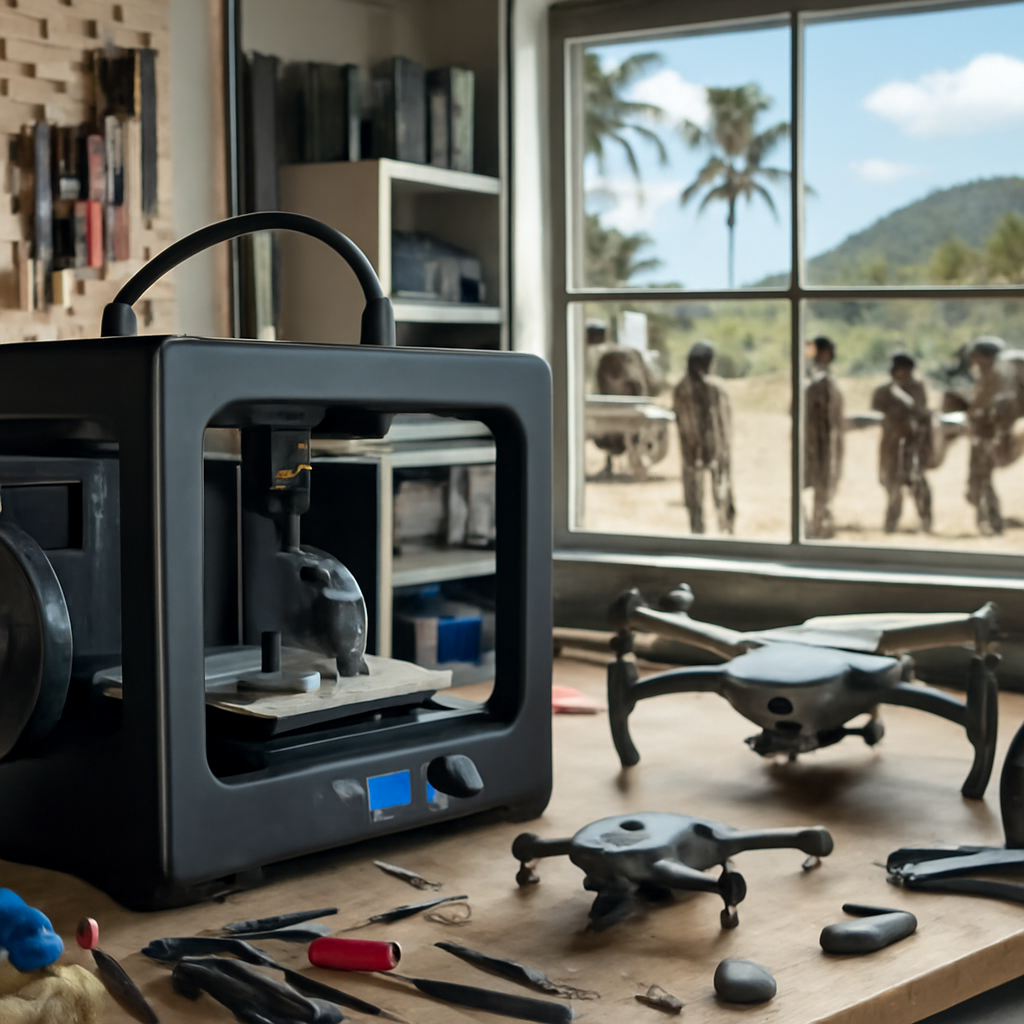
“This is Uber for manufacturing delivered at the speed of Amazon, for the highest quality of parts,” Marine Lt. Col. Michael Radigan told reporters.
RIMPAC’s scale and the logistics challenge
The Rim of the Pacific exercise this year is being used as a live laboratory for tackling a perennial problem in the Pacific theater: delivering parts and supplies across vast distances. Rear Adm. Michael Mattis described the program at the U.S. Pacific Command Joint Advanced Manufacturing Center as “the U.S. military’s largest advanced manufacturing demonstration so far” and said the experiment is intended to show “what theater-wide advanced manufacturing is going to look like for the joint force.”
RIMPAC itself provides a demanding backdrop. Mattis put the exercise’s footprint in stark numbers: 38 countries, 31 surface vessels, five submarines, more than 30,000 personnel, almost 180 aircraft, and over 1,100 personnel dedicated to landings. That scale is precisely why organizers are treating sustainment — getting the right parts to ships and units at sea or ashore — as an operational problem to be rethought, not merely a logistical footnote.
Firestorm, Fieldmade, Snowbird: expeditionary manufacturing gear
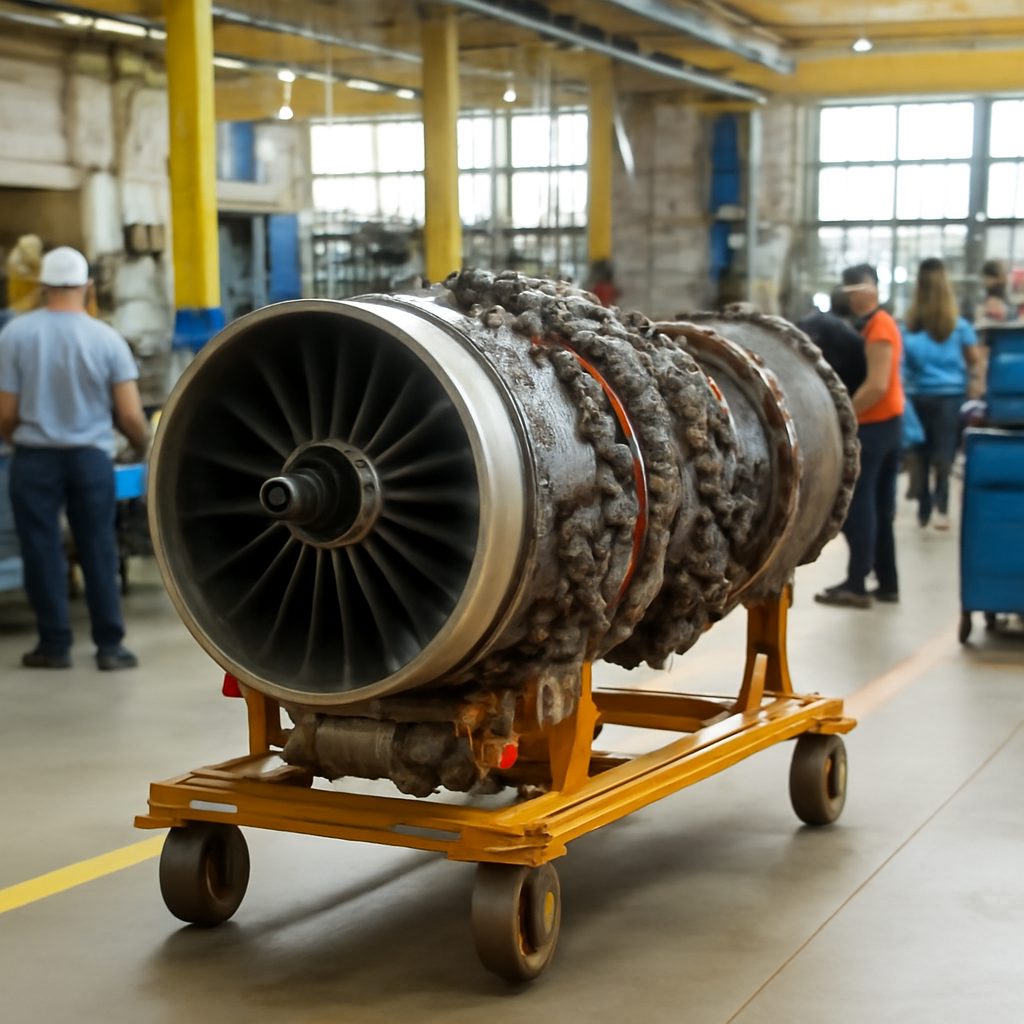
A set of compact, mobile manufacturing systems were shown at Schofield Barracks, Hawaii, to demonstrate rapid production at or near the point of need. San Diego-based Firestorm displayed an expeditionary advanced manufacturing cell consisting of two shipping containers that, the company says, can be set up by two people in a few hours. Norway-based Fieldmade brought an “additive manufacturing micro factory” designed to be parachuted from an aircraft and operational in minutes. Florida-based Snowbird Technologies showed a 3D printer inside a compact shipping container intended to work both ashore and aboard ships at sea.
Organizers framed these systems as tools to shrink supply timelines and bridge the vulnerability created when spare parts must travel thousands of miles of ocean to reach forward forces.

The cyber insurance questionnaire just landed. Now what?
SOC 2, HIPAA, insurance renewals - someone has to own security strategy. Nubivance provides fractional CISO leadership without the full-time salary.
Get a security leadAutonomous surface vessels: printed hulls and autonomous resupply
Autonomous boats were another visible element of the experiment. Rhode Island-based Havoc exhibited a 14-foot unmanned surface vessel (USV) that the company printed for the exercise; the vessel is solar-rechargeable, built to operate in moderate seas, and engineered to right itself if it capsizes, Sea Thomas, the company’s Indo-Pacific director, told reporters.
Los Angeles-based Splash Industries displayed a 10-foot Typhoon USV fitted with a Pelican case. CEO Ivan Avanesov reported two operational milestones during RIMPAC: the Typhoon “executed the first autonomous resupply of a warship at sea” by driving straight onto the well deck of the USS Essex amphibious assault ship while that ship was underway, and later the USV navigated rough waters to an aircraft carrier 100 miles from shore. Those demonstrations underline efforts to automate the “last leg” of resupply, moving equipment from distribution nodes directly onto ships without manned small boats.
Who is coordinating the experiment: Fleetwerx and the Naval Postgraduate School
The effort is coordinated by Fleetwerx together with the Naval Postgraduate School’s Consortium for Advanced Manufacturing Research and Education. Radigan described the program as bringing together “a trifecta of advanced manufacturing, autonomous systems, and artificial intelligence… to deliver true parts that the joint force needs.” That integration — combining printers, unmanned transport, and machine decision-making — is the central hypothesis being tested during RIMPAC.
Radigan stressed that while many of the hardware pieces appear mature — “I think we’ve actually got the technology pretty good” — the harder work lies in synchronizing logistics across a theater: moving data, authorizations, materials, and finished parts at scale and in contested environments. “It’s all the other things that have to happen throughout the theater in order to be able to deliver those [high-quality parts], the logistics, and creating this into the scale that you’re going to see today,” he said. “So it’s all about operationalizing advanced manufacturing.”
What this means for technologists, policymakers, and naval operators
- Technologists and security teams will be focused on integrating additive manufacturing with autonomous delivery and AI workflows — ensuring printers, USVs, and their control systems can operate together under realistic strain and in rough seas.
- Policymakers and logisticians must evaluate whether theater-wide processes — procurement, distribution, part certification, and cross-branch coordination — can scale to match the promised speed of in-theater manufacturing and autonomous resupply.
- Naval and amphibious operators will be watching operational experiments such as the Typhoon’s self-driven run onto USS Essex and a later transit to a carrier 100 miles offshore as a test case for routine, at-sea replenishment without manned small boats.
RIMPAC’s demonstrations show a blend of proven devices and ambitious operational choreography: portable printers, parachutable micro-factories, and unmanned boats that can deliver to a ship underway. The tech side may be nearing maturity, as Radigan said, but the exercise is designed to expose the harder question — whether theater-wide logistics, procedures, and scale can be reworked to make rapid, distributed manufacturing a reliable part of sustainment. The experiment will continue to play out in the coming weeks of RIMPAC, and whether the U.S. military can turn prototypes and proofs of concept into a persistent capability will depend less on printers and boats than on the systems that link them into a working logistics chain.