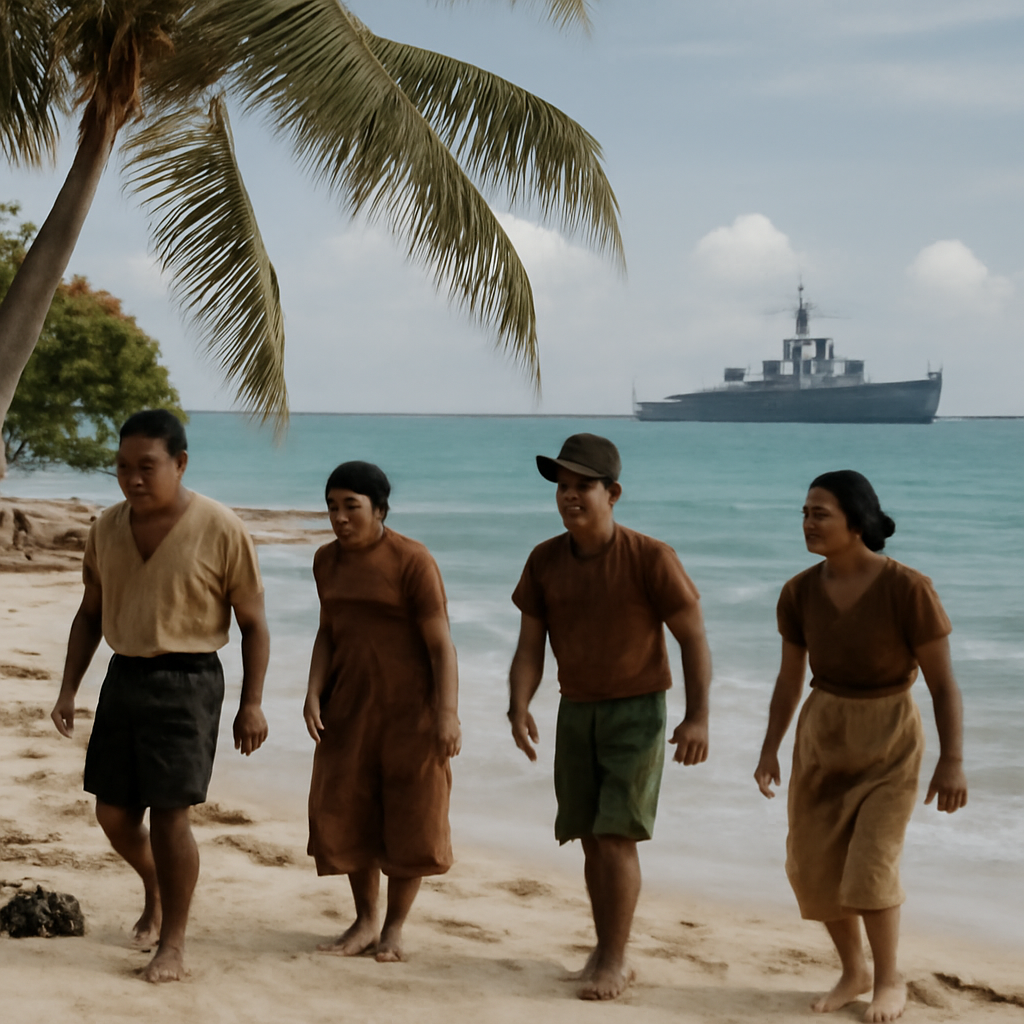
"provocative act," Australia swiftly deplored after Beijing fired a ballistic missile into the Pacific Ocean.
Missile test, diplomatic timing, and Pacific reaction
Just hours after Australian Prime Minister Anthony Albanese visited Fiji on 6 July to agree to enhance cooperation with the island state, Beijing fired a ballistic missile into the Pacific Ocean. Australia publicly deplored the launch as a "provocative act," and leaders of the Solomon Islands and Papua New Guinea urged global superpowers to respect those who live in the Pacific and to refrain from threatening behaviour. The sequence underscored how China’s growing assertiveness in the region is perceived as destabilising by island states and their partners.
Australia’s aid footprint and a deliberate shift in posture
Over the past 15 years Australia has provided far more development assistance to Pacific island states than any other single donor, accounting for 38 percent of total aid flow, according to the Lowy Institute. By comparison, China’s contribution over the same period totaled 9 percent. Canberra, however, recognises the limits of aid alone. As Australian Minister for Pacific Island Affairs Pat Conroy said in 2024, Canberra must "move beyond the patron-client relationship" that it has at times defaulted to, signalling a policy turn toward deeper partnership rather than transactional giving.

This site is the portfolio.
OSINTSights runs on Cloudflare Workers, D1, R2, and Vectorize, with an AI pipeline on Hetzner ARM. Nubivance designed, built, and operates it. We do the same for clients.
See what we buildBilateral agreements: Nakamal, Vuvale and base prohibitions
Australia has pursued a string of bilateral arrangements designed to cement closer ties with Pacific governments. On 29 June, Canberra and Port Vila signed the Nakamal agreement, which bars foreign military bases being set up in Vanuatu. That accord joins the Vuvale Partnership with Fiji and earlier agreements with Nauru and Tuvalu. The source characterises Canberra’s approach as offering investment "without the political baggage" associated with alternative partners that have adopted more transactional engagement models.
Japan’s diplomatic and defence push, and alignment with Australia
Tokyo has increased its diplomatic weight in the Pacific. In February it hosted the Japan-Pacific Islands Defence Dialogue, where Defence Minister Shinjiro Koizumi called for strengthening the region’s interconnectivity. Prime Minister Sanae Takaichi affirmed at a summit in Tokyo that Japan would support island states in addressing climate risks, and during a trip to Vietnam in May Takaichi committed Japan to playing a "more proactive role than ever before" in supporting an international order based on a free and open Indo-Pacific. Koizumi, at the Shangri-La Dialogue, unveiled a revised vision for that concept founded on "trust, transparency and dialogue."
Under Takaichi, Tokyo’s defence budget has exceeded A$78 billion for the first time, and Japan has expedited revision of three strategic documents and participated in the multinational Balikatan military exercise—moves presented as signals of Tokyo’s commitment to upholding the rules-based order in the Indo-Pacific. Australia’s 2024 National Defence Strategy identified Japan as an "indispensable partner for achieving regional peace and prosperity," reflecting formal recognition of the bilateral security alignment.
Economic security cooperation and contested sea lines of communication
Canberra and Tokyo have already committed to joint work on governance priorities for Pacific island states. In the Joint Declaration on Economic Security Cooperation the two countries pledged to support Pacific Island countries in combatting money laundering through capacity-building initiatives. At a leaders’ summit in May, Takaichi and Anthony Albanese committed to elevating the bilateral security partnership further, including closer defence cooperation and securing shared access to critical minerals.
The source warns that sea lines of communication are likely to remain hotly contested. It expects Australia and New Zealand to play leading roles in training to protect those lines, while noting that Japan is "geographically and technically well placed to support." Every partner Canberra brings into the fold is presented as reinforcing the strength of the rules-based international order against an assertive Beijing which, the piece notes, is barrelling towards a 435-ship fleet by 2030.
How Pacific island states, Canberra, and Tokyo are responding
- Pacific island states: Leaders in the Solomon Islands and Papua New Guinea publicly called for respect for those who live in the Pacific and for an end to threatening behaviour; island governments have been courted with both security and development offers and some have sought explicit guarantees—such as the Nakamal agreement denying foreign bases in Vanuatu.
- Canberra (Australia): Boosting aid and bilateral pacts, shifting away from a patron-client model as articulated by Pat Conroy, and deepening security cooperation with Japan to deter coercion and support Pacific sovereignty.
- Tokyo (Japan): Expanding diplomatic engagement and defence capacity—hosting regional defence dialogues, increasing defence spending above A$78 billion, revising strategic documents, and offering capacity-building and climate support to island states consistent with a vision of a free and open Indo-Pacific.
The facts laid out in the source make a clear case: the Pacific is a theatre where development, diplomacy and defence intersect, and Canberra and Tokyo are aligning their tools to offer Pacific island states an alternative to increasingly transactional approaches. The immediate question the source leaves on the table is whether that alignment will be sufficient to deter further military expansion into the region and to preserve sovereignty for island nations that have called for restraint.
https://www.aspistrategist.org.au/japan-and-australia-are-critical-partners-in-the-pacific/



