Guido Crosetto’s low‑profile visit to the Shangri‑La Dialogue
When Italian Defense Minister Guido Crosetto attended this year’s Shangri‑La Dialogue in Singapore, the visit attracted little attention in Europe. Yet his presence at Asia’s premier security forum was only one element of a broader pattern: over the past year, Italy has quietly intensified engagement with Southeast Asia through military and industrial partnerships rather than traditional diplomacy. Ministerial visits like Crosetto’s signal political will, but in Italy’s case they are tied closely to concrete industrial initiatives rather than the deployment of permanent military assets.
From the Giuseppe Garibaldi to bilateral naval cooperation
Italy’s Parliament approved the transfer of the decommissioned aircraft carrier Giuseppe Garibaldi to Indonesia, a highly visible example of how Rome is converting hardware into diplomatic capital. That transfer sits alongside expanded defense cooperation with Malaysia and other exchanges: Italy is deploying naval deployments, military exchanges, and cooperation agreements to build relationships at sea rather than through security guarantees or overseas bases.

Your town's IT department is one person. Maybe.
Ransomware crews target small municipalities because nobody's watching. Nubivance gives Maine and New Hampshire towns a security program sized to a town budget.
Protect the town officeLeonardo and Fincantieri as the engines of engagement
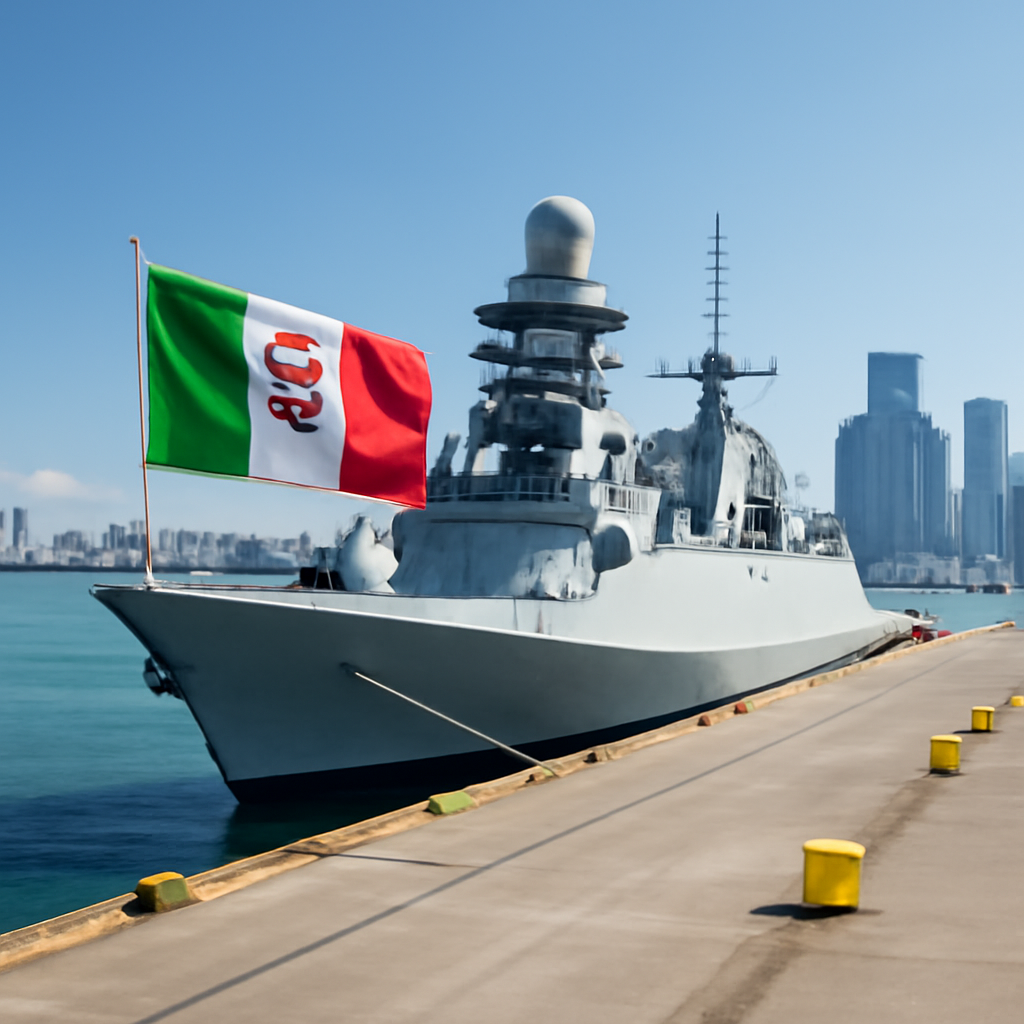
Rather than competing militarily with larger powers, Rome has leaned on its defense industry. Companies such as Leonardo and Fincantieri have become central to Italy’s regional presence by offering advanced naval platforms, aerospace technologies, and long‑term industrial cooperation. At Malaysia’s DSA & NATSEC Asia exhibition earlier this year, Fincantieri promoted its Landing Platform Dock proposal for the Royal Malaysian Navy alongside other naval solutions tailored to Kuala Lumpur’s modernization plans. Those trade‑show pitches demonstrate an approach that extends beyond simple arms sales to technology transfer and industrial collaboration.
Strategic limits: no overseas territories, no sustained regional presence
The Italian model is consciously lighter: unlike France, which maintains permanent military assets and overseas territories in the Indo‑Pacific, Italy possesses neither such territories nor the logistical infrastructure necessary to support an expansive security role. Its influence therefore depends on maintaining steady political engagement, periodic naval deployments, industrial cooperation, and military exchanges over many years. Whether Rome possesses the financial, diplomatic, and military resources required to sustain that long‑term commitment remains an open question.
What this means for Malaysia, Indonesia, and the European Union
- Malaysia: Rome’s industrial offers — including Fincantieri’s Landing Platform Dock proposal showcased at DSA & NATSEC Asia — give Kuala Lumpur options for naval modernization that emphasize technology transfer and partnership over sovereign security guarantees.
- Indonesia: The approved transfer of the Giuseppe Garibaldi is a concrete step in Jakarta–Rome ties, converting decommissioned Italian hardware into a diplomatic and industrial foothold that could underpin broader cooperation if followed by training, logistics, and sustainment arrangements.
- The European Union: The EU has repeatedly emphasized the Indo‑Pacific’s strategic importance and expanded political engagement with ASEAN, but defense cooperation in the region continues to be driven overwhelmingly by individual member states. Italy’s initiatives are compatible with EU objectives but remain largely national in conception and implementation, raising a potential need to reconcile bilateral networks with any future, more integrated European defense posture.
Italy’s expanding defense diplomacy should not be read merely as a series of arms deals. It represents an attempt to build influence where Rome lacks bases and permanent forces: through industrial partnerships, naval cooperation, and defense engagement that bind suppliers and customers in longer‑term relationships. The model leans on companies such as Leonardo and Fincantieri to translate commercial opportunity into strategic presence.
That convergence of industrial and diplomatic objectives is both strength and constraint. Industrial ties reinforce political relationships, but they also expose Rome to a practical dilemma: if European coordination toward Southeast Asia tightens, Italy may need to reconcile an extensive network of bilateral initiatives with common European priorities; if coordination remains limited, Rome risks assuming bilateral commitments that could prove hard to sustain alone.
In short, Italy has staked a distinctive path into the Indo‑Pacific — one powered by shipyards and aerospace firms rather than overseas bases. The immediate measure of success will be individual contracts and transfers, such as the Giuseppe Garibaldi. The longer test will be whether those commercial relationships can be translated into a coherent, sustainable regional policy that endures beyond any single sale or ministerial visit.