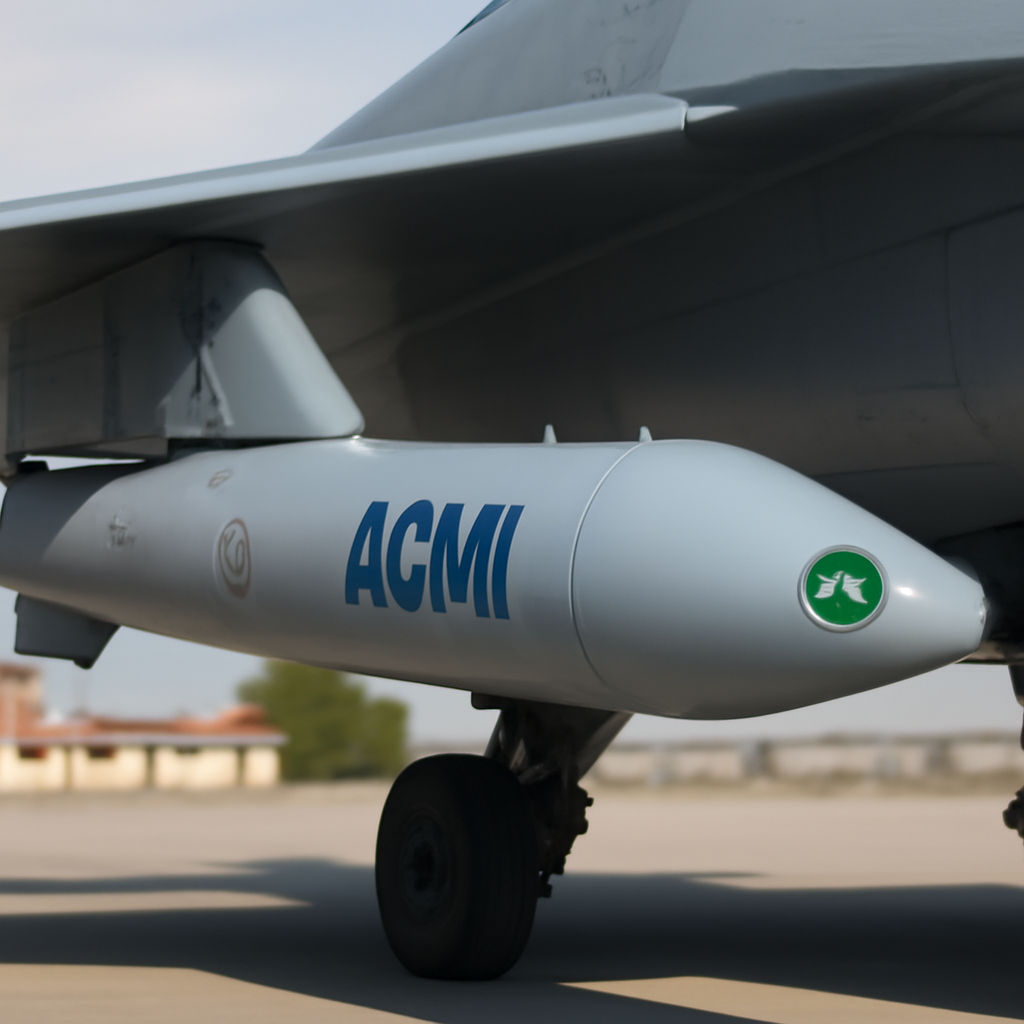
Air‑combat training becomes meaningful only when it can be measured rather than described; “ACMI” pods are the hardware that turns aerial sparring from anecdote into data. That is the practical point at the center of a newly available image: a small sensor package, now clearly visible in public, doing what modern air forces require for credible, repeatable training.
How ACMI pods make training measurable
The systems in question are Air Combat Maneuvering Instrumentation (ACMI) pods — the same real‑time telemetry and simulated‑weapons pods every modern air force relies on. They track positional data, maneuver geometry, missile shots, and gun envelopes, and feed it all back for real‑time kill calls and post‑sortie reconstruction. In short, ACMI converts aircraft positions and weapons events into a replayable record that commanders, instructors, and pilots can analyze together.
The public image: a clear look at a PLAAF/PLANAF ACMI pod on J-11BSH
Open‑source observers have long noted that clear photos of PLAAF/PLANAF ACMI pods were rare. The new material is “one of the first clear public images/screen captures of a PLAAF ACMI pod mounted on two naval J-11BSH,” according to the published account. That single frame changes the baseline: where previously pod use had to be inferred, analysts can now see the pod’s form and its mounting arrangement on operational aircraft.

This site is the portfolio.
OSINTSights runs on Cloudflare Workers, D1, R2, and Vectorize, with an AI pipeline on Hetzner ARM. Nubivance designed, built, and operates it. We do the same for clients.
See what we buildThe J-11BSH training round and its fit
The visible pod is mounted on two naval J-11BSH training rounds — described in the report as the “familiar missile‑shaped training round that bolts onto a standard hardpoint with no aircraft mods required.” The implication in the photograph is simple but important: the pod is a fieldable, non‑intrusive accessory that can be carried on standard pylons. Its small size belies its operational role; the account notes, “It’s a small piece of hardware, but a critical one: no modern air force trains seriously without it.”
Kenneth W. Allen as the institutional guide to PLAAF training
For readers who want to move beyond hardware spotting to institution-level understanding, the account directs attention to Kenneth W. Allen. He is described as “the most meticulous Western researcher on PLAAF organization, personnel systems, training institutions, and the grade structure that quietly governs everything the PLAAF does.” The post recommends Allen’s works as the starting point for anyone seeking to understand “PLAAF training as an institution rather than a collection of aircraft,” and notes that some of his works are linked in the original material.
What this means for PLAAF/PLANAF trainers, Western analysts, and procurement officers
- PLAAF/PLANAF trainers and aviators — The photograph documents an operational configuration that supports measurable sorties: pods on missile‑shaped training rounds mounted to standard hardpoints enable real‑time telemetry and post‑flight reconstruction without aircraft modification.
- Western analysts and the OSINT community — A clear public image converts an inference into visual evidence that can be compared to other imagery, referenced against known pod capabilities (positional telemetry, simulated‑weapons recording, kill‑call replay), and used as a calibration point for further open‑source collection.
- Procurement and maintenance planners — The depiction of a bolt‑on, hardpoint‑mounted training round highlights a low‑integration approach to equipping aircraft for ACMI missions: the hardware appears transportable between aircraft without requiring airframe modifications.
The photograph does what a single clear image can do: it turns a known technical requirement into observable practice. It shows that the PLAAF/PLANAF employ the same measurable training tools familiar across modern air forces, and it provides a new visual data point for analysts and planners who study how aviators are trained and assessed.
For readers who want institutional context beyond the hardware, the account points directly to Kenneth W. Allen’s work as the most reliable Western starting place for PLAAF training, organization, and grade structure. The image answers a narrow factual question about what is mounted on J-11BSH hardpoints; it leaves open the broader institutional questions of how frequently these pods are used, how sorties are scored, and how training programs are structured — questions Allen’s scholarship is positioned to address.