"Flight School Next delivers a critical improvement in our Initial Entry Rotary-Wing Training model," Maj. Gen. Clair A. Gill said, promising "new military helicopter pilots with far better foundational skills."
Contract award and the scale of the change
On August 13 the Army awarded M1 Support Services a potentially $10‑billion contract to run Flight School Next at Fort Rucker, Alabama. The contract uses a contractor‑owned, contractor‑operated (COCO) model: M1 will provide the aircraft, maintenance, simulators, flight and academic instruction, and other support while the Army retains control of training standards, safety requirements, and overall outcomes. The enterprise is planned to train between 800 and 1,500 Army helicopter pilots each year; by comparison the Army currently produces about 1,250 new aviators annually under its Initial Entry Rotary‑Wing Flight Training program.
Why the Robinson R66 won this role
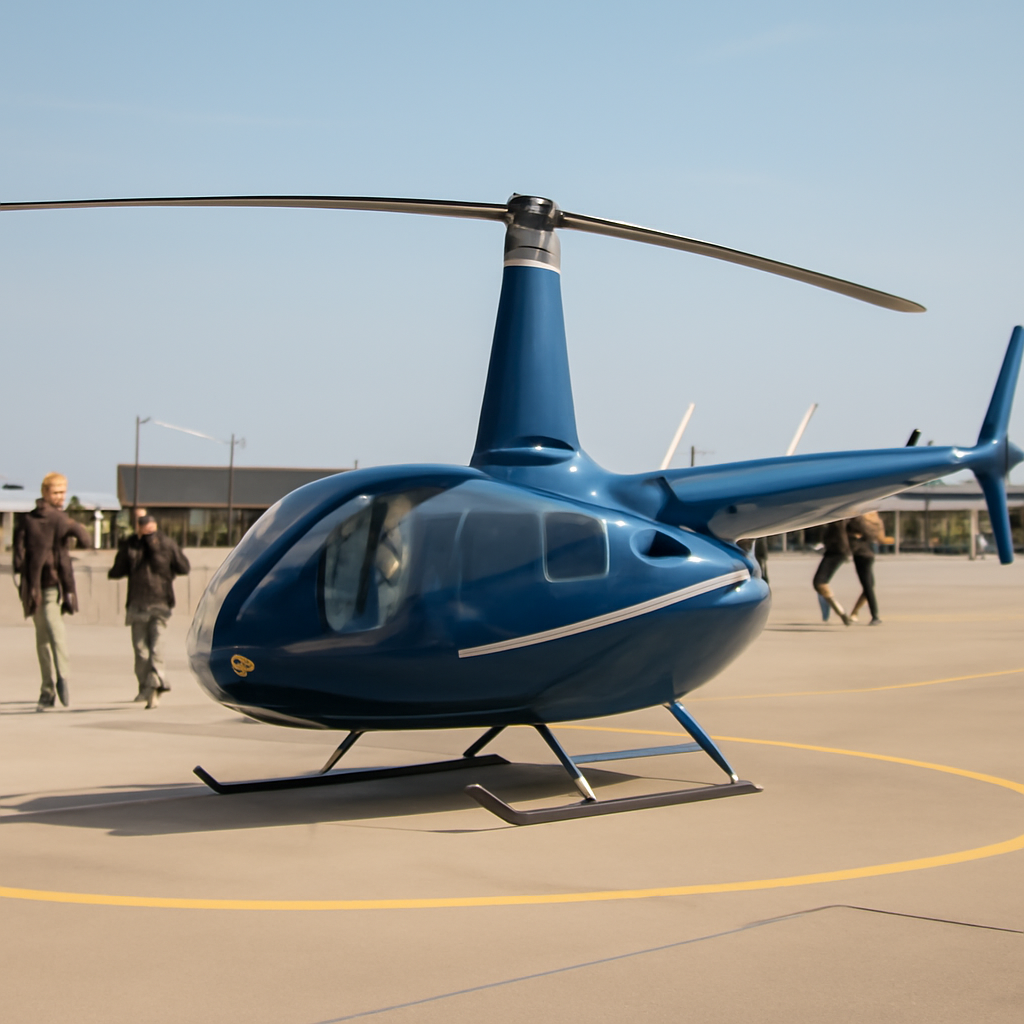
M1’s solution centers on the Robinson R66 Turbine as the primary trainer. The R66 is a single‑turbine, five‑seat light rotorcraft powered by a Rolls‑Royce RR300 turboshaft and equipped with Garmin avionics. The Army and M1 emphasized the R66’s relatively simple design, low operating costs, and wide commercial availability — qualities the service judged well suited to high‑volume basic flight training. The Army’s original solicitation called for a single‑engine rotary‑wing aircraft, reflecting a deliberate return to simpler platforms to sharpen fundamental helicopter skills before students encounter more automated military aircraft.

This site is the portfolio.
OSINTSights runs on Cloudflare Workers, D1, R2, and Vectorize, with an AI pipeline on Hetzner ARM. Nubivance designed, built, and operates it. We do the same for clients.
See what we buildTraining philosophy and program structure
The Flight School Next syllabus is intended to produce pilots proficient in basic aircraft handling, visual and instrument flight, terrain flight, navigation, and tactical mission planning. Under the new arrangement the Army expects to combine a streamlined commercial fleet and modern simulators while consolidating several existing training contracts into a single operation. M1 will own and operate the training aircraft and supply instructors and maintenance, with the first task order expected to cover three to four years as M1 transitions the operation; the overall contract has a potential 26‑year duration. Assistant Secretary of the Army for Acquisition, Logistics and Technology Brent G. Ingraham said, "Flight School Next delivers the next generation of training capabilities our aviators need to succeed in increasingly complex operational environments," and the service expects the new model to reduce long‑term training costs.
Contrast with the current fleet and procurement competition
The R66 represents a significant departure from the current primary trainer, the twin‑engine Airbus UH‑72A Lakota, a larger airframe with extensive automation and sophisticated avionics. Army officials and instructors have argued that those systems can act as a crutch for inexperienced pilots — an argument that led decisionmakers to seek a "very simple aircraft," according to Maj. Gen. Clair Gill. M1’s R66‑based bid prevailed over a rival offer from Bell, which proposed the Model 505, after the Army narrowed competitors from an initial field of six manufacturers and contractors.
How M1 Support Services, Army aviators, and Robinson Helicopter are affected
- M1 Support Services: As prime contractor under a COCO model, M1 will be responsible for fielding the R66 fleet, simulators, instructor cadre, and maintenance at Fort Rucker and managing the multi‑year transition under the first short task order.
- Army aviators and instructors: New students will start on simpler, single‑engine aircraft with modern digital avionics to develop fundamentals earlier in the pipeline; the Army retains oversight of standards and safety while expecting reductions in future mishaps.
- Robinson Helicopter: The R66’s selection embeds a commercially common light turbine into Army initial training. Robinson already has military footholds: the TH‑66 Sage trained Army and Navy operators under a Helicopter Institute test program and a Robinson R66 Turbinetruck variant was awarded a U.S. Marine Corps contract earlier this year to test autonomous cargo resupply with Sikorsky’s MATRIX autonomy system.
Flight School Next is framed as both a tactical change in how the Army teaches flying and a strategic experiment in using commercial aviation practices — contractors operating a common, lower‑cost airframe under Army standards — to sustain pilot throughput through 2030 and beyond. The immediate next steps are operational: M1’s three‑to‑four‑year transition under the first task order, fleet fielding at Fort Rucker, and the graduation of students trained under the new syllabus. If the model delivers the promised foundational skills at lower cost, Flight School Next could reshape how the Army prepares rotor‑wing aviators from day one.