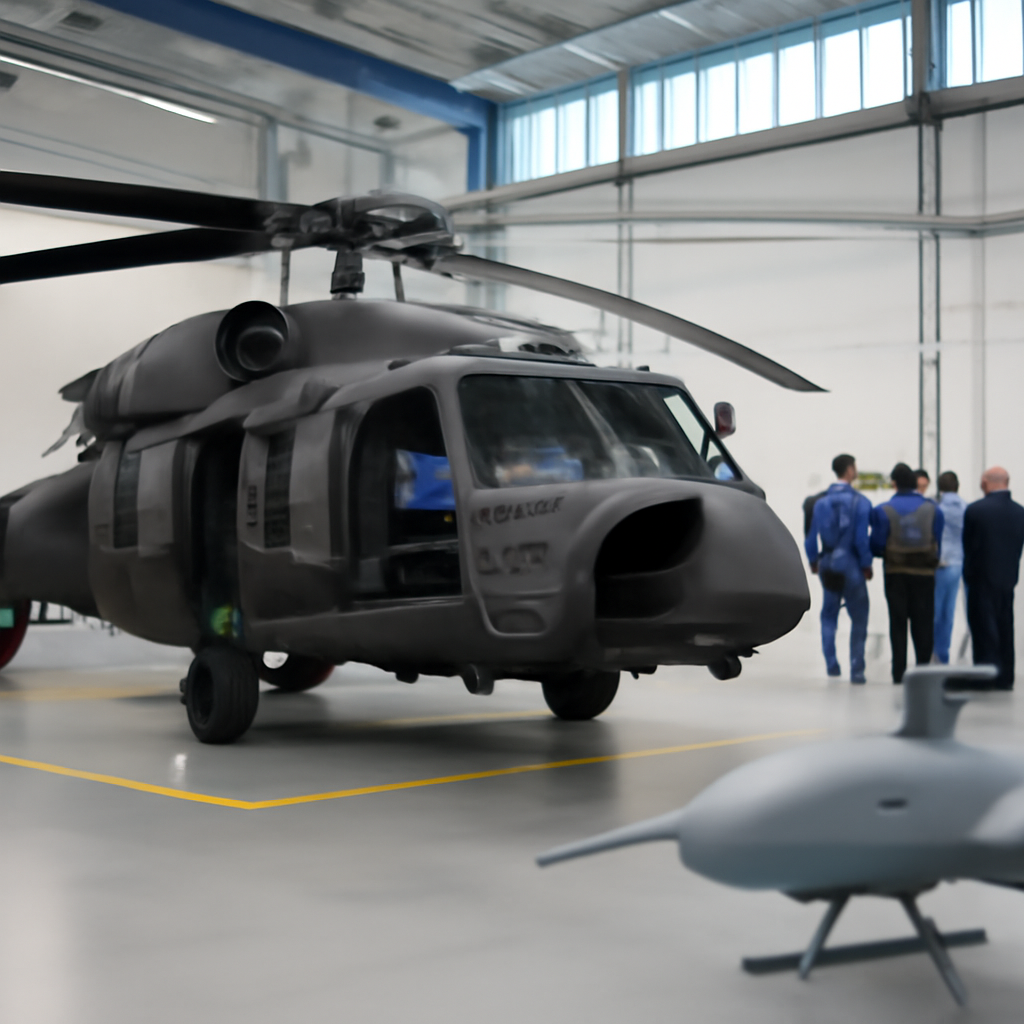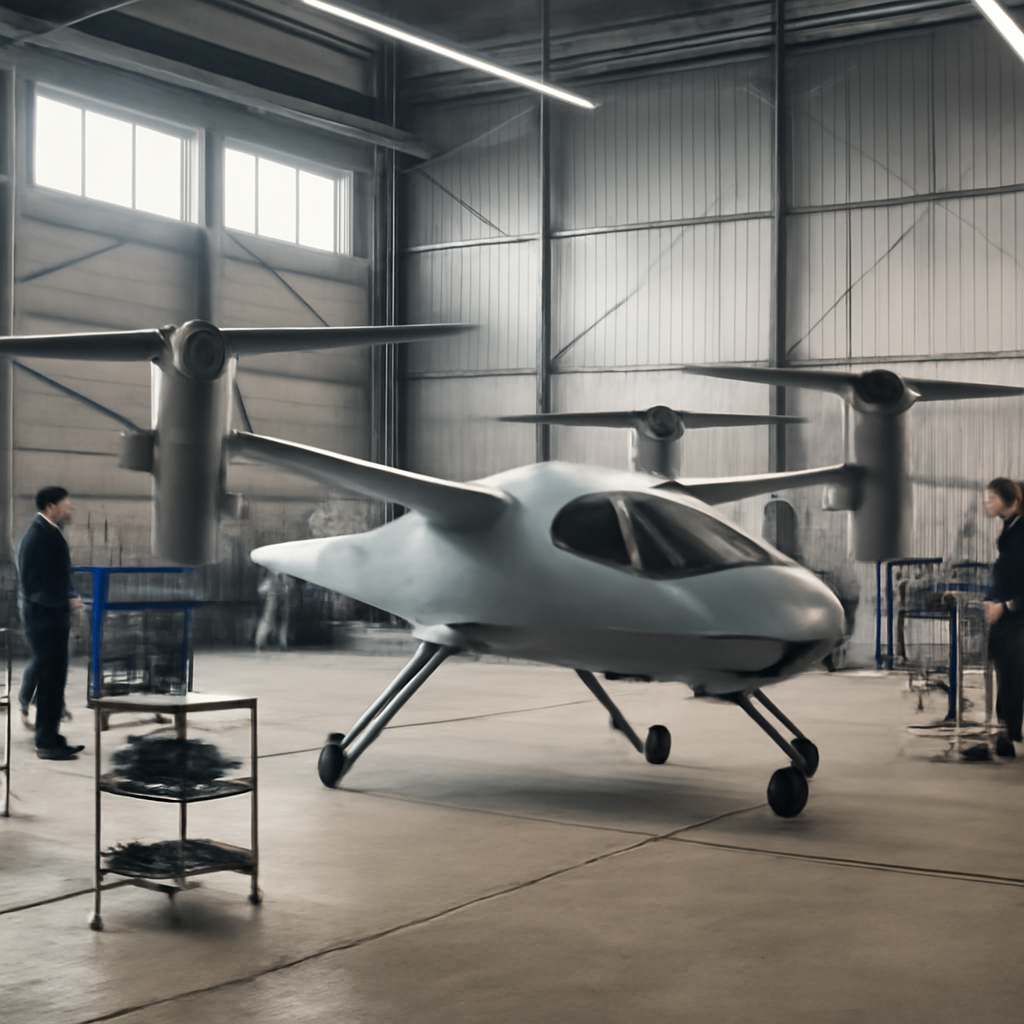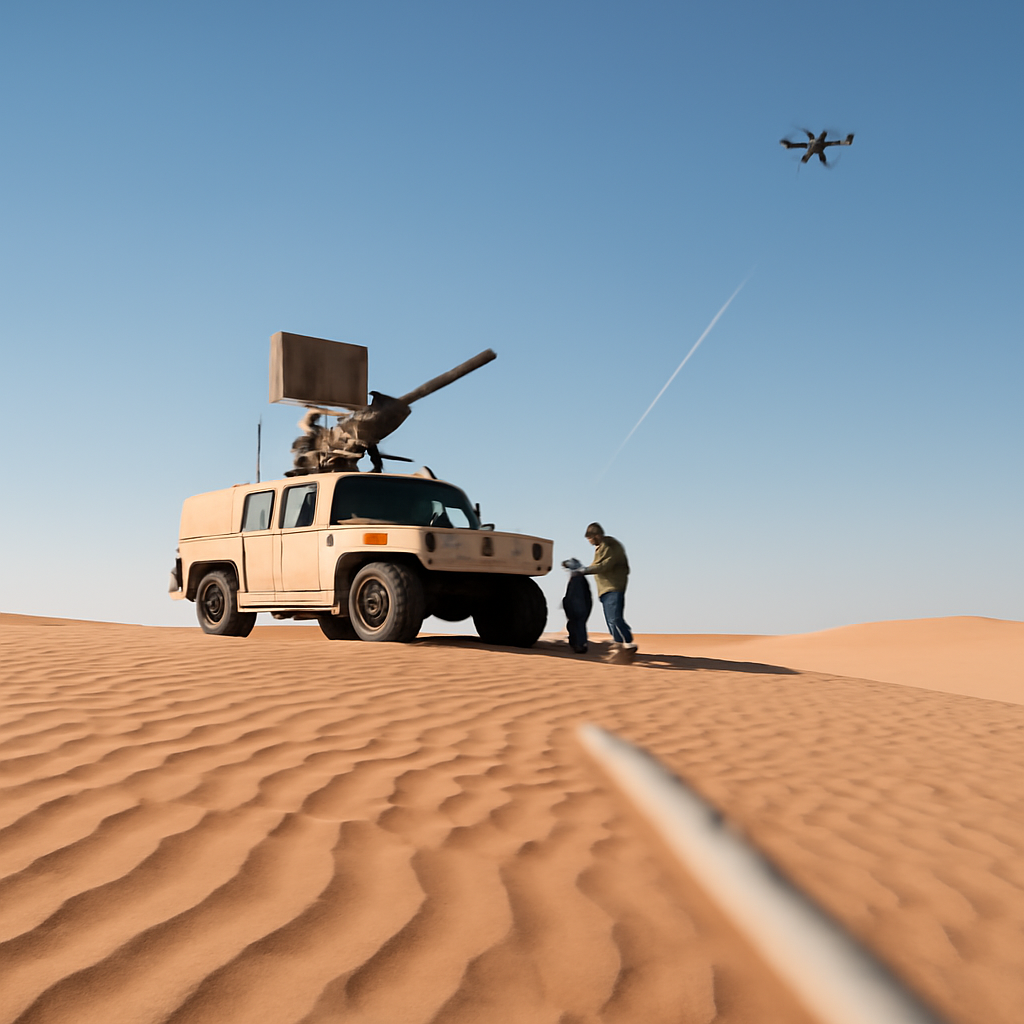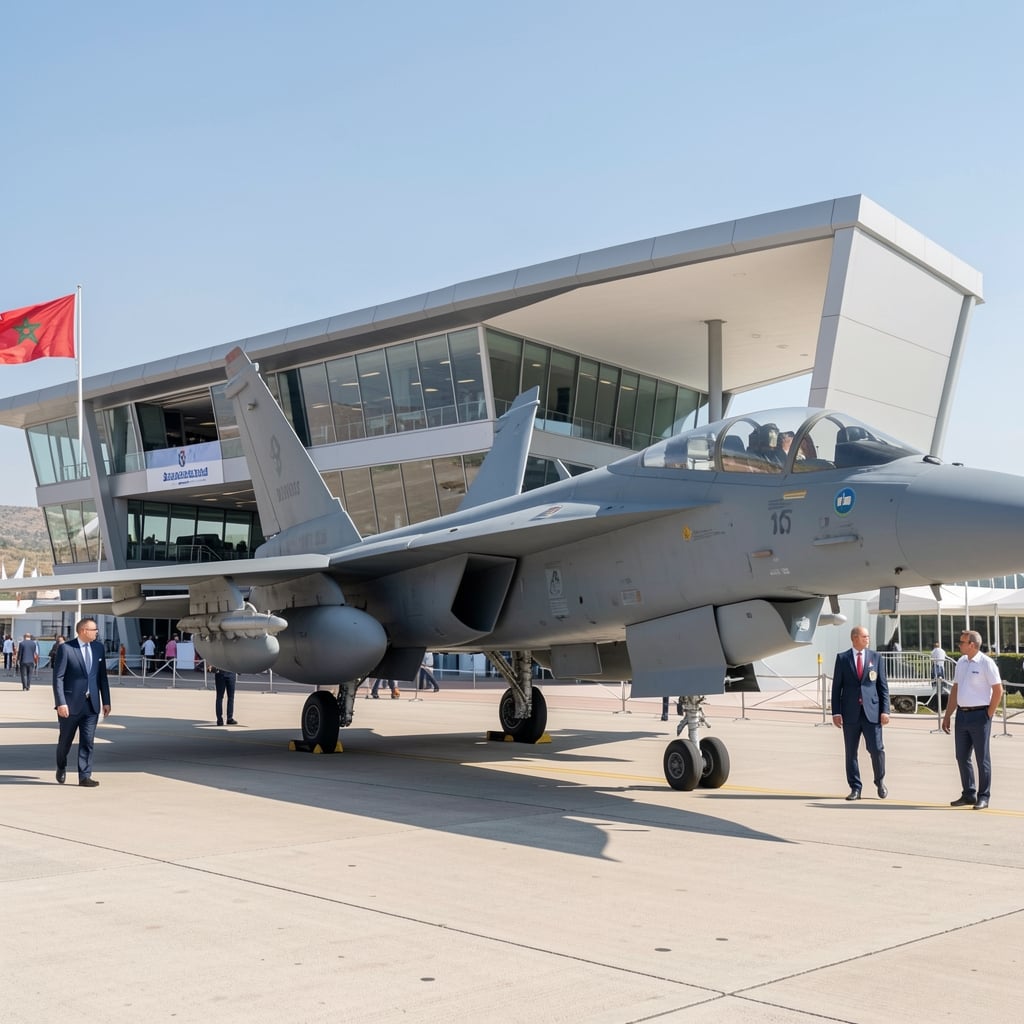
"This marks Israel’s first official participation in the defense exhibition held in Morocco since the signing of the Abraham Accords," Israel’s Ministry of Defense said.
Israel’s Ministry of Defense frames the visit as an export and cooperation milestone
The ministry tied the delegation and national pavilion at the Marrakech Airshow directly to a strategic aim: “to increase defense exports and defense cooperation with countries worldwide,” while also saying the effort will “strengthen the Israel Defense Forces and influence foreign policy.” Yair Kulas, head of the ministry’s SIBAT office, called the appearance at Marrakech a “milestone” for Israel’s defense industry. The ministry added that “during the exhibition, meetings were held with delegations and government officials from various countries.”
What Israeli firms displayed: loitering munitions, AI robotics and satellite communications
The Ministry of Defense said Israeli exhibitors showcased combat‑proven technologies that mirror current battlefield trends. The list supplied by the ministry cited:
- loitering munitions
- AI‑powered robotic systems
- autonomous navigation capabilities for UAVs
- laser guidance for FPV drones
- satellite communications
Eight Israeli companies exhibited at the Marrakech Air Show — the national pavilion included ASIO Technologies, Orbit Communication Systems, Shilat Optronics, Uvision Air and Xtend Systems — and, broadly, all five pavilion companies provide smaller drone or loitering‑munition systems that the ministry said have come to define recent battlefields.

Audit-ready is a season. It shouldn't be.
Evidence in spreadsheets, controls drifting between audits, frameworks multiplying on flat headcount. Nubivance runs continuous compliance on Rapid7 Cyber GRC - SOC 2, HIPAA, ISO 27001, PCI, CMMC.
End the scrambleRafael, Elbit and IAI: the major names on the floor
The three largest Israeli defense firms — Rafael Advanced Defense Systems, Elbit Systems and IAI — set up separate booths at Marrakech. Rafael highlighted air‑defense capabilities, pointing to its Spyder system and a suite of other systems.
- Rafael said Spyder “integrates radar, command and control and launcher on a single vehicle, together with the interceptors for its common launcher,” and noted recent sales of the system to Greece and Romania. Rafael also mentioned an interceptor drone called Hunter Eagle as part of its solution for smaller drone threats. Yoav Tourgeman, Rafael’s CEO, said the company views participation as “laying the groundwork for future collaboration” and that systems shown were “shaped by operational battlefield experience.”
- Elbit displayed a large Hermes drone and its FUSE line of smaller drones, which the company described as “military‑grade autonomous systems designed for scalable deployment.” Elbit also highlighted Mini‑MUSIC, an airborne self‑protection system that uses directed‑energy countermeasures. The company said it would showcase capabilities spanning unmanned and autonomous systems, precision fires, airborne protection and electronic warfare, ISR, electro‑optics, communications and digitalization, and training and simulation.
- IAI set up a booth but “did not put out a statement detailing the wares it’s showing off,” according to reporting from the show.
Morocco’s role: Abraham Accords, defense spending, and low‑profile ties
Morocco normalized ties with Israel as part of the Abraham Accords in December 2020. The Marrakech Airshow — held biennially since 2008 and attracting more than 200 exhibitors from two dozen countries — provided a public venue for both sides after almost six years of official relations during which Moroccan‑Israeli defense ties have often remained low profile for “security and sensitive reasons,” the reporting noted.
The story supplied several prior examples of discreet cooperation: in 2023 a dozen Israeli soldiers participated in the U.S.‑led African Lion exercise, and recent reports over the last year have indicated Morocco acquired IAI’s Barak MX air defense system, may have acquired Israeli drones, partnered with an Israeli drone maker, and may have other partnerships with Israel’s defense industry. Morocco, the report noted, is the second largest defense spender in Africa, with more than $6 billion in defense spending last year, according to SIPRI figures.
The presence of an Israeli national pavilion at Marrakech stood out against a backdrop of mixed international reaction to Israeli industry at arms shows — the piece noted that France banned Israel from Eurosatory in February.
What this means for technologists, procurement leaders, and military planners
- Technologists and security teams: expect more visible demonstrations of autonomy, AI and counter‑drone measures in export settings. The ministry’s list of showcased technologies and Elbit’s emphasis on autonomous and directed‑energy countermeasures point to where vendors are concentrating R&D and display efforts.
- Procurement leaders and policymakers: the ministry framed the pavilion as part of a deliberate export strategy, and Rafael’s and Elbit’s public statements emphasize laying groundwork for collaboration — details that procurement teams will watch for follow‑on meetings or contract announcements after the show.
- Military planners in Morocco and partner nations: Marrakech provided a venue for public display and private meetings. Given prior reports of Moroccan acquisitions and partnerships with Israeli companies, attendees will likely parse demonstrations for capabilities tied to air defense, loitering munitions, and counter‑UAV solutions.
Israel’s first official participation in the Marrakech Airshow, as characterized by the ministry and by industry leaders, was both a public sales pitch and a diplomatic signal — a tangible element of a stated strategy to increase exports, deepen cooperation and influence policy. Whether the presence translates into announced contracts or more visible, formalized partnerships will be tracked closely in the months after the show; industry voices at Marrakech framed the visit as groundwork for such outcomes.