"The first one of those will be done at the end of October," Armor Harris, Shield AI's Senior Vice President and General Manager of the company's aircraft division, told TWZ about the first full-scale X-BAT prototype.
Prototype and flight-test timeline (Shield AI)
Shield AI says it will roll out the first full-scale X-BAT prototype by the end of October, with flight testing of the tail‑sitting vertical takeoff and landing (VTOL) jet scheduled to begin before the end of the year. The company described a staged campaign: engine runs with the vehicle horizontal on its launch and recovery vehicle, vertical engine runs, suspended free‑flight testing from "one of the biggest cranes in the world" at X‑Forge 2 in Kansas, and then untethered flights.
Shield AI set a goal to fly a "fully missionized X‑BAT" in 2028 and to start series production in 2029. Under the Navy's Runway Independent Maritime Expeditionary Strike (RIMES) program, the stated target for an early operational capability is 2029.
Design, propulsion and key subsystems
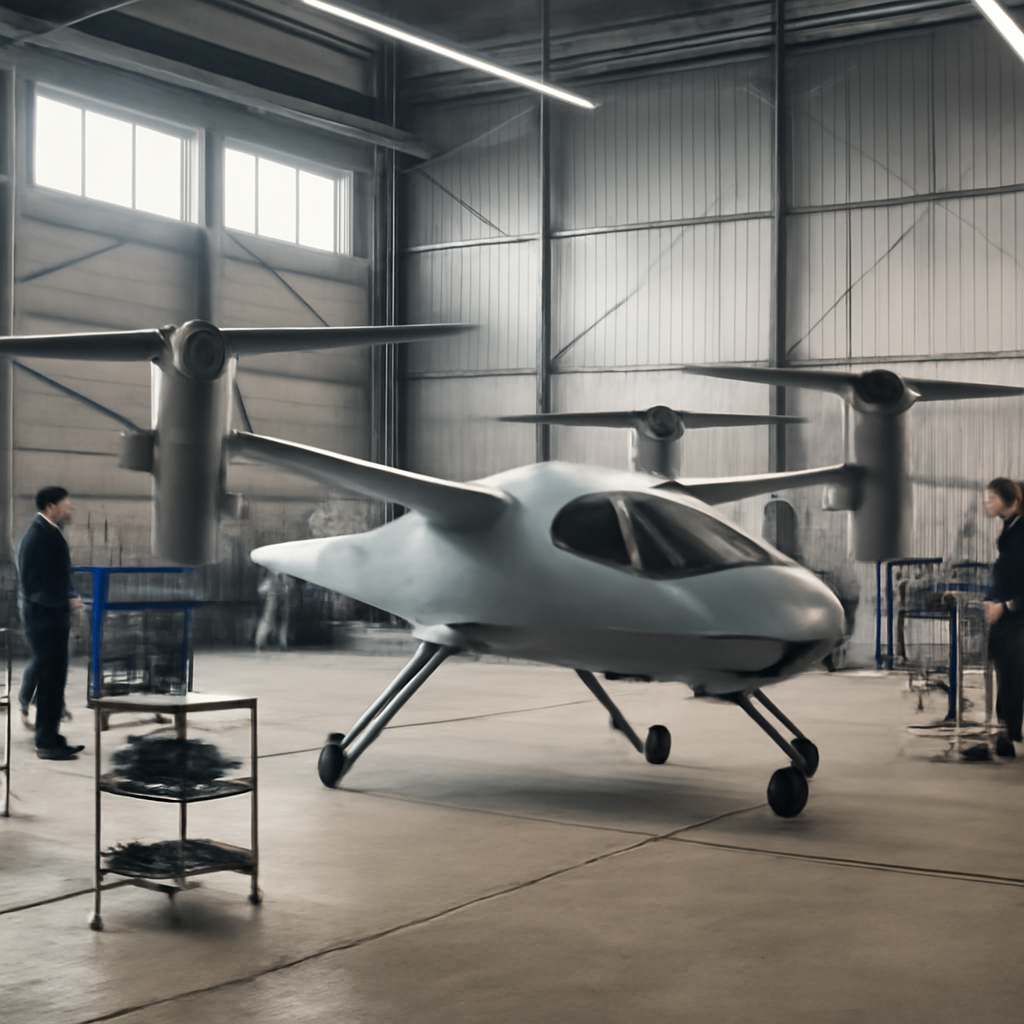
X‑BAT is described as a roughly fighter‑sized, jet‑powered, stealth‑oriented uncrewed aircraft that takes off and lands from a tail‑sitting position. The first prototypes will carry a General Electric F110 engine and an Axisymmetric Vectoring Exhaust Nozzle (AVEN) to provide pitch and yaw control. Shield AI is repurposing an AVEN that was developed in the 1990s for an experimental thrust‑vectoring F‑16 and had been in storage for decades.
Roll authority is to come from bleed air routed through thrusters in the drone's wings. Shield AI has previously stated performance targets that include a maximum range of 2,000 nautical miles, a service ceiling near 50,000 feet, and an effective combat radius the company has described as roughly twice that of the F‑35 (about 1,340 nautical miles), though the company has also indicated that figure could be closer to 1,000 nautical miles.
The design includes internal weapons bays "roughly the same size as those on the F‑35" plus two plumbed external hardpoints under the wings that could carry drop tanks or buddy refueling stores. Space has been reserved for possible in‑flight refueling, but Shield AI says there is no active work to integrate that feature yet. The company also plans modular, open‑architecture mission systems and intends to leverage its Hivemind autonomy software.

The cyber insurance questionnaire just landed. Now what?
SOC 2, HIPAA, insurance renewals - someone has to own security strategy. Nubivance provides fractional CISO leadership without the full-time salary.
Get a security leadLaunch and recovery vehicle, basing and shipboard concepts
Shield AI has evolved the launch and recovery system into a self‑propelled vehicle rather than a simple towed trailer. The company plans a one‑to‑one pairing of launch and recovery vehicles to air vehicles so "the air vehicle is always on the trailer. It never comes off of it," and maintenance is intended to be performed while the aircraft remain mated to the trailer.
Shield AI envisions dispersal and rapid relocation as survivability measures: prepositioning multiple launch and recovery vehicles across islands or within theater, operating from forward arming and refueling points (FARP), and employing "hub‑and‑spoke" basing ashore. The company also anticipates employing dozens of X‑BATs from amphibious assault ships and other amphibious warfare vessels — including expeditionary sea base types — arguing the concept would expand where carrier‑like strike capacity can be fielded without using carrier deck square footage.
Funding, program context and scale
The Navy and Pentagon partners are funding part of X‑BAT's development. Earlier this year the Navy, in cooperation with the Defense Innovation Unit, invested $50 million. On top of that, the Office of the Under Secretary of War for Acquisition and Sustainment provided an additional $150 million through its Defense Exportability Features program via the Navy. Shield AI has committed a matching amount of internal funding, producing a combined total of $400 million committed to the effort so far.
Shield AI said RIMES is structured around milestone payments tied to performance; when asked about fleet size planning figures, Armor Harris answered "hundreds to low thousands."
What this means for the Navy, the U.S. Marine Corps, and the U.S. Army
- Navy: RIMES aims to field runway‑independent maritime strike capability by 2029; X‑BAT is pitched as a way to extend carrier‑like strike to other ship types without displacing crewed carrier aircraft. Naval Air Systems Command has also released new requirements in August that TWZ reported as pointing toward advanced uncrewed combat air vehicle concepts.
- U.S. Marine Corps: TWZ highlighted that runway‑independent drones are of interest for expeditionary and distributed concepts. The Marines are separately acquiring MQ‑58B Valkyrie drones from Kratos that will operate from conventional runways and conduct runway‑independent launches (the baseline Valkyrie lands by parachute), indicating parallel paths for different runway‑independence approaches.
- U.S. Army: Aviation Week reported that Shield AI is pitching X‑BAT as a successor to the Army's MQ‑1C Gray Eagle fleet, signaling possible cross‑service interest if runway‑independent, long‑range strike UAVs prove viable.
Shield AI's stated near‑term watchpoints are concrete: a full‑size prototype with an F110 and AVEN by the end of October, flight testing before year's end, and a push toward a missionized aircraft in 2028 tied into a RIMES early operational capability in 2029. The company and the Navy have combined funding and technical work underway — but the timeline is tight and the tail‑sitting VTOL concept has a long history of difficult development, a fact Shield AI acknowledges even as it points to risk‑reduction work including wind tunnel, engine and thermal testing and earlier lessons from its internal V‑BAT program.