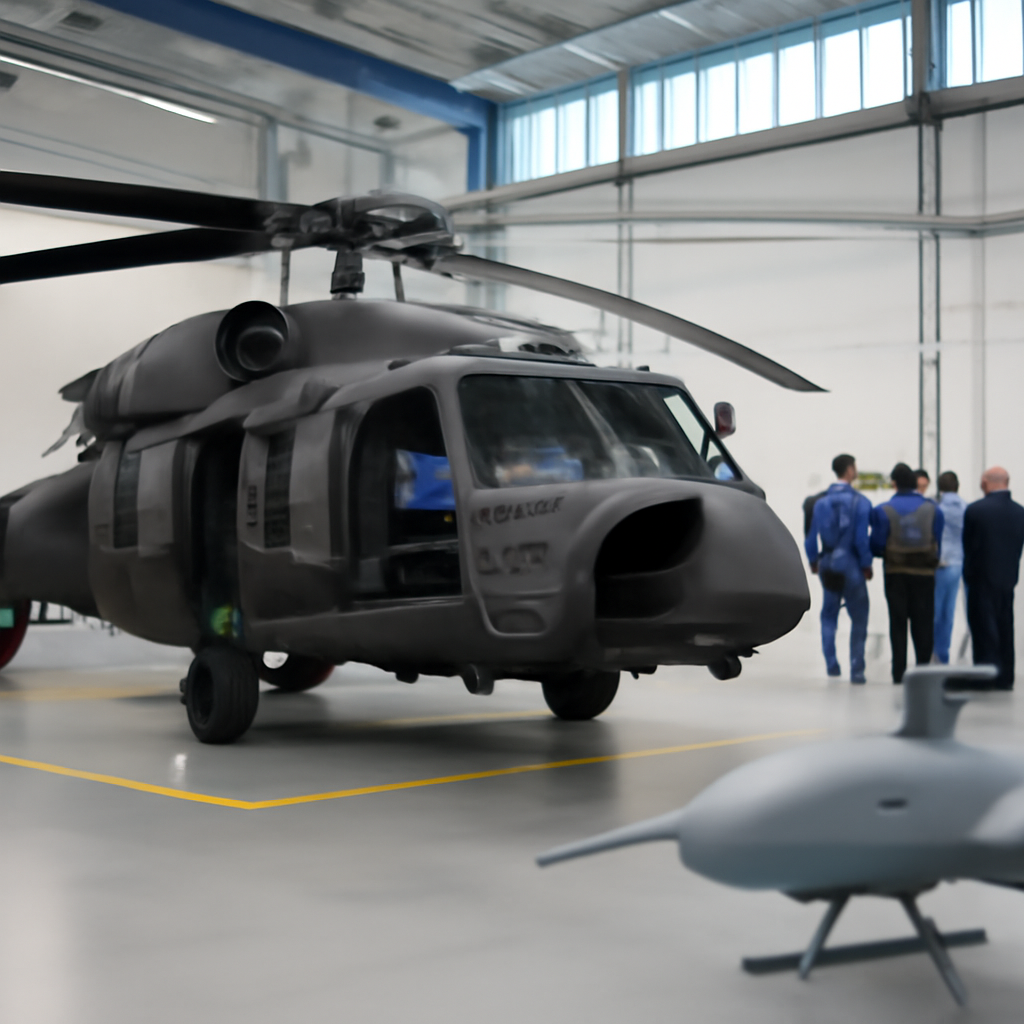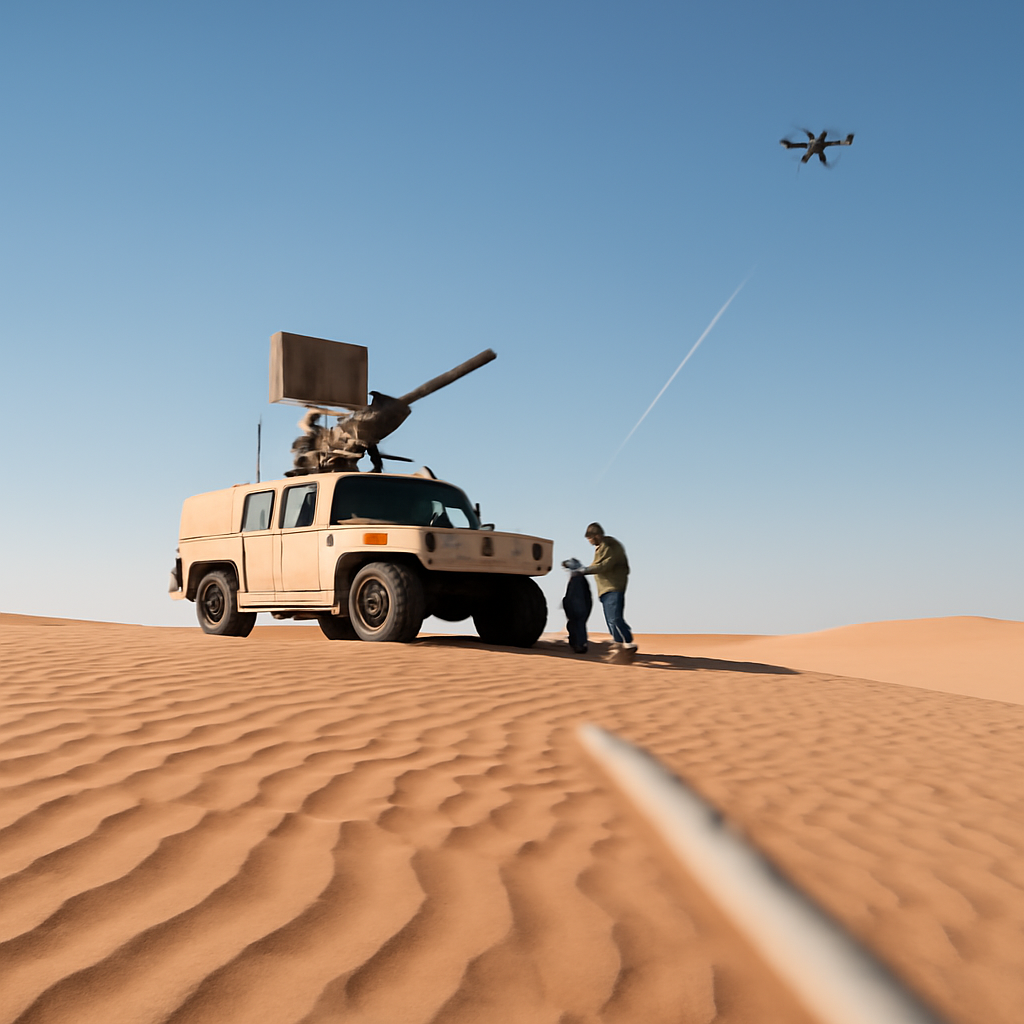
“Operating capabilities day after day in extreme desert conditions provides invaluable data on system durability and operator usability that directly translates to contested environments like the CENTCOM AOR,” Marine Col. Scott Humr told Breaking Defense after Falcon Peak 26.2 concluded in the Arizona desert.
Operational testing at Yuma Proving Ground
At Yuma Proving Ground, personnel from the Army-led Joint Interagency Task Force (JIATF) 401, U.S. Northern Command and industry partners ran counter-unmanned aerial system (UAS) experiments during Falcon Peak 26.2. JIATF-401’s mission, as described in reporting from the event, included stress-testing sensing suites, kinetic interceptors and ballistic takedowns in conditions meant to mirror those in the U.S. Central Command (CENTCOM) area of responsibility.
Heat, wind and dust: sustainment realities that matter
Participants repeatedly called out basic environmental factors as decisive test outcomes. Humr said intense heat, wind, dust and glare at Yuma replicate the physical challenges faced in CENTCOM’s theater, and that testing here exposed sustainment needs “that cannot be replicated in a laboratory.” Practical fixes surfaced during the exercise: teams had to clean solar panels more frequently because of rapid dust accumulation, and operators required new display shields to read screens in unrelenting sunlight.

This site is the portfolio.
OSINTSights runs on Cloudflare Workers, D1, R2, and Vectorize, with an AI pipeline on Hetzner ARM. Nubivance designed, built, and operates it. We do the same for clients.
See what we buildThree lanes of capability: sensing, drone-on-drone and ballistic takedowns
During Falcon Peak, the task force and NORTHCOM demonstrated three lanes of capability. Organizers described these as sensing; kinetic interceptors — termed drone-on-drone takedowns; and ballistic takedowns, which the reporting describes as mainly small ammunition used to take down aircraft. Brig. Gen. Matt Ross, JIATF-401’s commanding general, said on Sept. 24 that the exercise reinforced the requirement for a layered defense that combines both active and passive sensing and multiple defeat mechanisms.
Ross also said JIATF-401 plans to brief CENTCOM leaders on the exercise’s “success with constructing a ‘layered defense’” and that the task force has provided support to CENTCOM and its commander, Adm. Brad Cooper. Ross noted CENTCOM already uses layered defenses but that beefing them up is “vital” in light of ongoing risks posed by Iranian Shaheed drones to U.S. and allied bases in the region.
Vendor takeaways: Bullfrog, Perseus and wind testing
Industry participants reported concrete engineering takeaways. Mike Wior, CEO of Allen Control Systems (maker of the Bullfrog counter-drone system), said gusts and crosswinds at Yuma altered interceptor trajectories and forced on-the-fly adaptations. “That has been kind of an eye opener,” Wior said, adding the conditions were “really, really good, comparable stuff to CENTCOM.”
Joe Cornelius of Perseus — whose firm advertises interceptors that the company says cost under $5,000 a hit — said the winds at Yuma are “about twice what we’ve ever tested with down in Texas,” and that the exercise made clear they need “to do more robust testing on different wind environments.” Those vendor comments underscore that aerodynamic variability and local meteorology can be as decisive as sensor fidelity in real-world intercepts.
What this means for CENTCOM leaders, developers, and the DIU/JIATF-401 partnership
- CENTCOM leaders: Expect operational feedback on layered defenses and sustainment needs — JIATF-401 plans to pass lessons and additional tools to CENTCOM to help protect critical assets against Shaheed drones, according to Brig. Gen. Ross.
- Developers and manufacturers: Prepare for ruggedization and environment-specific testing — Humr emphasized passback of operator feedback so counter-UAS systems are “fully ruggedized and optimized” before forward deployment; vendors at Yuma already reported redesigns to account for wind, dust and glare.
- Defense Innovation Unit and JIATF-401: Continue the experimentation-to-transition pipeline — Angela Aspito of DIU’s Arizona onramp hub said DIU found relevant capabilities for CENTCOM during Falcon Peak but acknowledged remaining “gaps that we’re aware of that the warfighter needs to fill with technology.” DIU’s role remains finding and transitioning those capabilities.
The Arizona desert proved to be an intense, focused laboratory: not a single breakthrough device was the star, but a series of pragmatic lessons about how systems survive, operators see, and interceptors fly under harsh conditions. JIATF-401 will carry those lessons to CENTCOM, DIU will try to move usable capabilities into theater, and vendors will iterate hardware and tactics to meet the demands revealed by wind, dust and unblinking sun. As Angela Aspito put it, “the opportunity to see that on the battlefield today is really real.”