Israel’s Aerial Calculus: Redefining Power in a Volatile Region
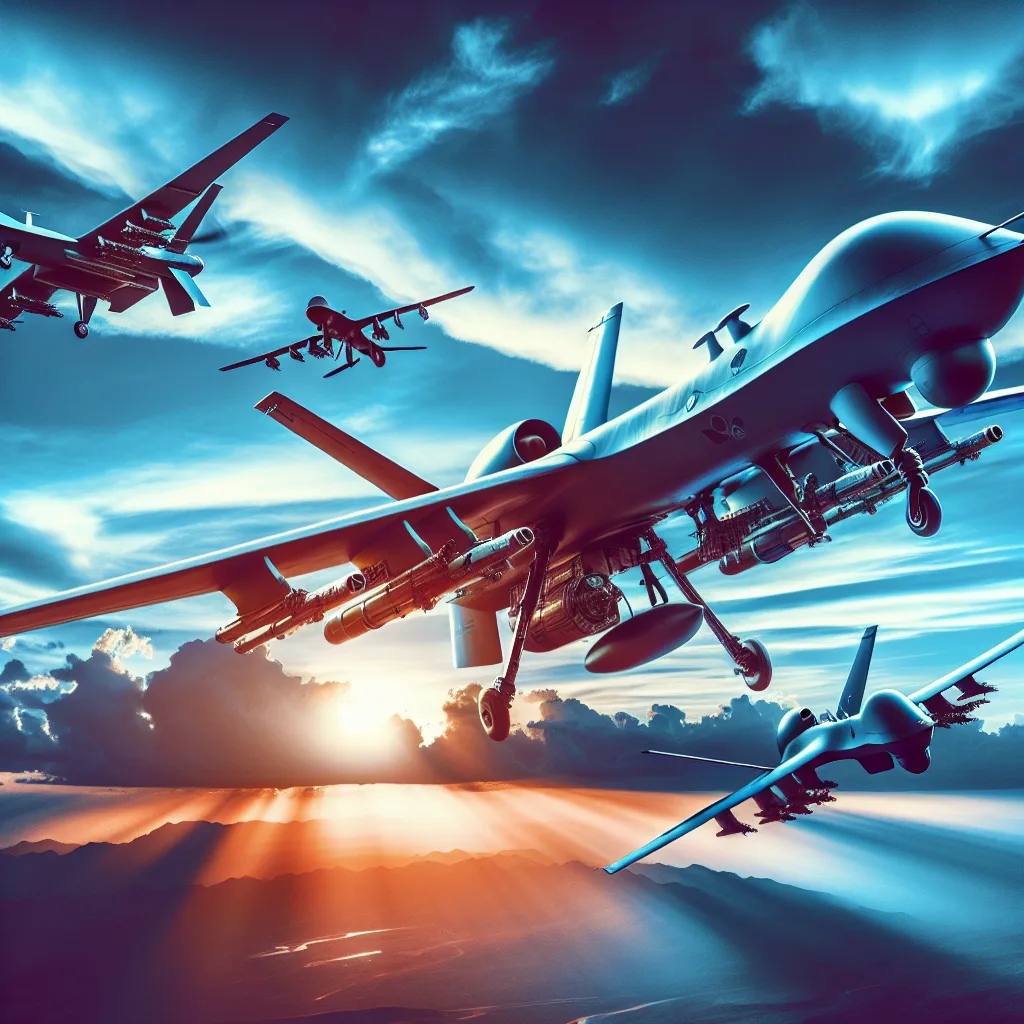
In the early hours of June 13, a series of meticulously coordinated air strikes altered the balance of power in the Middle East. Israeli aircraft, penetrating deep into Iranian territory, have secured sustained control over key segments of the Iranian airspace. The operation, aimed at disabling Tehran’s air defense systems, military bases, and missile launch sites, marks a significant tactical maneuver by the Israeli Air Force.
Israeli military authorities have reported that the successful strikes were not isolated incidents but rather part of an ongoing campaign to neutralize critical Iranian capabilities. The initial salvo was followed by continuous operations that collectively demonstrate Israel’s confidence in its technological edge and operational planning. Senior Israeli military officials confirm that the effectiveness of these missions underscores a proactive approach to regional threats, one that leverages advances honed over decades of conflict.
The background of the current operation is steeped in history. For years, Israel and Iran have engaged in a dangerous game of brinkmanship. Israeli tactics, refined through past confrontations and supported by cutting-edge stealth and electronic warfare systems, have evolved to address a multifaceted set of challenges. This latest campaign draws upon a rich legacy of military strategy where precision, timing, and intelligence converge to create decisive advantages.
This development comes at a time when tensions in the region are already under intense international scrutiny. Iranian anger over what it views as an infringement on its sovereignty is met with calculated restraint by strategic observers, who note that such operations, while aggressive, are designed to deter further escalation. As regional analysts have pointed out, the ability to project air power is not merely an exercise in military might—it is an instrumental element in demonstrating deterrence and protecting national interests.
Experts in military strategy have emphasized that the recent strikes are emblematic of a broader transformation in how nations employ air power. By targeting Tehran’s critical defense infrastructures, the Israeli forces have effectively limited Iran’s capacity to react and retaliate with coordinated countermeasures. This calculated disruption is seen as a reconfiguration of the traditional security balance, one where technological superiority meets a robust command-and-control system.
At the heart of the issues surrounding these strikes is a long-standing rivalry that has shaped Middle Eastern geopolitics. Israel’s preemptive measures are an answer to decades of perceived threats posed by Iranian military ambitions, including concerns over Iran’s nuclear program and its regional proxy engagements. In this context, the operation not only aims to degrade Iran’s military posture but also to send a clear signal about the limits of regional aggression.
Multiple perspectives abound in the wake of the operation. While Israeli military officials declare the strikes a resounding success, Iranian ministers have issued strong rebukes without offering substantive details of their intended response. Analysts at institutions such as the International Institute for Strategic Studies and experts from the Brookings Institution have noted that the operation’s success is likely to prompt a recalibration of defense postures across the region.
Beyond the immediate tactical gains, the strategic implications are noteworthy. Israel’s sustained control over segments of Iranian airspace changes the dynamic of future engagements. The demonstrated ability to neutralize sophisticated air defense systems could encourage further air-centric operations, perhaps reshaping strategic doctrines not only in Israel but also in other nations facing similar defense dilemmas.
Observing the situation are international stakeholders who approach the unfolding events with a mix of caution and measured response. NATO officials, while avoiding overt partisan endorsements, have advised close monitoring of the situation, indicating that any significant escalation could impact global security architectures. Meanwhile, several Middle Eastern governments have called for diplomatic channels to be reinforced to prevent inadvertent spillover effects amid an already unstable regional landscape.
Looking ahead, security experts urge that the coming weeks will be critical. The operational success, as celebrated by Israel, may compel Tehran to either rearm and adapt its strategic frameworks or risk being further marginalized in regional power calculations. What remains clear is that modern warfare continues to be defined by precision, rapid adaptation, and the ability to interdict contested airspace—a domain that now appears increasingly within Israel’s purview.
The evolving situation underscores the potent role of air power as both a deterrence mechanism and an instrument of geopolitical influence. Israel’s successful operation may well be seen as a pivotal moment, one that challenges adversaries to rethink their strategies and prompts allies to reevaluate their support mechanisms under a new order of contested skies.
As nations watch these developments unfold, the enduring question looms: In a region marked by long-standing rivalries and rapid technological advancements, how will the balance of strategic power adapt to a reality where air supremacy may dictate not only the tactics of tomorrow’s battles but also the enduring contours of international diplomacy?



