"The pragmatists showed up. The decision-makers did not." That blunt assessment, lifted from Quwa's reporting, captures why Islamabad's diplomatic opening between the United States and Iran in early 2026 produced a seat at the table but no agreement.
How the Islamabad talks unmasked an authority gap in Tehran
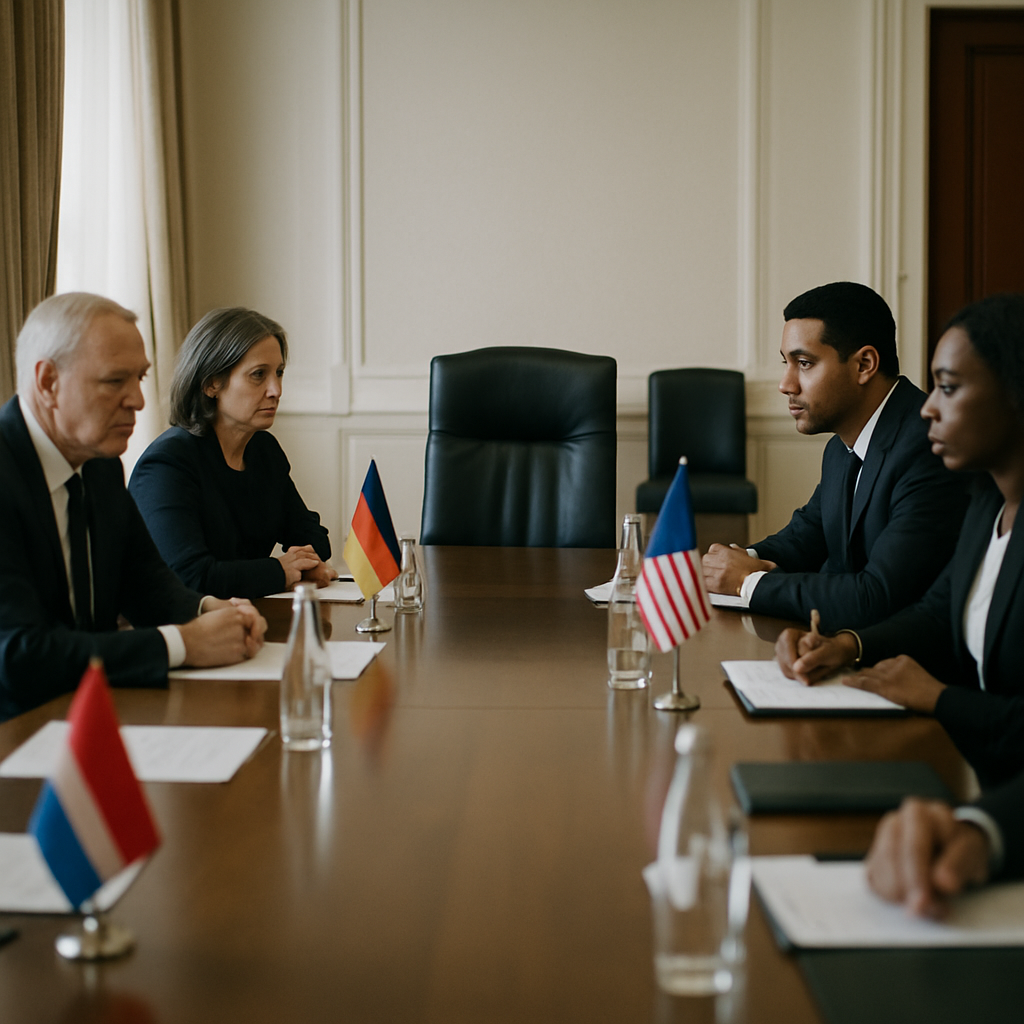
The Islamabad talks followed a fragile two-week ceasefire and placed Pakistan in an uncommon mediating role usually played by Oman, Qatar, or Switzerland. Publicly, the failure to reach a deal has been explained as Iran not being ready to negotiate. Quwa's reporting offers a different, sharper diagnosis: the United States misread who in Iran actually held the authority to make a deal. The senior IRGC leadership that had been the hidden backbone of major U.S.-Iran negotiations for two decades was largely gone after Operation Epic Fury, leaving visible pragmatist diplomats — named in the source as Iraqchi and Gharibabadi — who retain visibility but no longer command the IRGC machinery beneath them. The result: interlocutors Washington recognizes were present in Islamabad; the de facto decision-makers were not.
Operation Epic Fury and the Decapitation of Iran’s pragmatist class
Quwa describes Operation Epic Fury as doing more than degrading military infrastructure: it "systematically wiped out the senior leadership of the Islamic Revolutionary Guard Corps (IRGC)." That leadership had served as the pragmatic layer that could translate diplomatic concessions — sanctions relief, economic normalization — into political value. With that layer removed, the structural conduit for Washington-facing diplomacy has frayed, undermining past negotiation dynamics exemplified by the Joint Comprehensive Plan of Action (JCPOA) era.

Audit-ready is a season. It shouldn't be.
Evidence in spreadsheets, controls drifting between audits, frameworks multiplying on flat headcount. Nubivance runs continuous compliance on Rapid7 Cyber GRC - SOC 2, HIPAA, ISO 27001, PCI, CMMC.
End the scrambleThe rise of regionalized IRGC war heroes and a shifting legitimacy
Before the conflict, the IRGC had adopted a doctrine of devolved authority so Iran could continue to function even if senior leaders were destroyed. That doctrine produced an unexpected outcome: younger officers at the one- or two-star level emerged as regionalized war heroes who draw legitimacy from grassroots opinion within their jurisdictions. Quwa's analysis emphasizes that this is a qualitatively different political position from the JCPOA-era leadership, which needed sanctions relief and economic rewards. The new generation's claim to authority — being perceived as having "held the line" — is, according to the source, incompatible with returning to negotiations on Washington's terms.
General Asim Munir, JD Vance and Pakistan’s missed pricing of leverage
Washington's outreach to Islamabad — highlighted by General Asim Munir's reception at the White House and the "JD Vance angle" — reflected a belief that Pakistan had the credibility, IRGC backchannels, and geography to introduce a new Iranian power structure to U.S. interlocutors. Quwa argues Pakistan failed to convert that leverage into durable concessions. Islamabad secured the seat at the table but did not attach a price to its mediation, a pattern the source links to earlier hesitation over a Saudi defence pact. The window remains open but, as the source warns, windows like this rarely stay open for long and the next serious U.S.-Iran engagement may not run through Islamabad.
Tying the Gulf to India: pipelines, surcharges, and maritime posture
Quwa offers a concrete pathway Pakistan could have pursued: convert Iran–Gulf positioning into leverage against India. With the Indus Water Treaty described in the source as having "collapsed" in any meaningful sense, Pakistan lacks an instrument to credibly push back if India weaponizes water flows. Extending the Iran–Pakistan pipeline through Pakistani territory toward India, with a Pakistani-controlled surcharge, would create a structural lever Islamabad could use when water becomes contested. The same logic applies to maritime energy transit through the Arabian Sea: Pakistan's geographic position could be converted into rent and deterrence simultaneously — but only if Islamabad builds the force structure to back it.
The Maritime Foundation: procurement and presence
Quwa stresses that energy-transit leverage depends on a Navy capable of peacetime grey-zone enforcement, sustained presence, and credible interdiction. Pakistan's surface combatant procurement over the past two decades shows awareness of this requirement, the source notes, but the critical question is whether procurement can scale fast enough to make Arabian Sea presence a credible enforcement posture rather than merely a flag-showing exercise. Without that maritime foundation, the transactional benefits of mediation and energy transit proposals remain theoretical.
What this means for Pakistan, the United States, and Iran
- Pakistan: Islamabad has a fleeting diplomatic opening tied to geography and networks; converting it into leverage requires explicit pricing of mediation, expedited maritime procurement, and concrete energy-transit arrangements such as pipeline routing or surcharge mechanisms.
- The United States: Washington's assumption that visible pragmatists equate to negotiating authority proved unreliable; future engagement will need recalibrated expectations about who in Iran makes strategic decisions and how to reach them.
- Iran: The IRGC's devolved-authority model produced new regionalized leaders whose grassroots legitimacy makes them resistant to the bargain structure that underpinned earlier deals reliant on sanctions relief.
Quwa's reporting frames the Islamabad talks as an early stress test of the Look West thesis — Pakistan's strategic turn toward deeper Gulf and regional integration — and finds the test mixed. The country earned a rare seat but, the analysis concludes, did not yet convert that access into durable leverage. For now, the diplomatic opening remains available but fragile, and whether Islamabad chooses to attach a price to its mediation will determine whether this moment becomes a strategic dividend or a squandered opportunity.