"routine passing exercise," the Indonesian navy said — words that both described the manoeuvre and, inadvertently, set off a diplomatic debate about meaning and intent.
The August 12 encounter: KRI I Gusti Ngurah Rai and the Chinese frigate Honghe
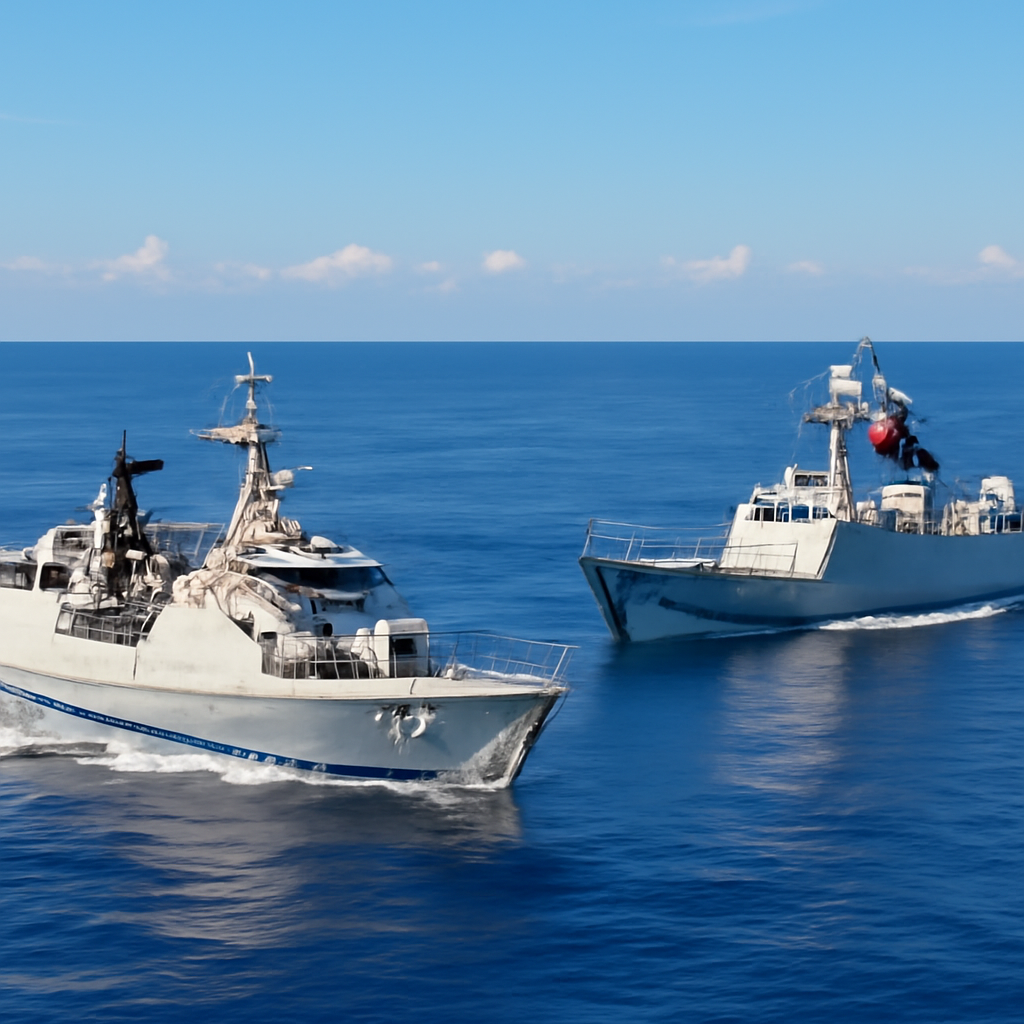
On 12 August, the Indonesian frigate KRI I Gusti Ngurah Rai conducted a passing exercise with the Chinese navy frigate Honghe roughly 130–150 km east of Taiwan. Indonesian officials said the activities included communications, formation manoeuvring and replenishment at sea, and stressed the interaction was unrelated to warfighting. Jakarta framed the encounter as part of the frigate's return voyage from exercises in Russia and noted similar passing exercises were planned along that return route with Japan and the US Seventh Fleet.
How Beijing and Taipei framed the same moment
Beijing announced and framed the encounter in a very different register, presenting the interaction as a joint navigation exercise in waters east of Taiwan and situating it within its broader claim to sovereignty over the island. Taipei responded by condemning what it called political manipulation designed to create a false impression of Chinese jurisdiction over its eastern waters. Taiwanese military intelligence, however, described the Indonesian ship as simply transiting home and noted it posed no direct threat — a restrained assessment that reflected recognition of Jakarta’s declared intent.

Audit-ready is a season. It shouldn't be.
Evidence in spreadsheets, controls drifting between audits, frameworks multiplying on flat headcount. Nubivance runs continuous compliance on Rapid7 Cyber GRC - SOC 2, HIPAA, ISO 27001, PCI, CMMC.
End the scrambleIndonesia’s concurrent US ties and wider defence activity
The passing exercise with China occurred even as Indonesia was conducting other bilateral activities with the United States. Indonesian and US marines began their annual Platoon Exchange in Lampung on 12 August, and the Indonesian Army is hosting Ksatria Warrior 2026 in South Sumatra with US Army Pacific. The public announcement of the east-of-Taiwan interaction also came shortly after US Under Secretary of Defence for Policy Elbridge Colby visited Jakarta to discuss deeper defence cooperation with Defence Minister Sjafrie Sjamsoeddin. More broadly, Indonesia’s defence relationship with the United States includes regular exercises, military education and training, and increasing operational cooperation; Super Garuda Shield has evolved from a bilateral army exercise into a major multinational activity involving US, Indonesian and partner forces in combined field training, airborne operations and live-fire activities.
Judgement failure, not an alignment shift
The episode, as reported, should not be read as evidence that Indonesia is tilting toward China or quietly revising its position on Taiwan. Indonesia conducts military exercises with China while simultaneously deepening military cooperation with the United States, Australia, Japan and other partners, and maintains substantial unofficial economic and people-to-people ties with Taiwan. That pattern reflects Jakarta’s stated preference to preserve strategic autonomy and avoid formal alignment.
The core critique is operational and strategic: if Jakarta genuinely regarded the encounter as unremarkable, the more troubling inference is a lack of anticipatory guardrails. China anticipated the optics, announced the meeting in advance and attached a political meaning to it. Engaging with China is not inherently problematic for a non-aligned policy, but interactions in politically sensitive areas — exercises around Taiwan, activities in contested waters, or communiqués touching sovereignty — require limits and clear boundaries to avoid being reframed by others.
What this means for Indonesia, Taiwan, and the United States
- Indonesia: Will need to clarify rules of engagement and public communications around naval encounters in politically sensitive waters so third parties cannot easily supply political meaning after the fact; strategic autonomy is more credible when its boundaries are defined in advance.
- Taiwan: Has signalled concern about Beijing's public framing but applied restraint in its operational assessment, treating the Indonesian ship as a non-threatening transit; Taipei will likely continue to distinguish intent from optics in similar incidents.
- The United States: Continues to have an institutionalised defence relationship with Indonesia — exemplified by Platoon Exchange, Ksatria Warrior 2026 and Super Garuda Shield — and will watch Jakarta’s handling of dual engagements as it pursues deeper cooperation discussed during Elbridge Colby’s recent visit.
The diplomatic ripple from a single passing exercise demonstrates how routine naval diplomacy can be transformed into strategic messaging when encounters take place in sensitive waters. For Indonesia, the immediate task is administrative and political: codify the limits of engagement, anticipate likely external framings, and make transparent choices about where and how its ships operate so that strategic autonomy cannot be undermined by others’ interpretations.
Source: Indonesia’s China exercise was a judgement failure, not an alignment shift — The Strategist