“The defense relationships of the future will be about technology and trust, not just about platforms,” India’s Defense Minister Rajnath Singh said at an event and demonstration in Jodhpur on October 10.
The fly‑past over Jodhpur: a photographed paradox
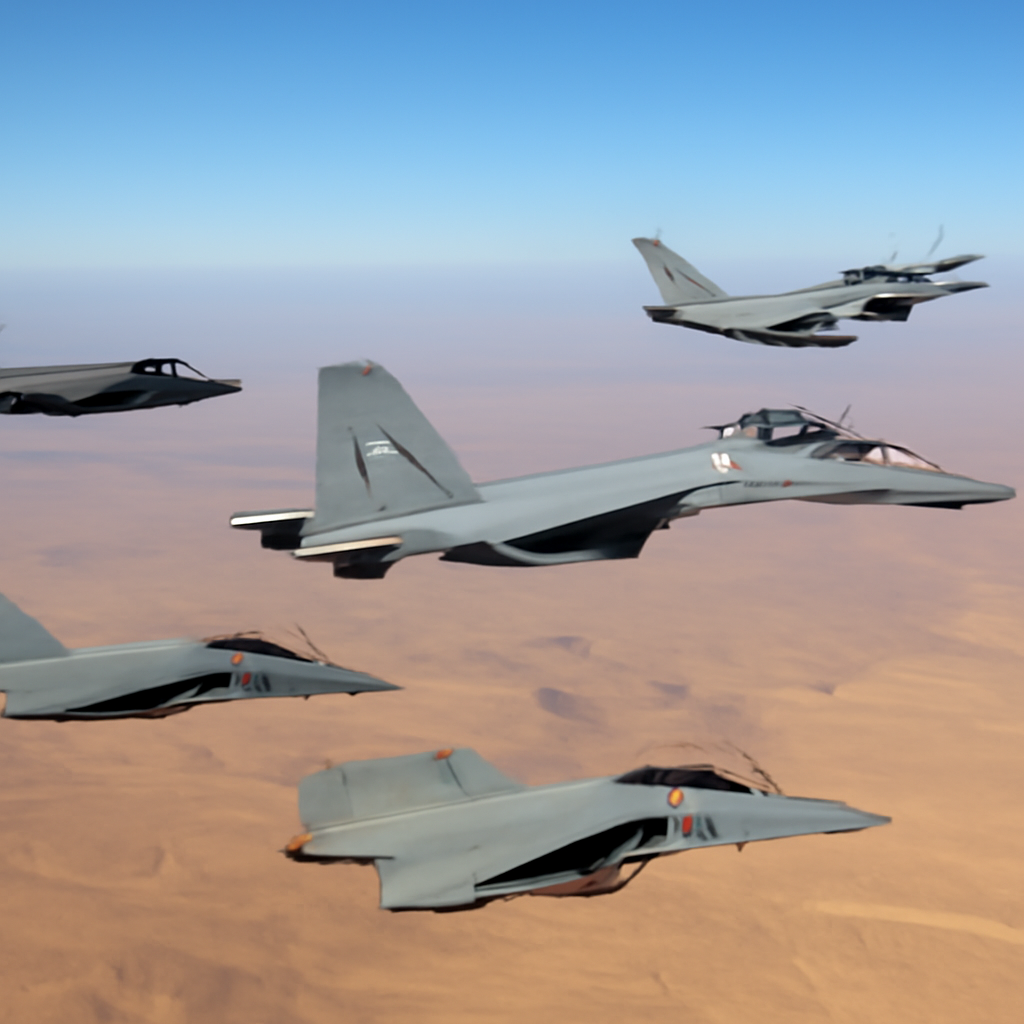
A single formation on October 10 made that point visually: an arrow‑shaped fly‑past with an Indian Air Force Su‑30MKI (Russian origin) at the center, flanked on one side by a U.S. F‑35 and an Indian Light Combat Aircraft (LCA), and on the other side by a French Rafale and a United Arab Emirates F‑16. The Diplomat characterized the formation as “impressive,” emphasizing the breadth of technology and firepower present.
Tarang Shakti: scale, participants, and sorties
Tarang Shakti, a biennial exercise now in its second edition, ran at Jodhpur from September 26 to October 12 under the theme “Power in Partnership.” The Indian Air Force hosted seven partner air forces — Australia, Bangladesh, France, Germany, Sri Lanka, the UAE, and the U.S. — who deployed aerial assets, while 32 other nations participated as observers. According to an IAF official cited in a post‑exercise brief, Tarang Shakti generated more than 800 sorties and 600 flying hours.
Contributions included six U.S. F‑35A Lightning IIs and one KC‑135R Stratotanker deployed by U.S. Pacific Air Forces with “over 200 personnel,” and a French detachment of four Rafales, three A330 Phoenix aerial refuellers, two A400M transport aircraft and 300 personnel as part of the Pegase26 mission that traversed multiple regions on a long‑range deployment.

This site is the portfolio.
OSINTSights runs on Cloudflare Workers, D1, R2, and Vectorize, with an AI pipeline on Hetzner ARM. Nubivance designed, built, and operates it. We do the same for clients.
See what we buildInteroperability, technology sensitivity, and operational lessons
Exercise planners framed Tarang Shakti as a means to “enhance mutual understanding of tactical air power application, strengthen interoperability,” and foster integrated air operations, joint administration, logistics support and maintenance coordination, according to an event handout. But interoperability proved complex in practice: U.S. F‑35s participated in the war games while remaining physically inaccessible to other participants, a precaution noted in reporting and referenced by Air Chief Marshal Amar Preet Singh at a press conference. Singh jokingly pointed out that U.S. personnel “don’t even let us go near the aircraft, and you talk about selling it to us.”
Tarang Shakti also included subject matter exchanges. The host briefed visitors on Operation Sindoor of May 2025; Exercise Director Air Vice Marshal Raj Thakur called Sindoor “one of the remarkable operations carried out by India,” and said there was strong interest among participants in the lessons presented.
U.S. Ambassador in India Sergio Gor described the F‑35 presence as “another example of trust” between the two countries, while Gen. Kevin Schneider, U.S. Pacific Air Forces Commander, emphasized exercises as groundwork for uncertain futures — humanitarian assistance, disaster relief, or other contingencies — citing a broader set of regional exercises including Pitch Black and Red Flag Alaska.
Back‑to‑back engagements: the crowded Indian military calendar
Tarang Shakti fit inside a dense diplo‑military schedule. The India‑U.S. bilateral Army exercise Yudh Abhyas ran September 15–27 in high altitude terrain at Auli, Uttarakhand and at Mahajan Field Firing Range in Rajasthan, with 600 personnel from each side and live use of systems including U.S. HIMARS and Indian Pinaka rocket systems. Other army exercises since July included bilateral wargames with Thailand (Maitree‑XV), Mongolia (Nomadic Elephant), Kazakhstan (KAZIND) and the UAE (Mountain Guardian), the last of which was set to conclude on October 18.
The Indian Navy logged at least eight engagements, including the annual Indra exercise with Russia that began at Vladivostok October 13–18 and Exercise IBSAMAR off South Africa with Brazil and South Africa. The IAF participated in bilateral drills with Japan (Veer Guardian) and Malaysia (Udara Shakti) and joined the multilateral Pitch Black hosted by Australia from July 7 to August 7. The Indian Coast Guard led SAREX‑2026 off Odisha on October 8 with 32 observers from 30 countries, and undertook a multinational sail to Perth with embarked sea riders from India, Japan, Australia and the U.S.
What this means for the U.S. Pacific Air Forces, the Indian Air Force, and the Indian Navy/Coast Guard
- U.S. Pacific Air Forces: Demonstrated deployability and selective sharing of advanced platforms — six F‑35A and a KC‑135R with over 200 personnel — while maintaining controls over sensitive hardware; publicly framed participation as a signal of trust, per Ambassador Sergio Gor.
- Indian Air Force: Used the exercise both to operate alongside a broad spectrum of partner platforms and to present recent operational experience, notably Operation Sindoor; Air Chief Marshal Amar Preet Singh highlighted the balance between learning and protecting sensitive operational details.
- Indian Navy / Indian Coast Guard: Continued a high tempo of maritime engagements — Indra (Vladivostok), IBSAMAR, the Quad logistics tabletop and coast guard sailings — and expanded observer participation in SAREX‑2026, reinforcing the maritime dimension of India’s military diplomacy.
Tarang Shakti, in context, was less an isolated demonstration than a node in a year‑round network of exercises. Between the fly‑past over Jodhpur and concurrent drills from Vladivostok to South Africa and Australia, the record in late 2026 registers both deepening interoperability and persistent sensitivity around advanced technology — a combination the exercise’s planners and participants described as emblematic of “technology and trust” shaping defence relationships going forward.
Source: The Diplomat — Exercise Tarang Shakti: A Mirror to India’s Multipronged Engagements