"Let me be clear that we cannot fight the next war like we fought our last," said late General Bipin Rawat in 2018.
What was raised on July 1
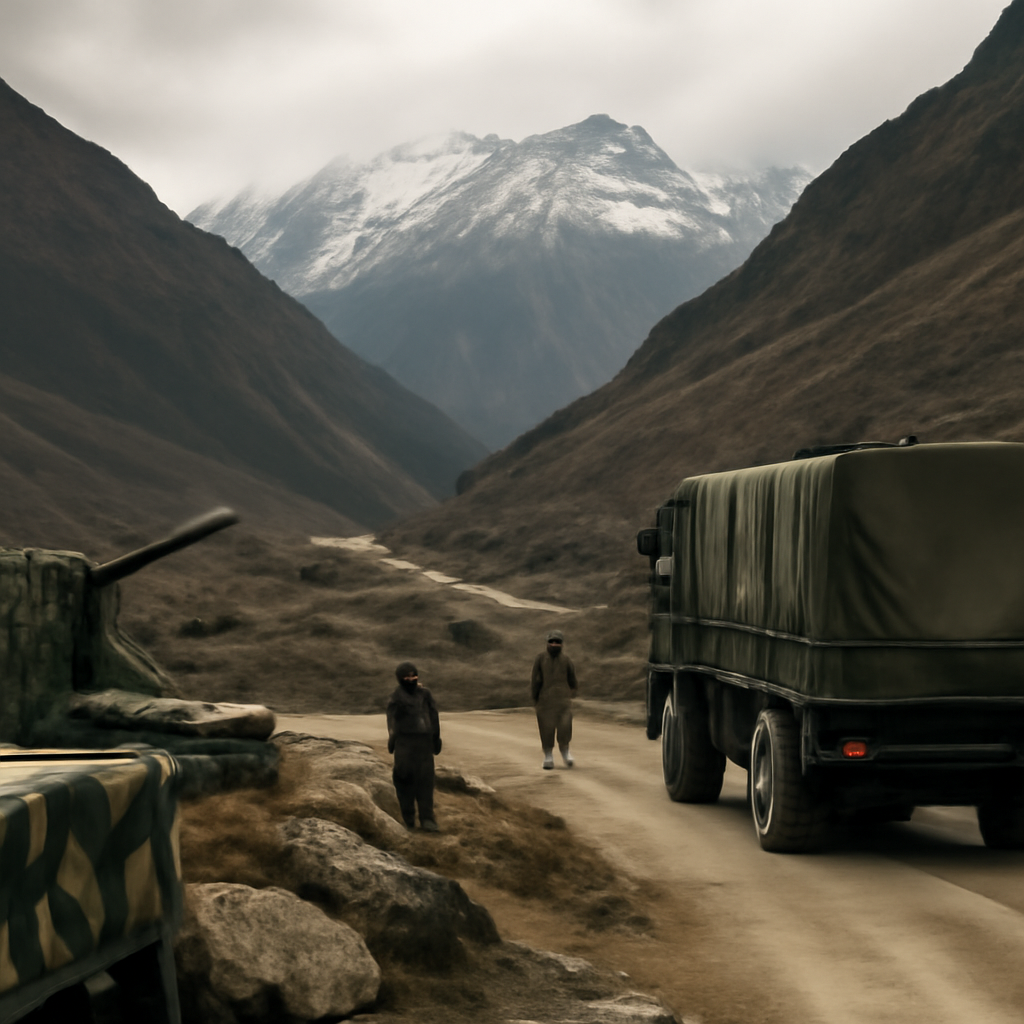
On July 1, the Indian Army formally raised the first five Integrated Battle Groups (IBGs) and a single Fire Support Group equipped with long-range firepower. These new formations were placed under the Eastern Command’s 17 Mountain Strike Corps, facing China, and are located in the states of Arunachal Pradesh and Sikkim. The service described the move as enabling a "blitzkrieg option" and said the overall process of raising IBGs is expected to take a year to complete. Officials also said that IBGs will eventually be created in other sectors.
Structure, readiness, and doctrinal grounding of an IBG
An IBG is designed to be an agile, self-sufficient strike formation. Each IBG is roughly 5,000 personnel — larger than a typical brigade and smaller than a division — and is headed by an officer of major-general rank. The formations are intended to mobilize on short notice, typically within 12–48 hours, and to include integrated elements: infantry, armor, artillery, air defense, logistics and other support arms. Officials have said each IBG would be tailored on three Ts — Threat, Terrain and Task. The Indian Army’s Land Warfare Doctrine 2018 also states that when forced to prosecute a conventional war, combat operations will function as IBGs under the command of a combined arms operational headquarters.
Why the east first: terrain, history, and the LAC
Although initial thinking on IBGs was heavily focused on Pakistan, the first IBGs have been raised on the eastern front against China. The 3,488‑km Line of Actual Control (LAC) between India and China is divided into three sectors; the eastern sector comprises Sikkim and Arunachal Pradesh. The mountainous topography of the region — which makes rapid massed mobilization difficult — is a key driver for formations that provide maneuverability for quick, shallow ingress to hold territory in case of “misadventure” by the People’s Liberation Army (PLA). The decision to concentrate initial IBGs on the eastern axis underscores where the Army perceives its biggest threats.
IBGs as an upgrade to "Cold Start" and as part of broader reforms
IBGs formalize and upgrade a long-discussed concept known as "Cold Start." That doctrine emerged after the mobilization problems of Operation Parakram following the 2001 terrorist attack on the Indian Parliament, when strike formations took weeks to move and lost the element of surprise. Cold Start was acknowledged publicly by General Bipin Rawat in January 2017. The IBG concept has been test‑bedded and validated in exercises under the Yol‑based 9 Corps on the Western front and the 17 Mountain Strike Corps. Senior officers have framed the new formations as part of a broader shift away from large-scale manpower mobilization toward faster, more precise and integrated options. The Army has also rolled out Rudra Brigades, Bhairav Battalions, Shaktibaan drone regiments and Divyastra drone batteries for the Regiment of Artillery in the period after Operation Sindoor in May 2025. In September, then‑Lieutenant General Dhiraj Seth — now the Army chief — observed that with the Rudra brigade “the time has come to change the cold start to cold strike one.”
How the Indian Army, the People’s Liberation Army, and the government are positioned
- The Indian Army: With a formal government sanction letter now issued, the Army has commenced the process of raising IBGs, beginning with five formations and a Fire Support Group under the 17 Mountain Strike Corps. The service expects the build‑out to take about a year and has already used IBG concepts in exercises.
- The People’s Liberation Army (PLA): IBGs are organized on lines similar to the PLA’s Combined Arms Brigades (CAB), created as part of the PLA’s 2017 reforms; CABs of roughly 5,000–6,000 personnel have been deployed in Tibet facing Eastern Ladakh since the 2020 standoff.
- The government and the bureaucracy: The program’s formal sanction was delayed for years — in January 2025, then‑Army Chief Gen. Upendra Dwivedi said “wherever the bureaucracy gets involved, it will take time” and that the Army was hopeful of either creating or cancelling the IBG project by 2025. With the sanction now in hand, the bureaucratic step to proceed has been taken.
The IBG decision crystallizes a strategic choice: to institutionalize faster, combined‑arms strike options in terrain that once favored slow, deliberate mobilization. The first five IBGs and the Fire Support Group are both a tactical answer to the mountain challenges of Arunachal Pradesh and Sikkim and a doctrinal answer to the long-running aim of preserving conventional options under the region’s unique escalation dynamics. Implementation will unfold over the next year as the Army moves to replicate the model in other sectors and to weave these formations into broader structural reforms that senior leaders have advanced.