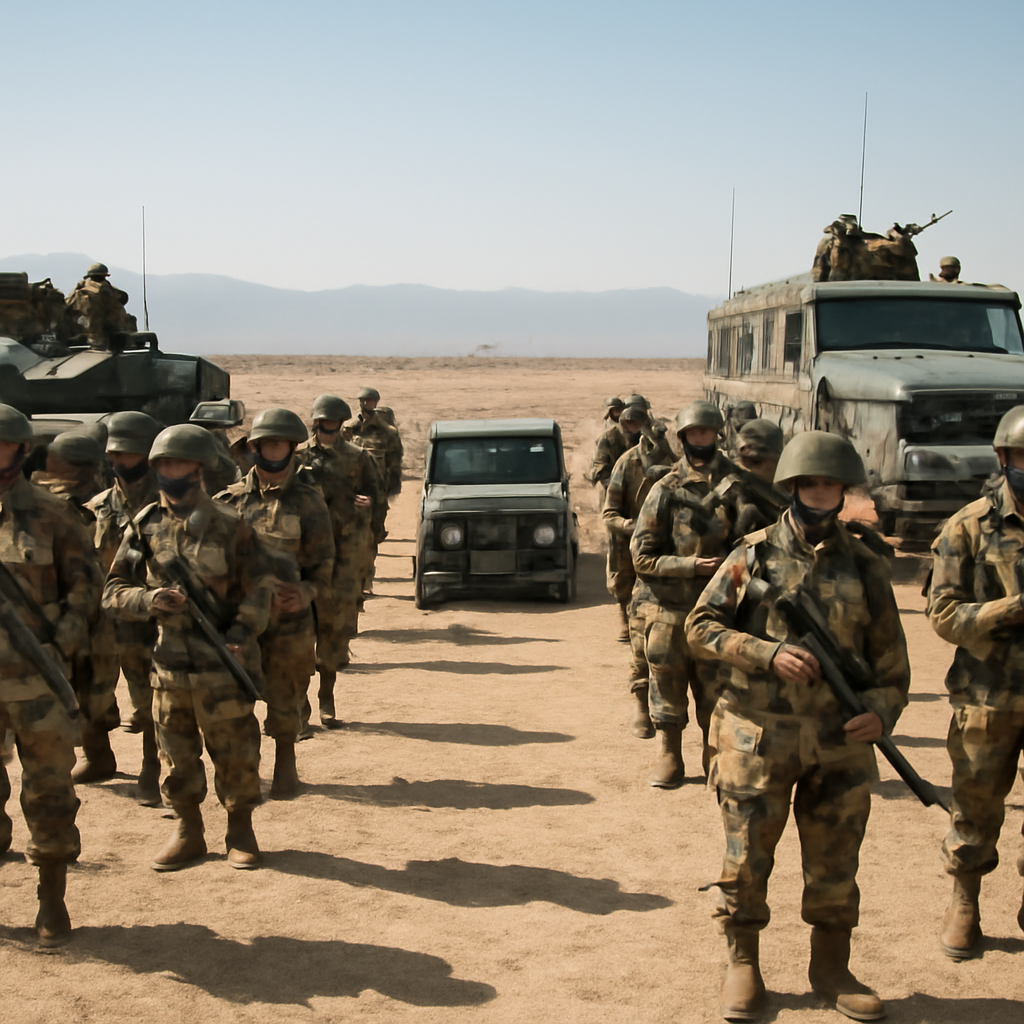
Each new Integrated Battle Group will number roughly 5,000 to 6,000 troops, according to the way the Indian Army has described the formation’s intended scale.
Integrated Battle Groups: size, command, and composition
The Indian Army has announced the operationalization of the first batch of long‑planned Integrated Battle Groups (IBGs). Conceived under the limited‑war thinking that grew from the Cold Start Doctrine and first floated in 2004, an IBG is modeled on the Soviet Operational Maneuver Group (OMG) and designed as a mobile, combined arms formation. Its exact make‑up will vary by terrain, but the institutionally quoted manpower range is approximately 5,000–6,000 personnel—roughly the size of two conventional brigades.
Reports in Indian media, the army’s public statements, and the analysis reviewed by this report indicate there is no single, publicly confirmed command arrangement yet. Because an IBG is nearly the size of two brigades, it is expected that a major general would exercise operational control, with a brigadier possibly serving as the chief operations officer. The stated rationale for assigning a major general is to reduce operational and bureaucratic friction and to allow an IBG commander to coordinate in real time with higher headquarters.
Rudra brigades and why IBGs were chosen
The IBG decision follows an earlier move to create Rudra brigades—smaller, agile formations with a sanctioned strength of about 3,000 personnel. After standing up at least two Rudra brigades, the Indian Army identified structural shortfalls in the Rudra concept for some mission profiles. The army concluded that desert and plain assaults in places such as Rajasthan and Punjab require larger mechanized forces capable of dislodging entrenched defenses, and that Rudra brigades were too small to sustain such operations.
Mechanized offensive operations also bring logistical burdens: substantially greater petroleum, oil, and lubricant (POL) consumption, faster ammunition expenditure, and the need for specialized equipment to clear minefields before major assaults. Those supporting requirements, the source material explains, create demand for extra troops in supporting roles—needs the Rudra brigade structure cannot fully meet. The Indian Army therefore shifted back toward an IBG design it judged better suited to decisive mechanized action.

This site is the portfolio.
OSINTSights runs on Cloudflare Workers, D1, R2, and Vectorize, with an AI pipeline on Hetzner ARM. Nubivance designed, built, and operates it. We do the same for clients.
See what we buildPanagarh-based Mountain Strike Corps XVII and the initial rollout
The first IBG will be carved out of the Panagarh‑based Mountain Strike Corps XVII in West Bengal, the army has said. The current plan—described as an initial phase—calls for four IBGs to be raised along with a fire support group (FSG). The first IBG has already been rolled out; the remaining three are likely to be established in the coming months, according to the same accounts.
Those rollouts are positioned as the opening steps in a broader pivot toward rapid‑response, independently operating formations. The Indian Army’s stated aim is to create more fighting formations capable of acting autonomously and in coordination with higher command in real time.
Fire Support Group, logistics, and mechanization requirements
A dedicated fire support group (FSG) will accompany the IBGs in the initial phase and play a key operational role. The FSG is described as the mechanism to bring to bear towed and self‑propelled rocket artillery assets and long‑range loitering munitions to provide additional fire support for advancing IBGs.
Because IBGs are mechanized and designed to conduct rapid assaults, they require larger stocks of POL, faster ammunition resupply, and mine‑clearing capabilities before operations begin. Those logistical and specialized‑equipment needs are part of the army’s reasoning for preferring IBGs for larger offensive tasks rather than the smaller Rudra brigades.
How New Delhi, Islamabad, and the Indian Army are affected
- New Delhi: The Indian political and defense leadership retains an explicit option to authorize ground offensive action in a crisis. The reporting links the IBG concept to the objective of preserving an operational edge over Pakistan and keeping conventional options open beyond non‑contact warfare such as fighter strikes, stand‑off weapons, and drone use.
- Islamabad: Pakistan is expected to monitor the IBG rollout closely and to respond by diverting resources—during crises or peacetime—to strengthen defenses, hold in‑field exercises, and induct new weapons to counter a potential ground invasion, according to the analysis.
- The Indian Army: The army foresees Rudra brigades remaining in service but repurposed as shorter‑duration rapid‑response units to repel attacks and prepare the ground for incoming IBGs or strike corps formations.
The operationalization of IBGs is being presented by New Delhi as a bid to preserve conventional options under what the army calls the nuclear overhang: formations that can make shallow penetrations into Pakistani territory on short notice. But the source material also warns that creating this expanded conventional capability may erode existing deterrence; it could act as a catalyst that risks escalation, even to the point of spiraling beyond New Delhi’s control into an all‑out nuclear conflict. The first IBG’s arrival is therefore both a tactical development and a strategic pivot with implications that Islamabad—and New Delhi—will be compelled to manage in the months ahead.