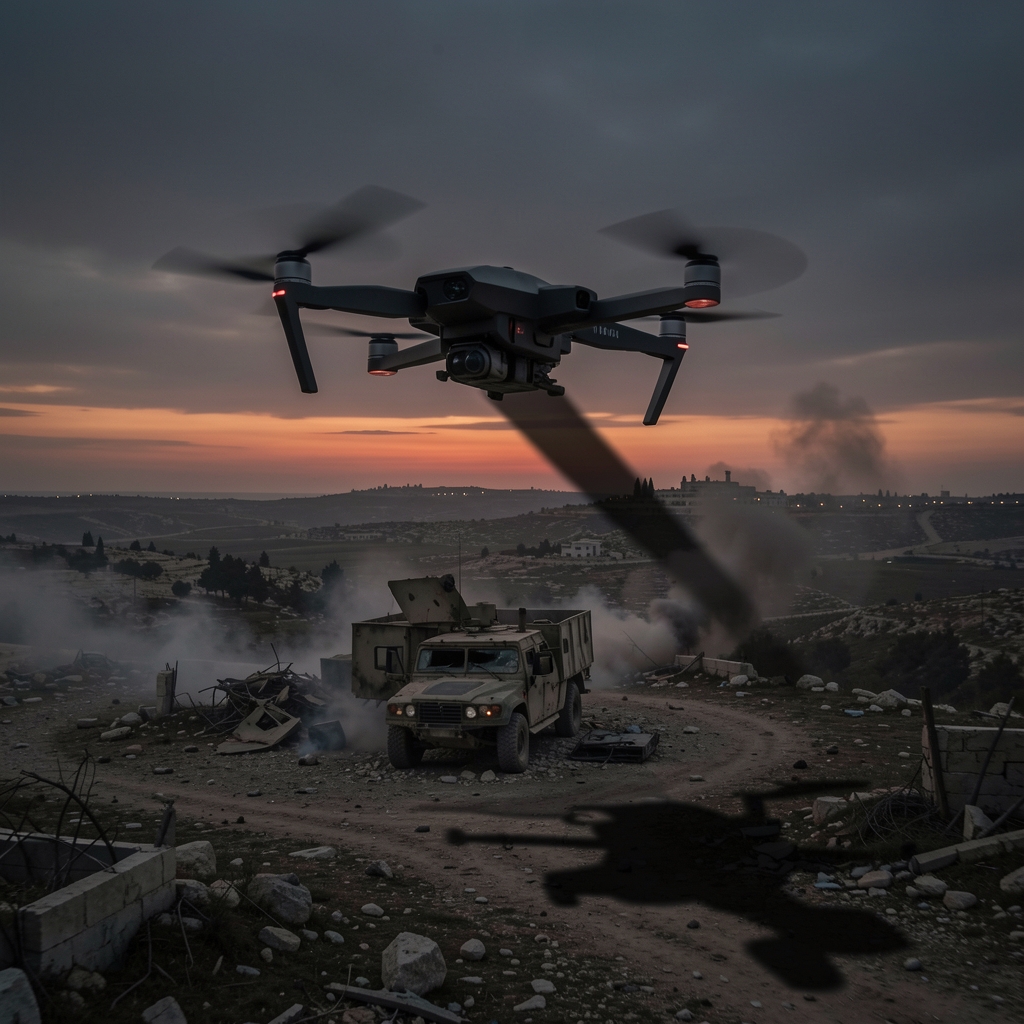
As ground operations push farther into Lebanon, the landscape of the conflict is changing in one clear way: it is creating new opportunities for unmanned attack. That is the central observation in a recent report by The War Zone, which says that as Israel drives deeper into Lebanon it is “presenting more targets for Hezbollah's FPV drones.”
What the report says
The War Zone post notes a direct link between deeper Israeli penetration into Lebanese territory and increased targeting by Hezbollah's FPV drones. In short, expanded ground presence appears to correlate with expanded exposure to a class of small, maneuverable attack drones that the report identifies as FPV — first-person-view — systems.
Context and immediate implications
The connection drawn in the report is straightforward: moving forces into new terrain creates additional physical targets. According to The War Zone, that shift in target geometry is already being exploited by Hezbollah’s FPV drone activity. The practical implication offered by the reporting is that operations that extend lines of advance or increase concentration of personnel and equipment can change the risk calculus when adversaries employ small, agile unmanned systems against them.

The cyber insurance questionnaire just landed. Now what?
SOC 2, HIPAA, insurance renewals - someone has to own security strategy. Nubivance provides fractional CISO leadership without the full-time salary.
Get a security leadWhy technologists, policymakers and operators should pay attention
- For technologists: the report highlights an operational environment where low-signature, highly maneuverable FPV drones find value. That suggests demand for detection and defeat tools optimized for small, fast aerial threats, and for tactics that mitigate exposure when forces concentrate or advance into denser risk areas.
- For policymakers and campaign planners: the linkage between force posture and drone threat reinforces a perennial trade-off — territorial gains can bring tactical advantages but also create new vulnerabilities. The War Zone’s account underscores that those vulnerabilities are not abstract; they are immediate and tied to decisions about where and how forces move.
- For operators on the ground and commanders: the report points to the need to anticipate how changes in disposition alter signature, silhouette and sensorability. Increased targets on the ground invite more attention from adversaries employing remote, low-cost platforms that can be employed at distance and with limited warning.
- For adversaries and analysts: The War Zone’s observation confirms the operational utility of FPV drones in contested settings where opposing forces extend their footprint. The pattern described suggests such systems will be brought to bear in proportion to the opportunities presented by enemy movement.
What this matters most for — and the open questions
The War Zone report ties a tactical behavior — deeper penetration into territory — to an observable response: more FPV drone targeting. That raises familiar but important questions about balancing objectives and risks. How will commanders weigh the tactical advantage of advancing against the increased exposure to small unmanned attacks? Will changes in deployment and protective measures alter the attractiveness of targets? The report does not claim answers to those questions, but it does make clear that they are immediate operational considerations.
The exchange documented by The War Zone also highlights a broader dynamic in modern conflict: changes in force disposition can rapidly alter the threat environment when adversaries have access to adaptable technologies. Whether the result is adjustments in tactics, investment in countermeasures, or political reconsideration of operational tempo will depend on decisions beyond what the report details — yet the causal link it draws is unmistakable.
As the situation unfolds, one persistent question remains: when advances open up new targets, who will change course first — the attacker seeking to exploit those openings, or the force that must now defend them?
https://www.twz.com/air/hezbollah-ramping-up-fpv-drone-attacks-on-idf-in-lebanon



