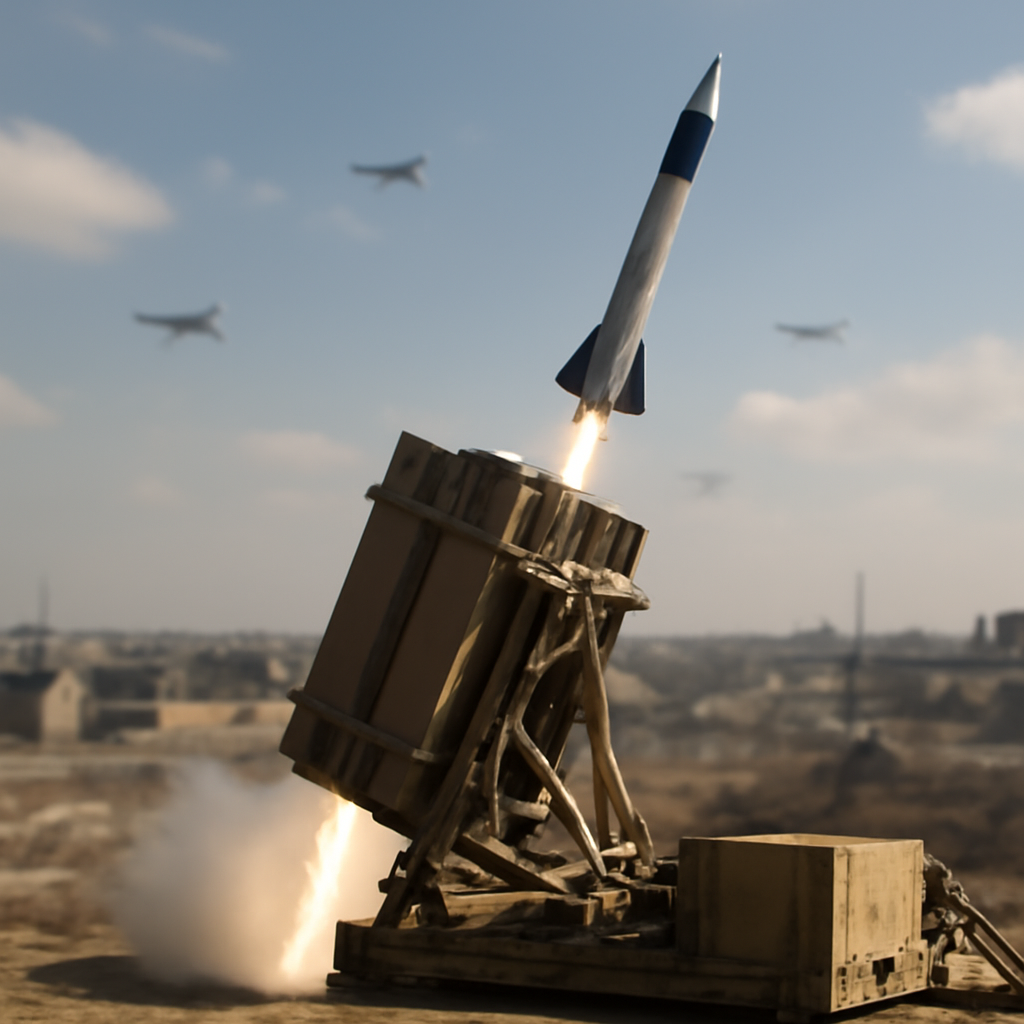
When warnings about foreign threats reappear on the front pages, the question is not only who is threatening whom — it is what framework the government will use to respond. Recent Iranian threats against U.S. targets have refocused public and policy attention on a conspicuous absence: the long-promised doctrine from Sebastian Gorka, the counterterrorism czar.
A promised doctrine that has not appeared
The catalyst for renewed scrutiny is straightforward. Iranian threats against U.S. targets have emerged as a news driver, and that spotlight has, in turn, highlighted that Sebastian Gorka's long-promised counterterrorism doctrine has not been articulated or published. The juxtaposition is simple: vocal, external threats and an internal absence of a stated guiding doctrine.
Why a doctrine matters in moments of heightened threat
A doctrine is more than rhetoric. It establishes priorities, clarifies thresholds for action, signals intent to allies and adversaries, and shapes resource allocation. In the absence of an articulated doctrine from the counterterrorism lead, policymakers and practitioners lack a publicly stated reference point that could guide decisions, communications, and operational planning when confronting threats that cross diplomatic, military, and intelligence domains.

Audit-ready is a season. It shouldn't be.
Evidence in spreadsheets, controls drifting between audits, frameworks multiplying on flat headcount. Nubivance runs continuous compliance on Rapid7 Cyber GRC - SOC 2, HIPAA, ISO 27001, PCI, CMMC.
End the scrambleOperational and strategic implications
The current situation raises a sequence of operational and strategic questions. Without a written or published doctrine tied to the counterterrorism office, there can be ambiguity about escalation ladders, attribution standards, or the balance between defensive measures and preemptive steps. That ambiguity can complicate coordination across agencies, slow decision cycles, and increase the risk of mixed messaging to the public and to partners.
At the strategic level, the absence of a doctrine can affect deterrence. A clear doctrine can function as a deterrent by defining what behavior will provoke what response. Conversely, not having a publicly stated doctrine can create uncertainty that adversaries may try to exploit.
Different perspectives on the gap
- Policymakers: For those responsible for national security decisions, the lack of a declared doctrine complicates deliberation. It forces reliance on ad hoc judgments, preexisting but perhaps informal interagency practices, or classified guidance that may not translate well into public policy statements.
- Technologists and operators: Practitioners who build defenses and run operations typically favor clear, consistent guidance. A missing doctrine can complicate prioritization for cyber defenses, intelligence collection, and protective measures for critical infrastructure.
- Users and the public: Citizens and impacted organizations look for clarity about risk and protective steps. The absence of an articulated doctrine can erode public confidence in the government’s ability to manage sustained threats.
- Adversaries: Threat actors often probe for ambiguity. A gap in declared policy can invite testing of red lines or encourage miscalculation about the likely scale or type of response.
Communications and credibility at stake
Communications play an outsized role when tensions rise. The existence of a doctrine provides a narrative anchor: it explains how decisions will be made and why. Without that anchor, public messaging can appear reactive or ad hoc. That dynamic affects credibility — not only of the individual who promised the doctrine, but of the institutions that are expected to execute and enforce counterterrorism policy.
Practical trade-offs in publishing doctrine
There are legitimate reasons why a full public doctrine might not be immediate. Doctrine can contain sensitive judgments about capabilities, thresholds, or methods that governments may prefer to keep classified. At the same time, a doctrine does not need to expose operational detail to be useful; even high-level principles can reduce uncertainty and aid coordination. The balance between transparency and operational security is a trade-off that must be managed deliberately.
What happens next — risks and questions
The renewed attention prompted by Iranian threats forces decisionmakers to confront the gap. Will the counterterrorism lead publish a doctrine, even if at a high level? Will interagency partners codify interim guidance to fill the vacuum? Or will the government continue to operate without a public anchor, relying instead on classified guidance and informal practices?
The answers matter because they affect how the United States — and other actors watching closely — interpret signals and manage escalatory dynamics. Absent a public doctrine, responses to threats can seem inconsistent, which can complicate deterrence, strain alliances, and create openings for miscalculation.
Iranian threats have done what policy debates and planning documents sometimes fail to do: they have focused attention on the governance tools available to manage risk. The question left hanging is as practical as it is political: if the counterterrorism czar’s long-promised doctrine remains unwritten or unpublished in a moment of heightened threat, who gets to define the rules of the road instead?
Read the original story: https://www.defenseone.com/policy/2026/04/counterterrorism-czar-without-counterterrorism-plan/413004/