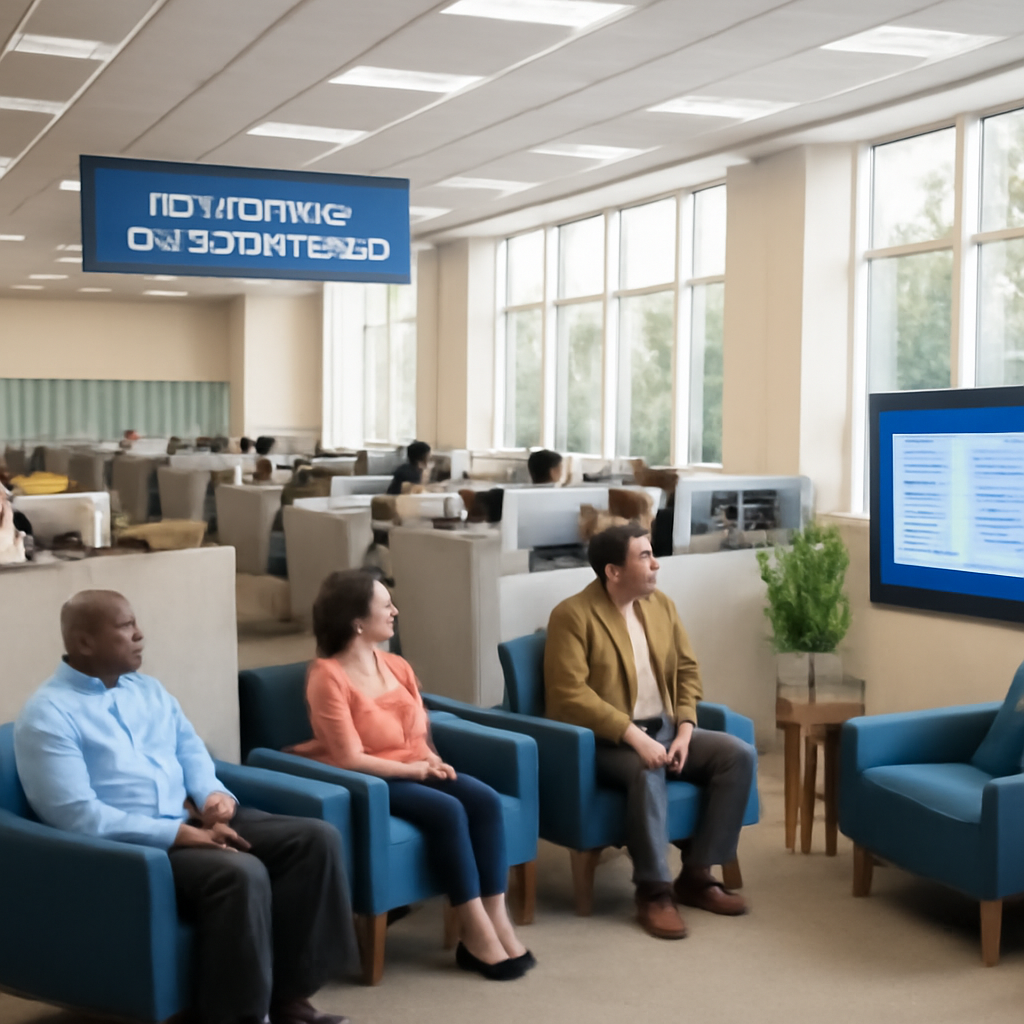
"The Department of Veterans Affairs, and particularly the Veterans Benefit Administration, has a fantastic focus in their service delivery," said Bruce Caswell, President and CEO of Maximus, describing the kind of mission-centered orientation he wants to see across federal contact centers. Caswell framed that remark during a conversation with Francis Rose on Fed Gov Today’s Federal Focus as he argued that government contact centers should become welcoming front doors rather than sources of frustration.
Bruce Caswell’s vision for contact centers
Caswell told Fed Gov Today that Maximus aims to modernize the infrastructure that connects citizens to government, making interactions not only faster and more accurate but more enjoyable for both citizens and federal employees. He described contact centers as "mission-centered front doors for government agencies" where every interaction should move the mission forward and benefit the individual who initiated it.
Building a multimodal digital front door for government
Central to Caswell’s plan is a multimodal platform that blends humanity, technology, and data. Rather than treating contact centers as isolated, transactional hubs, Maximus is building systems where phone, web, chatbots and agency staff are orchestrated so that data and context flow across channels. The intended result is that answers or services are delivered "in a timely manner" and that interactions are seamless across modes.

Audit-ready is a season. It shouldn't be.
Evidence in spreadsheets, controls drifting between audits, frameworks multiplying on flat headcount. Nubivance runs continuous compliance on Rapid7 Cyber GRC - SOC 2, HIPAA, ISO 27001, PCI, CMMC.
End the scrambleCustomer insights and the FDA early-warning example
Caswell emphasized that contact centers do double duty: they resolve individual inquiries and generate data that agencies can analyze to improve service delivery. He offered a concrete example for the Food and Drug Administration: if a cluster of calls originates from a specific part of the country related to a product or event, an agency can get an early warning that "there could be an issue related to food safety." In that formulation, contact-center data becomes operational intelligence that supports the agency's mission and public safety.
AI's role and the human-in-the-loop
On artificial intelligence, Caswell was explicit about current and near-term expectations. He said AI's present value lies in streamlining straightforward interactions—making sure "the right information gets to the right person at the right time" and that responses remain compliant with regulatory requirements. But he cautioned that AI will not replace essential human qualities. "I don't think we're going to see the end of human interaction within five years, candidly … Other attributes are not as easily replicated like empathy, judgement, and intuition, and the ability to take a call in a direction where you're … getting to the heart of why the person is calling," he said, underscoring a human-in-the-loop model.
What this means for federal agencies, procurement leaders, and citizens
- Federal agencies: The shift Caswell describes reframes contact centers as mission enablers. Agencies will need to plan for data orchestration across channels and for workflows that prioritize mission outcomes—Caswell used the Veterans Benefit Administration as an example of that focus.
- Procurement leaders and partner organizations: Caswell advised working with trusted partners to bridge legacy systems and future requirements, noting that partnership can "ease concerns and avoid common pitfalls" when migrating to multimodal environments that must endure over time.
- Citizens and federal workers: The intended payoff is practical—shorter waits, more accurate answers, and an experience that both citizens and agency workers "enjoy" rather than dread.
A practical next step: partner for long-term modernization
Caswell framed modernization as both technological and cultural. He urged that agencies begin with the mission—asking whether orchestration and service delivery tangibly benefit the people served—and couple that focus with analytics and selective automation. The combination is meant to deliver speed, accuracy, and continual improvement, while preserving human empathy and judgment where it matters most.
Caswell summarized his priorities in three key takeaways: that contact centers are mission-centered front doors for government agencies; that analyzing, orchestrating, and applying data drives speed and accuracy in citizen interactions; and that "AI is a part of our future, but it will not replace human empathy and judgement."
Read the original conversation and analysis: https://governmenttechnologyinsider.com/its-time-for-citizens-to-enjoy-interacting-with-the-federal-government/



