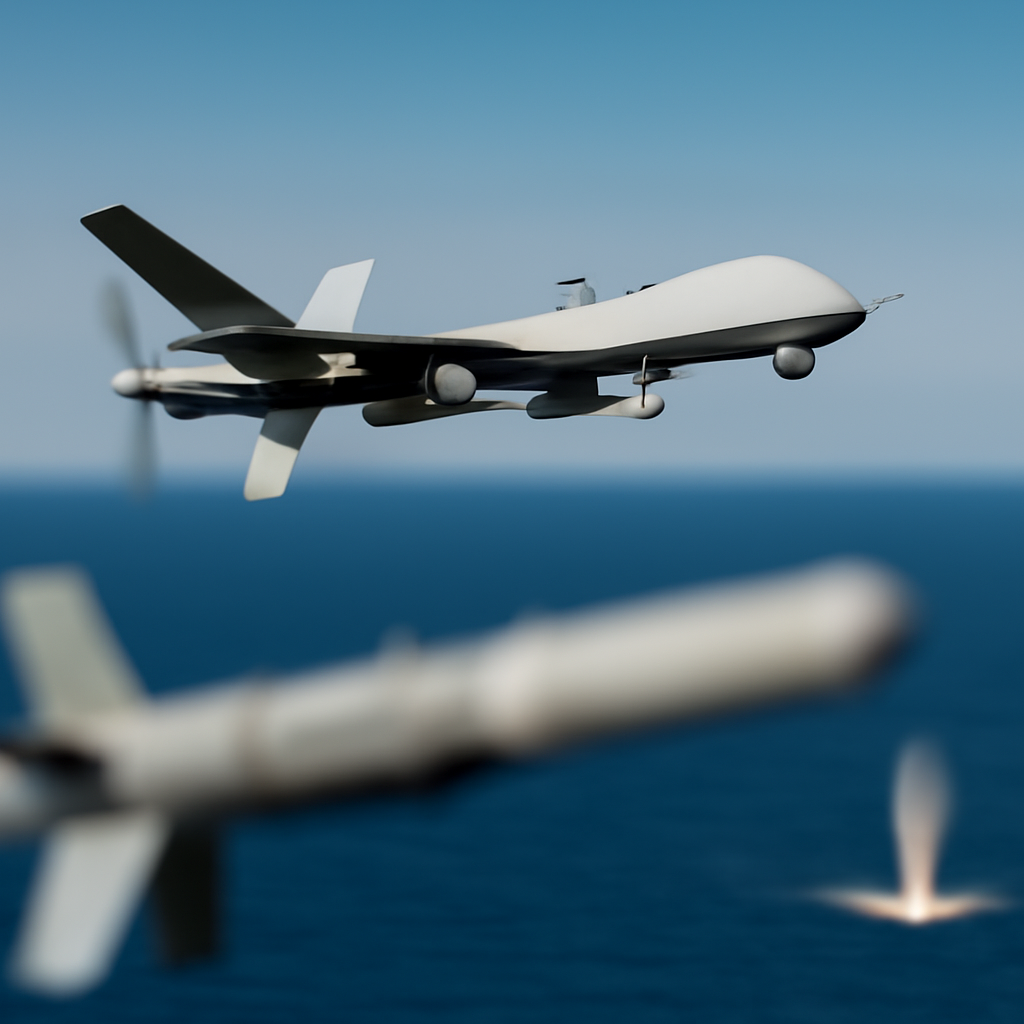
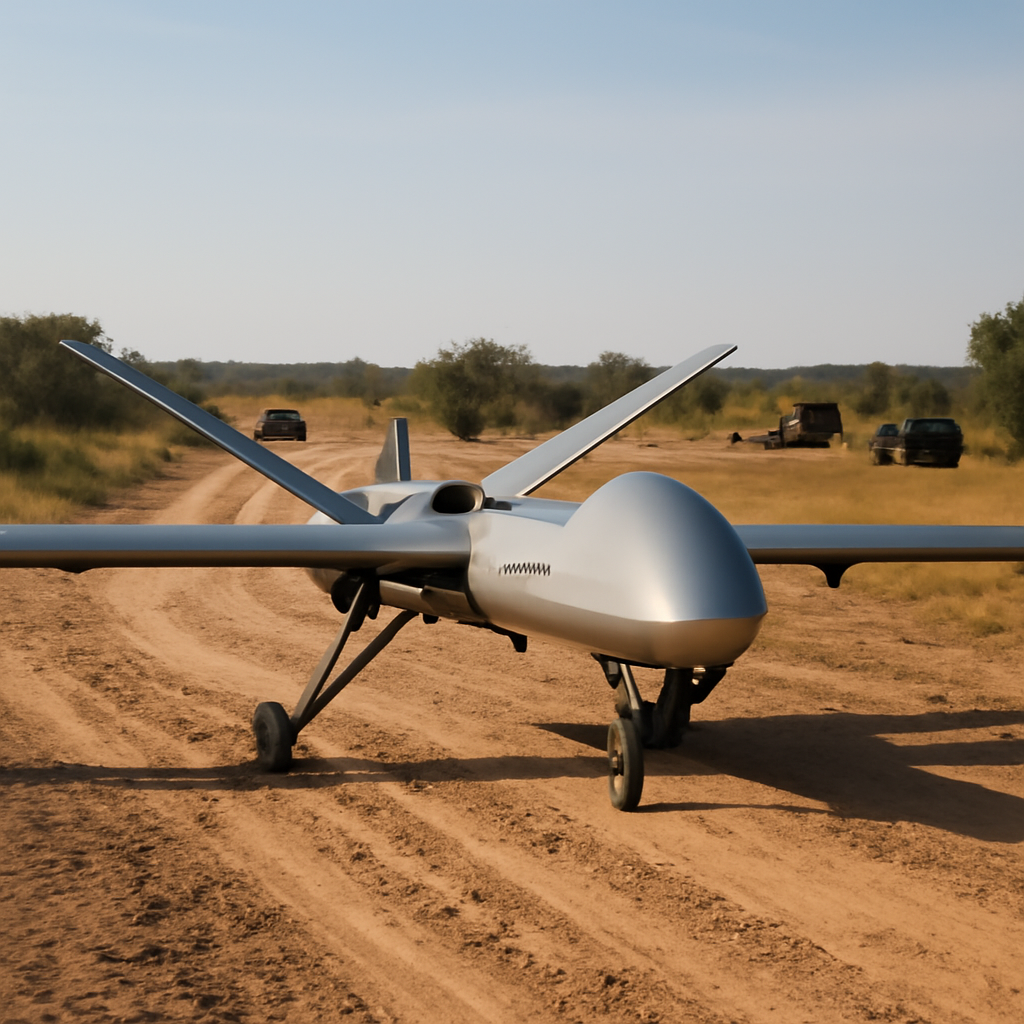
“You’re looking at something that’s effectively an unmanned F-16,” Hermeus CEO Zach Shore said, describing the company’s Mk 2 Quarterhorse as it moves from experimental flights toward operational demonstration.
DIU’s $159 million award and what it covers
The Defense Innovation Unit (DIU) increased its contract with Hermeus by $159 million, raising the contract ceiling to $219 million. According to Hermeus, the award will fund flight tests scheduled for this year and in 2027. Hermeus CEO Zach Shore told Breaking Defense the company is ready to begin work immediately.
The DIU’s military deputy, Air Force Maj. Gen. Joseph Kunkel, is quoted in a Hermeus press release expressing strong support: “If we can mass produce this, then it becomes a game-changing warfighting capability, where we use it as a weapon instead of a test platform, and I think we found a significant number of use cases where it can be used as a weapon.”
Where the Quarterhorse program stands — Mk 1 to Mk 2.3
Hermeus has developed the Quarterhorse through iterative flight tests since the company was founded in 2018. The company flew an Mk 1 version at subsonic speeds last year and followed with a supersonic flight of the larger Mk 2.1 recently. Shore said the Quarterhorse 2.2 is slated to fly this year, and the 2.3 is planned for the “first half of 2027.”
Shore characterized the completion of the Mk 2 series as a milestone that would “definitively prove[] the viability.” He said that once 2.3 meets its milestones, Hermeus would move to “rounding the edges” by integrating additional features and could then partner with a military branch to transition the aircraft into service. The recent DIU award, Shore noted, brought on the Air Force and Navy as partners.

Audit-ready is a season. It shouldn't be.
Evidence in spreadsheets, controls drifting between audits, frameworks multiplying on flat headcount. Nubivance runs continuous compliance on Rapid7 Cyber GRC - SOC 2, HIPAA, ISO 27001, PCI, CMMC.
End the scramblePayload carriage and the claim to release at high Mach
The DIU award will fund work for the Quarterhorse “to carry and release payloads at high speeds.” Shore did not disclose the payloads the Quarterhorse would release, but the company said those payloads will be mounted externally on hardpoints. The stated technical goal is to release payloads at speeds “up to and including Mach 3.”
Kunkel’s endorsement frames a potential shift in role: from a test platform to a weapon system if mass production is achievable. Shore compared the Mk 2 series to a manned fighter in capability while emphasizing that it is an unmanned platform — “an unmanned F-16,” in his phrasing — and suggested cost advantages relative to manned fighters and to Collaborative Combat Aircraft (CCA) drone wingmen.
Propulsion, materials and the path toward hypersonics
The immediate Mk 2 work is focused on achieving and sustaining higher Mach speeds through iterative airframe and propulsion changes. Planned flight tests will evaluate a new inlet, a Hermeus-developed precooler technology, and an airframe made of steel to help the Quarterhorse reach higher speeds.
Hermeus describes a longer-term propulsion roadmap centered on a turbine-based, combined-cycle engine called Chimera. That design would use a gas turbine engine at lower Mach speeds and switch over to a ramjet at higher velocities. Hermeus said the Mk 3 series, which it calls Darkhorse, would be the platform to pursue hypersonic flight (Mach 5 and above).
As an interim choice, the Quarterhorse is initially being offered with the Pratt & Whitney F100 engine; Shore said Hermeus can refurbish these engines from the Air Force.
How the Air Force, Navy, and Hermeus are positioned
- Air Force and Navy: Shore said the award “brought on the Air Force and Navy as partners,” and he asserted “the most senior leaders in the services are very well aware of this.” Maj. Gen. Joseph Kunkel’s public remarks indicate institutional interest in mass production and weaponization if technical and production milestones are met.
- Hermeus: The company has completed subsonic and supersonic test flights, plans additional Mk 2 flights this year and in early 2027, and expects continued work with DIU beyond the current series. Hermeus does not yet have manufacturing facilities and said a future round of capital raising would focus on that need.
- Production outlook: Shore estimated initial production could be “12 to 15 a year, we believe today,” with the possibility of scaling depending on government demand and successful completion of Mk 2.3 milestones.
The record in hand places the program at a hinge point: significant DIU funding, a schedule of near-term flight tests, and public claims of both operational release of external payloads at up to Mach 3 and a roadmap to hypersonic propulsion. The immediate technical checkpoints are the Quarterhorse 2.2 flight slated for this year and 2.3 in the first half of 2027; Shore tied broader transition and production ramp decisions to those milestones. Whether the platform moves from an experimental demonstrator to a mass-produced, weaponized asset will depend on those tests, on DIU and service decisions, and on Hermeus’s ability to establish manufacturing capacity.
Original reporting: https://breakingdefense.com/2026/05/diu-ups-hermeus-contract-for-high-speed-drone/