"We are at an inflection point in history, a pivotal moment when the ability to generate combat power will depend not only on fielding the world’s most advanced capabilities, but on delivering them at the speed, scale and affordability today’s security environment demands," wrote Quinlan Lyte, president of Advanced Effects, Missile Solutions at L3Harris.
L3Harris' delivered fleet: more than 1,200 vehicles
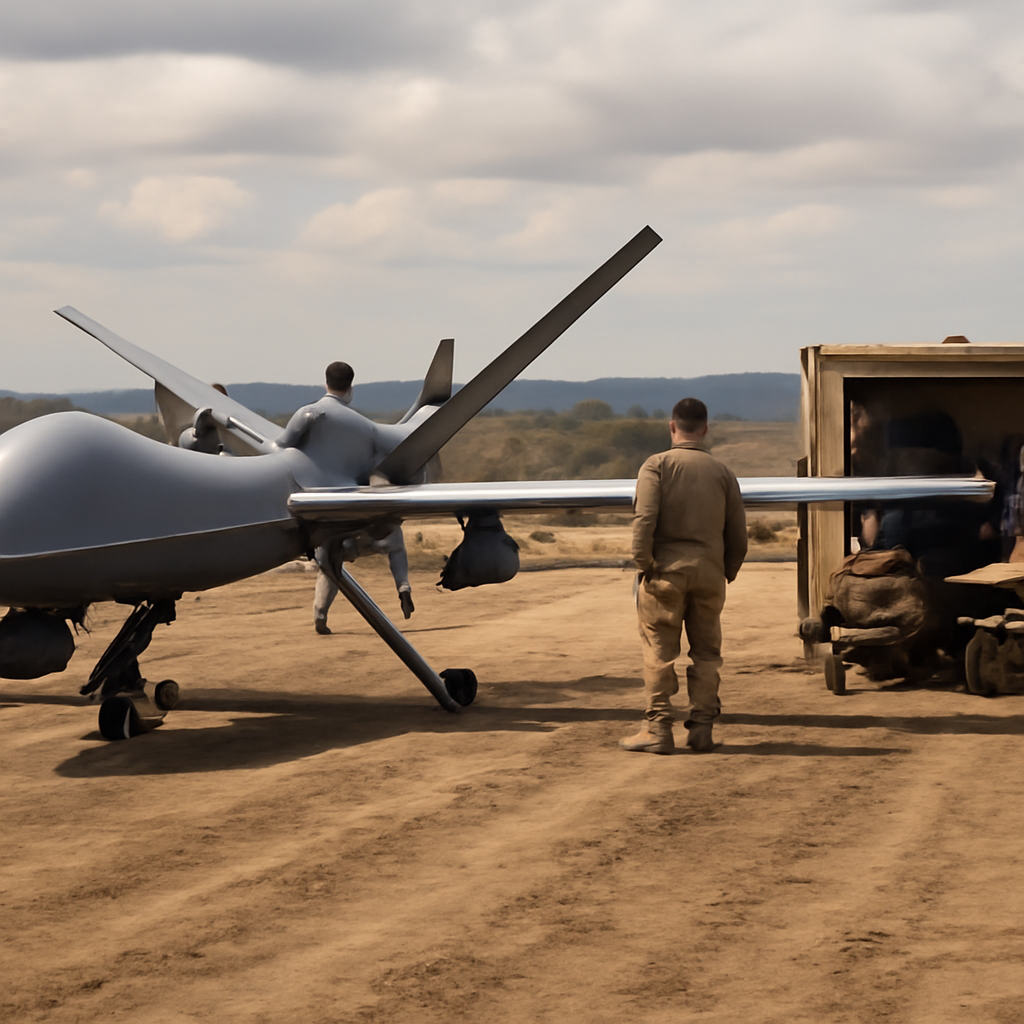
L3Harris presents concrete production credentials: the company says it has delivered "more than 1,200 vehicles" of its unmanned aerial platforms. That tally, the author argues, is evidence of maturity and a foundation for rapid scaling. Lyte highlights a pedigree that moves beyond concept — the firm points to "more than 50 proven flight tests" across rotary-wing, fixed‑wing and ground‑launched variants as part of its Wolf Pack family, a sequence of demonstrations the company uses to support a claim that it can transition from prototype to volume manufacturing.
The Wolf Pack family and launched effects: Red Wolf and Green Wolf
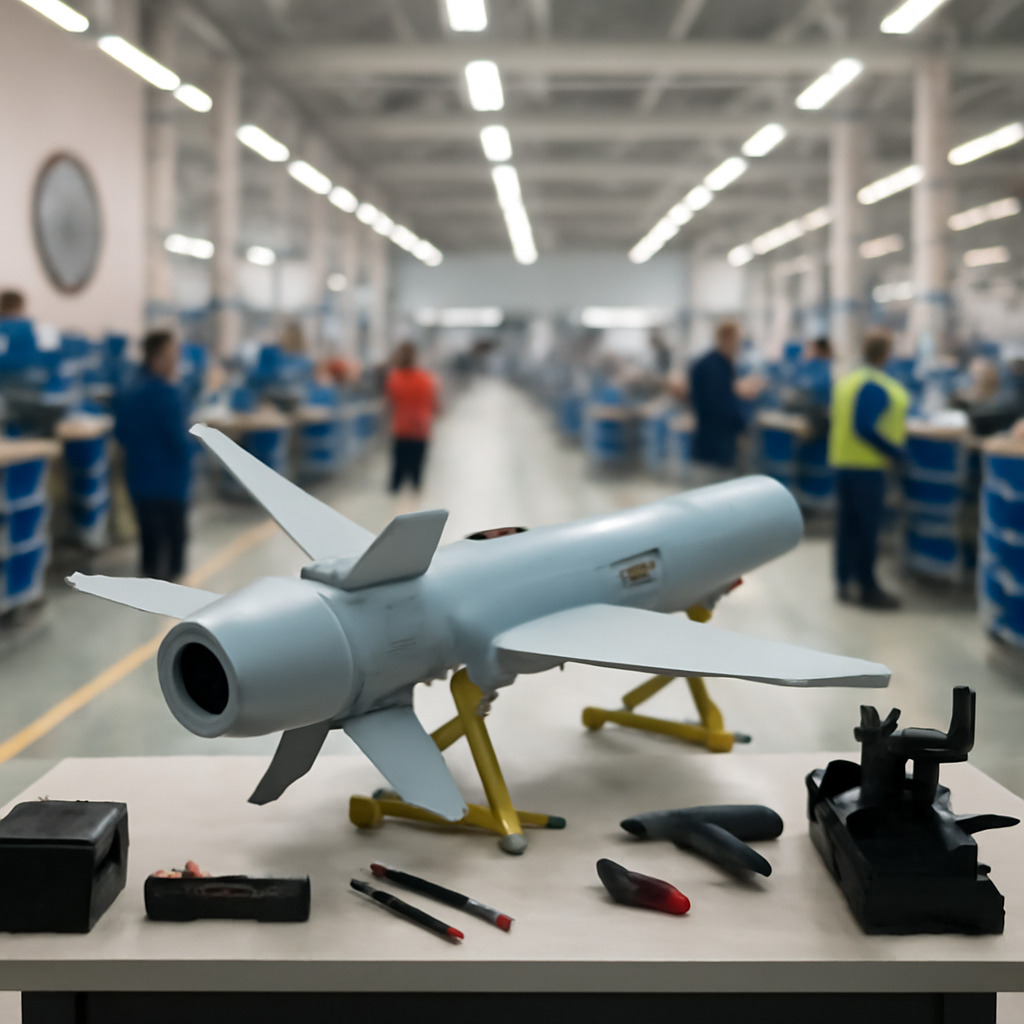
Lyte emphasizes launched effects — a class of precision, affordable munitions delivered from air, ground or maritime platforms — and names L3Harris' Red Wolf and Green Wolf as examples. He describes these systems as part of a portfolio "built for this moment," designed to provide both high-altitude, high-speed performance and the producibility necessary to be fielded at operational scale. The argument ties the product family directly to a stated operational need: affordable, precise effects that can be produced in quantities sufficient to sustain campaigns.

Audit-ready is a season. It shouldn't be.
Evidence in spreadsheets, controls drifting between audits, frameworks multiplying on flat headcount. Nubivance runs continuous compliance on Rapid7 Cyber GRC - SOC 2, HIPAA, ISO 27001, PCI, CMMC.
End the scrambleDesign choices: modularity, commercial components, and producibility
The company frames affordability as an outcome of design decisions made early in development. L3Harris says its systems use modular architectures to "enable seamless integration across air, ground and maritime platforms" and improve producibility. Where appropriate, the firm reports incorporating commercial components and designing for "rapid upgrades" to lower unit cost while retaining operational relevance. The company couches these tradeoffs as intentional: not a surrender of capability, but a pragmatic balancing of performance, cost and sustainment to achieve "affordable mass."
Acquisition realities: the Department of War, predictable demand, and industrial investment
Lyte critiques past acquisition priorities — "for decades, defense acquisition has largely focused on exquisite capability, often at the expense of cost, schedule and production scale" — and says the Department of War has shifted its focus toward faster delivery and greater volume. He argues that meeting modern threats will require a different acquisition approach: predictable demand signals and aggregated requirements among services and allied nations. Those commitments, he writes, give industry the confidence to invest in production capacity, reduce unit costs and deliver capability at operational scale, including "quantities of 1,000 systems per year or more."
What this means for the Department of War, allied nations, and industry
- Department of War: According to Lyte, the Department of War will need to provide predictable demand and aggregate requirements to make it financially viable for industry to expand production capacity and sustain combat mass in prolonged operations.
- Allied nations: Lyte suggests aggregation of requirements across allied nations can enable reduced unit costs and give industry the confidence to invest in volume manufacturing and supply‑chain strengthening.
- Industry (manufacturers and integrators): L3Harris frames an imperative to prioritize producibility and modularity from the outset, strengthen supply bases and maintain strategic partnerships to deliver at speed and scale — investments the company says it has already made to move prototypes into production.
Lyte's central contention is unmistakable: affordable mass is not merely a cost exercise but a systems‑engineering and acquisition challenge that requires early design tradeoffs, supply‑chain investment, and predictable customer commitments. He frames launched effects such as Red Wolf and Green Wolf as examples of what those choices can produce — capable systems designed expressly to be manufactured in quantities that "matter operationally."
The claim concludes with an explicit readiness: L3Harris says it has built the infrastructure to scale and is prepared to lead, while pressing for an acquisition regime that supplies the predictable demand signals needed to justify large‑scale production. Whether those signals arrive — and whether aggregated commitments across services and allied nations will follow — is the practical question Lyte places before the buyer and the builder alike.
Original story: Defeating modern threats with capable, affordable munitions