A coalition of more than 40 nations has pledged support for a Multinational Military Mission (MMA), led by France and the United Kingdom, to reopen the Strait of Hormuz once a sustainable ceasefire is in place.
The strategic condition: ceasefire and mine clearance
The MMA, co-chaired by Paris and London, is explicitly designed as “an independent and strictly defensive multinational mission to protect merchant vessels, reassure commercial shipping operators” and to carry out “mine clearance operations as soon as conditions permit following a sustainable ceasefire agreement,” according to the joint April statement that launched the effort. The Strait has effectively been closed by Iran since U.S.-Israeli strikes against Tehran began in late February; although a ceasefire has been in place since April, the agreement has already been tested by recent drone strikes reported by Gulf countries.
The United Kingdom’s package: destroyers, fighters, and drones
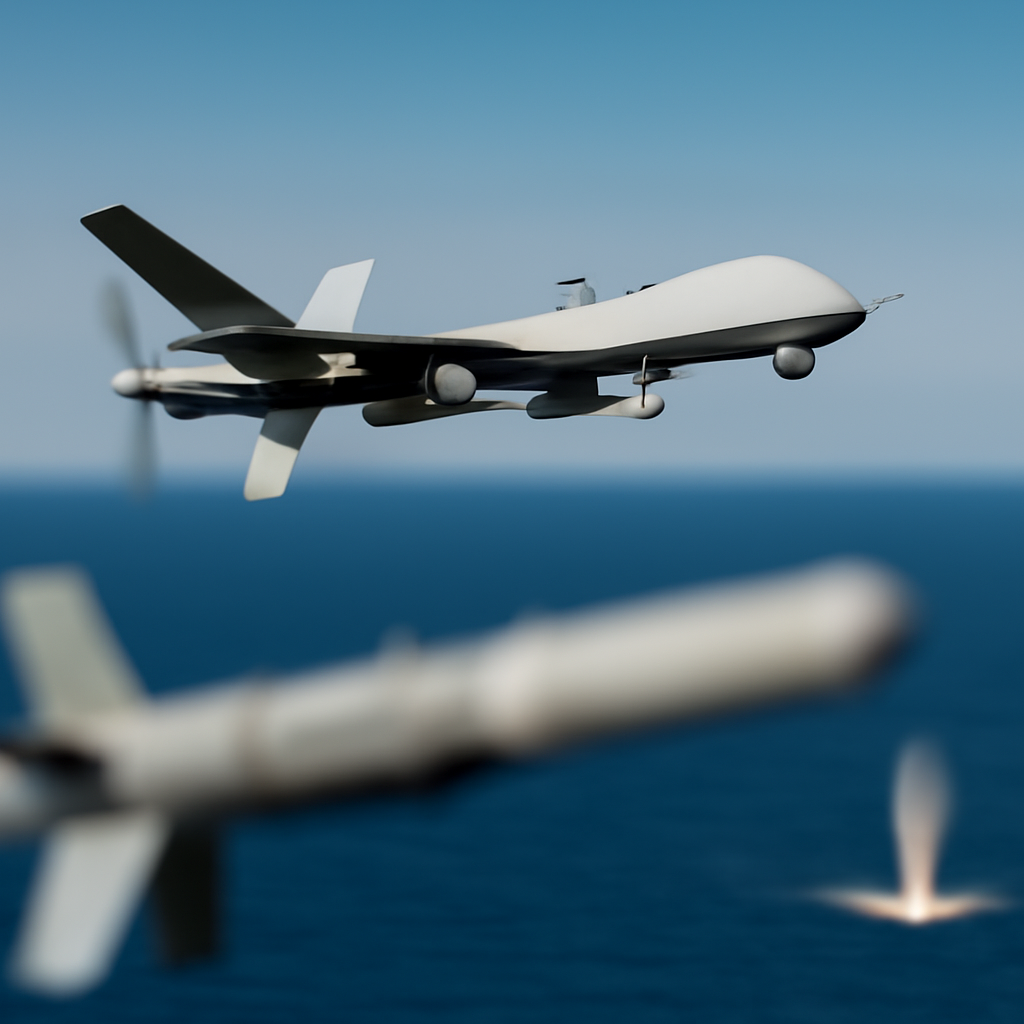
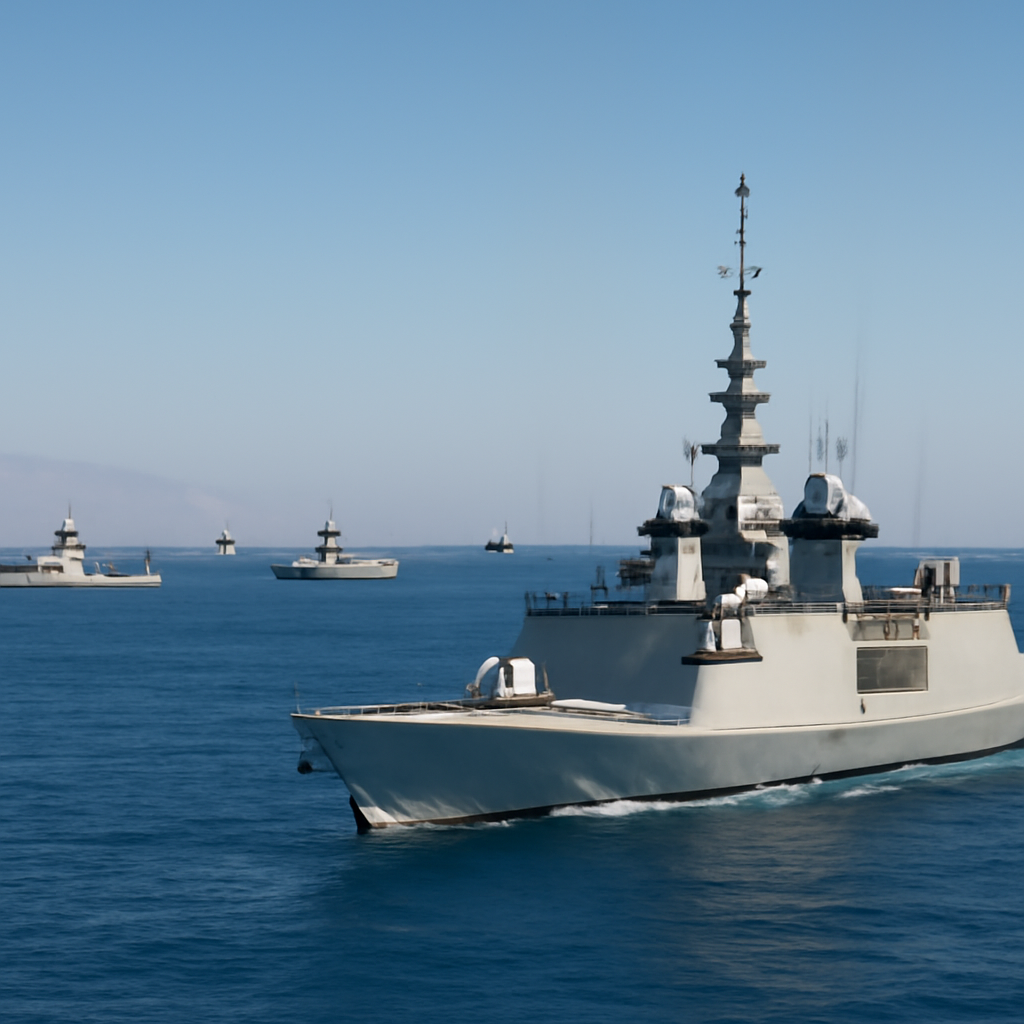
The UK has committed a multi-equipment contribution that mixes high-end combat platforms with autonomous systems. The Ministry of Defence announced deployment plans for Eurofighter Typhoon fourth‑generation fighter jets that are “ready to conduct air patrols over the Strait of Hormuz.” The Royal Navy’s Type 45 air-defense destroyer HMS Dragon is being sent to the Middle East “in preparation for any mission to secure” the passageway.
The statement noted the destroyer class is equipped with the Sea Viper anti-air missile system and can fire eight missiles in less than 10 seconds. Britain also plans to use its modular Beehive system to field high-speed, autonomous Kraken drone boats intended “to sense, track, and identify potential threats and defeat them.”

This site is the portfolio.
OSINTSights runs on Cloudflare Workers, D1, R2, and Vectorize, with an AI pipeline on Hetzner ARM. Nubivance designed, built, and operates it. We do the same for clients.
See what we buildFrance’s contribution: Charles de Gaulle and a standing naval force
France, as co-leader of the MMA, has said it will redirect a “robust naval force in the eastern Mediterranean and the Red Sea,” headed by the aircraft carrier Charles de Gaulle and supported by numerous frigates and several amphibious helicopter carriers. French President Emmanuel Macron said in remarks timed with the UK statement that portions of that force will be “allocated to the [multinational] effort we’ve just mentioned.” Macron later referenced on X the regional “prepositioning” of Charles de Gaulle to support the mission.
Minehunting and logistics: Belgium, Germany, and Italy
Mine countermeasures and support vessels feature prominently among pledged assets. Belgium rerouted the Primula minehunter from the Baltic toward the Mediterranean and signaled readiness to “take its responsibility in the Strait of Hormuz ‘when needed,’” Belgian Defense Minister Theo Francken said in an April X post and at the Atlantic Council.
Germany said it moved the Fulda minehunter and the replenishment ship Mosel to the Mediterranean “to station potential German capabilities for a possible operation,” the German ministry of defense said on May 4. Local reporting indicates Italy plans to contribute two Gaeta MLU class minehunters — the Nave Rimini (5561) and Crotone (5558) — alongside the P432 Raimondo Montecuccoli patrol vessel and the A5336 Atlante logistic support vessel. The Rimini is noted for sonar and remotely-operated vehicles able to identify seabed objects to roughly 600 meters.
Australia’s E-7A Wedgetail and the EU’s operational options
Australia will contribute an E-7A Wedgetail airborne early warning and control aircraft to the defensive effort, Australian Defense Minister Richard Marles said. The E-7A, produced by Boeing, is fitted with Northrop Grumman’s Multi-Role Electronically Scanned Array (MESA) radar and mission consoles that enable simultaneous tracking of airborne and maritime targets, the Royal Australian Air Force factsheet states.
The European Union has said it is prepared to play a role by potentially expanding Operation Aspides, EU foreign policy chief Kaja Kallas told reporters. Launched in 2024 to protect freedom of navigation in the Red Sea, the Indian Ocean and the Gulf, Operation Aspides currently involves three naval units and 21 contributing nations. Any extension to the Strait of Hormuz would “require the change of the operational plan,” Kallas noted, and discussions with EU members are ongoing.
What this means for merchant vessels, contributing navies, and the EU
- Merchant vessels and commercial operators: The MMA is framed explicitly as a reassurance and protective measure for commercial shipping, with mine clearance singled out as a necessary precondition for safe passage once a sustainable ceasefire permits such operations.
- Contributing navies and air arms: Nations are lining up capabilities across three domains — air surveillance and patrol (Eurofighters, E-7A Wedgetail), surface and air defense (Type 45 destroyer, Charles de Gaulle carrier group), and undersea/mine countermeasures (Primula, Fulda, Rimini, Crotone). Several countries also emphasized modular and autonomous systems, notably Britain’s Kraken drone boats.
- The European Union: Kaja Kallas’ comments indicate the EU could fold the Strait into the remit of Operation Aspides, but only after an operational-plan change and member-state agreement; the operation already involves 21 contributing nations and three naval units in adjacent waters.
The coalition’s plan ties the reopening of the Strait to two interlocking conditions: a sustainable ceasefire and the safe removal of mines and other threats. Nations have pledged a mix of carriers, destroyers, minehunters, replenishment ships, AEW aircraft and autonomous systems — but those assets will be committed only as the political and security environment allows. The next, concrete milestones are the completion of ceasefire implementation and the coalition’s operational planning — outcomes that will determine whether these pledges translate into a cleared corridor for global shipping or a longer, risk-filled stalemate at one of the world’s most strategically sensitive chokepoints.