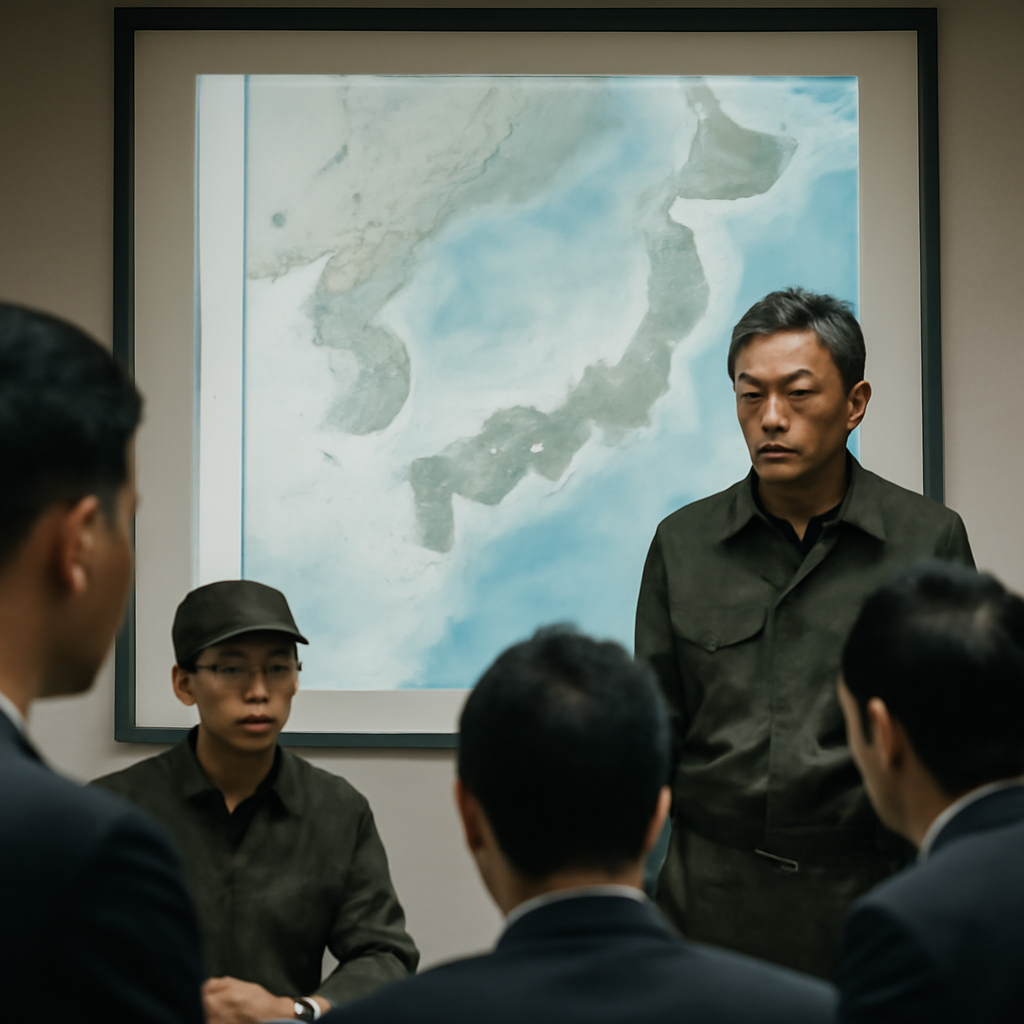
Prime Minister Sanae Takaichi’s Diet remarks and Beijing’s response
The Diplomat frames the episode as a turning point. Tokyo’s domestic political moment — comments by Prime Minister Sanae Takaichi to the Diet on November 7, 2025 — is presented in Beijing as a provocation. The source says Beijing has not confined itself to rhetoric: it has stepped up military activity around Japan and is treating Takaichi’s long and relatively close relationship with Taiwanese President Lai Ching-te as evidence of a bloc promoting Taiwanese independence. That interpretation, the source reports, has been used to justify heightened pressure in the East China Sea and in waters around Taiwan.
Carrier operations beyond the First Island Chain
One of the most significant shifts documented in the source is the eastward movement of Chinese aircraft carrier operations. The People’s Liberation Army Navy (PLAN) had already adopted a three-aircraft-carrier policy before the Takaichi remarks, and carrier activity has moved beyond the First Island Chain into waters between the First and Second Island Chains. Research vessels have also been confirmed in the same area, the report says, and Japan has responded by reexamining its defense posture for the stretch from the Ogasawara Islands (Bonin Islands) to Iwo Jima.

Audit-ready is a season. It shouldn't be.
Evidence in spreadsheets, controls drifting between audits, frameworks multiplying on flat headcount. Nubivance runs continuous compliance on Rapid7 Cyber GRC - SOC 2, HIPAA, ISO 27001, PCI, CMMC.
End the scrambleDirect encounters and expanded activity in the East China Sea
The source cites a concrete incident on December 6, 2025, when J-15 fighter jets launching from the Chinese aircraft carrier Liaoning intermittently illuminated Japan Air Self-Defense Force F-15s with fire control radar (FCR) as the Japanese jets conducted airspace intrusion countermeasures. That encounter occurred to the east of the First Island Chain. At the same time, activity to the west of the First Island Chain has not diminished: the East China Sea, the Taiwan Strait, and the South China Sea have all seen increased Chinese activity.
Tokyo’s observers documented another striking maneuver at the end of December 2025, when over 2,000 Chinese fishing vessels reportedly formed a backward-L-shaped formation in the East China Sea before dispersing. The vessels are thought to have principally come from Zhejiang Province; the Diplomat notes this was the first time an exercise of this scale involving fishing vessels had been witnessed. In May 2026, after the U.S.–China Summit, Wu Jau-shieh, Secretary-General of the National Security Council, posted on X with a map indicating 100 Chinese vessels operating in the area around the First Island Chain. Taken together, the source concludes, China is deploying forces on both sides of the First Island Chain while also operating in large numbers across adjacent seas.
China–Russia coordination and strategic encirclement
The source emphasizes another layer: coordination between China and Russia. It reports that People’s Liberation Army Air Force activities heading northeast from the East China Sea and beyond the First Island Chain are frequently coordinated with Russian counterparts. The combined pattern, as described, is producing a gradual encirclement of Japan that demands a fundamental reassessment of Tokyo’s security posture. The Diplomat frames that reassessment as already underway, with three security-related documents being drafted to reflect an eastward shift in perspective and the recognition that the Second Island Chain may be the next frontier.
What this means for Japan, the United States, and Taiwan
- Japan: The source says Japan is reassessing its defense posture for the region from Ogasawara (Bonin Islands) to Iwo Jima and is drafting three security-related documents that will likely reflect the eastward shift. The First Island Chain is described as being squeezed from both sides, pushing Tokyo to consider the Second Island Chain as the next strategic focus.
- The United States: According to the source, countering the narrative that the U.S. and Japan are militarizing — a narrative gaining traction in China — has become one of the central challenges for the United States, Japan, and their allies as Beijing moves to alter the status quo.
- Taiwan: The source reports Beijing views Takaichi’s relationship with President Lai Ching-te as an element of a bloc promoting Taiwanese independence, and that perception has contributed to increased pressure on Japan and the surrounding waters.
The Diplomat’s account is resolute on one point: the pattern of Chinese activity is multidirectional and persistent. Carrier operations east of the First Island Chain, large-scale maritime formations in the East China Sea, frequent air operations coordinated with Russia, and public displays of vessels near the First Island Chain together form a new operational picture. Tokyo’s drafting of security documents and reassessment of defense posture from Ogasawara to Iwo Jima are concrete responses recorded in the source. The remaining question implicit in the reporting is whether the Second Island Chain will become the defined next frontier — and how Japan and its partners will align strategy, posture, and messaging in response to a campaign that mixes naval power, air operations, and maritime civic-military actions.
https://thediplomat.com/2026/06/japans-security-focus-shift/