"Everybody has a plan until they get punched in the face," Mike Tyson said — and that blunt observation sits at the centre of Beijing’s logistics dilemma. China’s military is busy folding artificial intelligence into its sustainment systems to speed resupply and coordinate operations over greater distances. But the very features that promise efficiency in peace also create concentrated, attackable points of failure in war.
Beijing’s calculation: short, decisive campaigns
China’s planners prefer short, decisive campaigns in part because they recognise the risks of a prolonged fight. The source explains that the greater driver of this preference is the risk of US intervention in Chinese military action against Taiwan, Japan or another US friend; the Chinese military calculates that the longer a conflict lasts, the more time the United States and its allies have to mobilise effectively. That timeline pressure helps explain why Beijing is investing heavily in peacetime efficiency — and why it hopes speed will blunt adversary responses.
AI-enabled logistics and data dependency
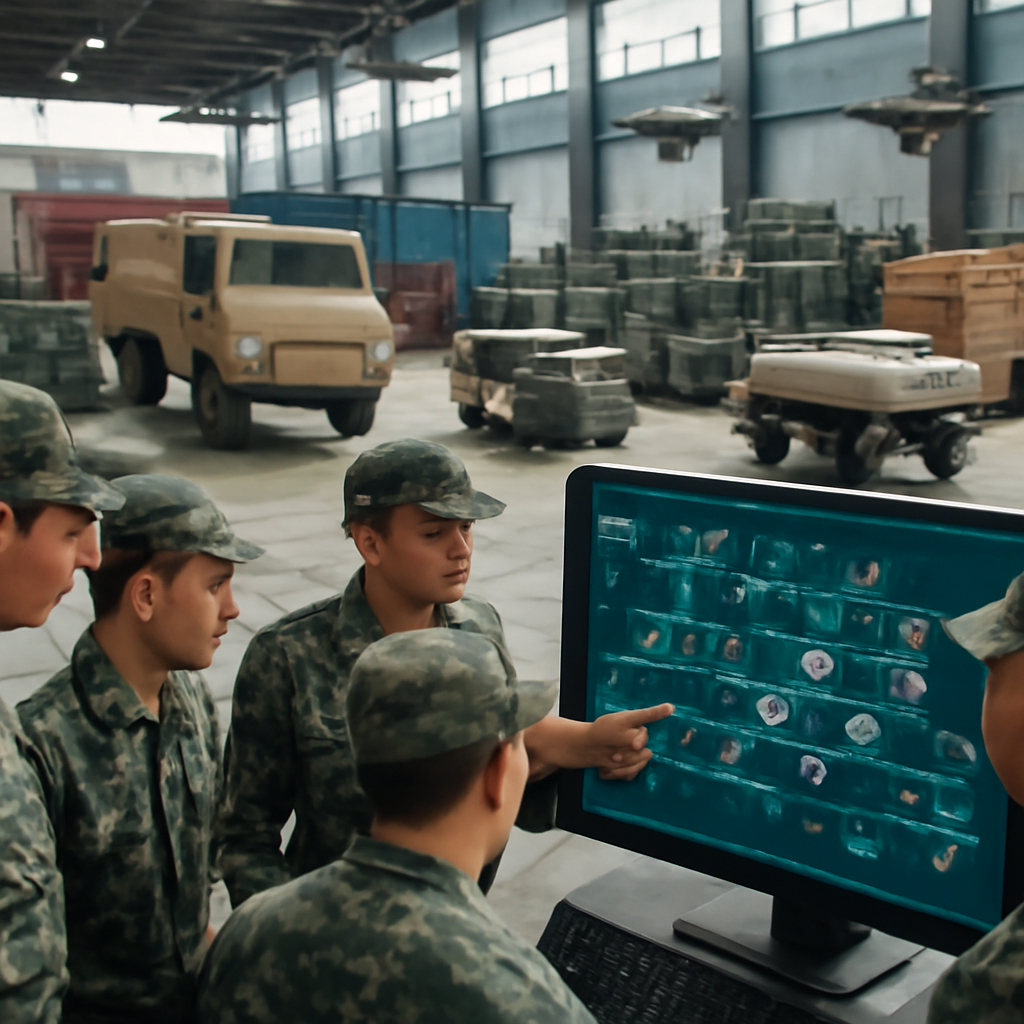
AI promises predictive routing, dynamic scheduling and real-time visibility by linking sensors, planning systems and dispersed units. But those benefits depend on uninterrupted data flows. The source warns that China’s predictive logistics models rely on large volumes of stable peacetime data to plan routes and distribute supplies — precisely the conditions that break down under high-intensity combat, when damaged infrastructure, disrupted communications, weather effects and rapidly changing consumption rates produce data the models were never designed to handle.

Audit-ready is a season. It shouldn't be.
Evidence in spreadsheets, controls drifting between audits, frameworks multiplying on flat headcount. Nubivance runs continuous compliance on Rapid7 Cyber GRC - SOC 2, HIPAA, ISO 27001, PCI, CMMC.
End the scrambleElectromagnetic warfare, cyberattacks and commercial supply-chain weak points
The logistics architecture China is building is exposed to non-kinetic attack. AI-enabled logistics are inherently vulnerable to electromagnetic warfare and cyberattacks because they require continuous, accurate communications between many nodes. The Chinese military’s heavy reliance on commercial supply chains and civilian software adds further weak points: intrusions into logistics software can corrupt scheduling data, delay movements and trigger cascading failures across units and theatres. Jamming or spoofing the links that guide cargo drones and uncrewed ground vehicles could stop resupply altogether even if the carrying equipment itself is unharmed.
Strikes against civilian ports, trucking fleets, rail nodes and communications infrastructure can be as disruptive as attacks on military facilities but carry less risk for the attacker. The source observes that targeting these dual-use nodes would force commanders to divert defensive resources and would blur the line between civilian and military targets, raising escalation risks.
Centralisation, Clausewitzian friction, and legacy systems
High levels of centralisation tend to concentrate fragility. The analysis notes that highly centralised logistics systems often become fragile once communications and access are disrupted; AI-enabled logistics are likely to face the same problem unless redundancy and fallback modes are baked in. When data links degrade or automated systems fail, compatibility issues between new AI tools, older platforms and legacy bureaucratic processes quickly reappear. Units can fall back on slower manual coordination and pre-positioned stocks whose locations and quantities may no longer match operational needs.
The report invokes Carl von Clausewitz’s concept of "friction" — the unpredictable incidents and constraints that make war harder than plans assume — and points out that large military organisations historically struggle to rewire how they operate once a conflict has begun. The Chinese military’s rigid command structures, which require many approval layers before alternative supply methods can be authorised, reinforce that friction.
What this means for the United States, Japan, and Chinese commanders
- United States and Japan: By targeting civilian data hubs and key transport nodes, the US and its Western Pacific allies such as Japan could force Beijing into logistical dilemmas the Chinese military seeks to avoid, according to the source. These measures offer adversaries a way to impose costs without matching China’s overall strength.
- Chinese commanders: Chinese military publications repeatedly warn about the dangers of depending too much on data networks and emphasise safeguarding logistics against electromagnetic warfare, cyberattacks and supply-chain disruption. That awareness is likely driving both technical resilience exercises and doctrinal commitments to speed and pre-war preparation.
The central question remains operationally stark: can China protect these interconnected systems, or bring them back online quickly under attack? The source concludes that without assured resilience or fast recovery, systems designed for peacetime efficiency could become critical weaknesses in wartime. How Beijing answers that question will shape its operational planning — and the choices its adversaries make about where and how to apply pressure.