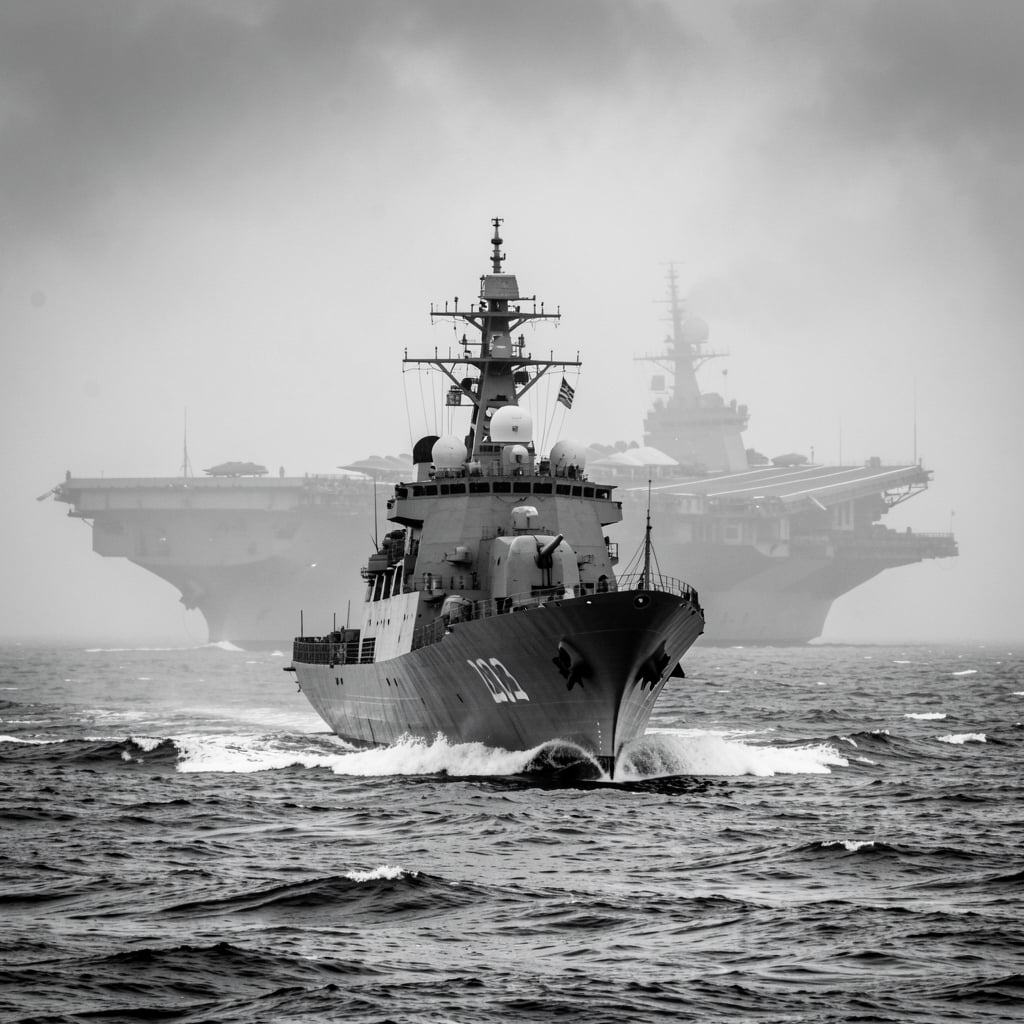
"If you already watch dual-use technology, why not watch the docks?" That is the practical question at the heart of a recent op-ed arguing for a shift in attention from laboratories to littorals.
Background: who is sounding the alarm
The Heritage Foundation’s Brent Sadler and Allen Zhang wrote an op-ed, published on Breaking Defense, urging a new focus on maritime infrastructure that could serve both civilian and military ends. The piece contends that "China’s dual-use ambitions could severely threaten America’s force posture," a formulation highlighted in the story headline.
What the current situation looks like
The article notes one clear baseline: the Pentagon already closely tracks dual-use technology. Building on that acknowledged posture, Sadler and Zhang argue it is "past time to keep an eye on potential dual-use maritime infrastructure." In short, their case is not that monitoring has not begun—rather, that the aperture of current monitoring should widen to include ports, terminals, and other maritime facilities that can be used for both civilian commerce and military operations.

This site is the portfolio.
OSINTSights runs on Cloudflare Workers, D1, R2, and Vectorize, with an AI pipeline on Hetzner ARM. Nubivance designed, built, and operates it. We do the same for clients.
See what we buildWhy this matters: competing perspectives
- From the op-ed authors’ vantage point, the linkage between dual-use capabilities and maritime infrastructure presents a strategic vulnerability warranting attention. They frame the issue as an extension of existing dual-use concerns already monitored by the Pentagon.
- For technologists, the argument implies a shift in analytical focus: the relevant objects of study would include physical maritime systems and infrastructure as much as semiconductors, sensors, or software that traditionally dominate dual-use discussion. Sadler and Zhang’s piece invites practitioners to consider how hardware and logistics intersect with emerging capabilities.
- Policymakers, according to the op-ed, are being asked to consider whether oversight and resources should be reallocated or expanded to account for maritime infrastructure’s potential to serve dual purposes. The authors’ prescription is presented as complementary to, not a replacement for, the Pentagon’s established monitoring of dual-use technology.
- Users and commercial operators are implicitly implicated as stakeholders: if ports and maritime facilities are treated as dual-use vectors, operational practices and commercial planning could come under heightened scrutiny, the op-ed suggests.
- The piece frames the concern as one that bridges peacetime commercial activity and potential military utility. Whether that potential translates into actual threat, the authors contend, depends on the attention and policy choices applied to maritime infrastructure—hence their call to "keep an eye" on these assets.
Analysis and implications
The op-ed’s central proposition is straightforward and defensible on its own terms: existing Pentagon attention to dual-use technology provides a foundation from which to expand focus to maritime infrastructure. Sadler and Zhang position this expansion as a timely course correction rather than a novel policy invention. Their writing links a broadly accepted monitoring activity—tracking dual-use technology—to a less emphasized domain—maritime infrastructure—arguing that the latter could importantly affect military posture if left unexamined.
The significance of the argument rests on two moves the authors make. First, they treat maritime infrastructure as a plausible vector for dual-use activity worthy of the same kinds of scrutiny traditionally applied to technology. Second, they appeal to institutional prudence by invoking the Pentagon’s existing role as a baseline actor in dual-use monitoring.
Those two moves produce a clear policy question: if dual-use maritime infrastructure can influence force posture as the headline suggests, should oversight and analytical resources follow? Sadler and Zhang answer in the affirmative—urging attention now rather than after risks manifest more clearly.
Their op-ed is both diagnostic and advocative: diagnostic in identifying a potential blind spot, advocative in calling for policymakers and practitioners to correct it. The piece refrains from prescriptive detail in the excerpt summarized in Breaking Defense, instead concentrating on the rationale for greater attention.
Ultimately, the authors leave the reader with an operational prompt embedded in an institutional fact—the Pentagon already watches dual-use technology—paired with a normative claim that maritime infrastructure merits similar vigilance.
If dual-use attention helped the Pentagon anticipate other evolving risks, the authors ask implicitly, why not apply the same lens to maritime infrastructure before it becomes a strategic liability?



