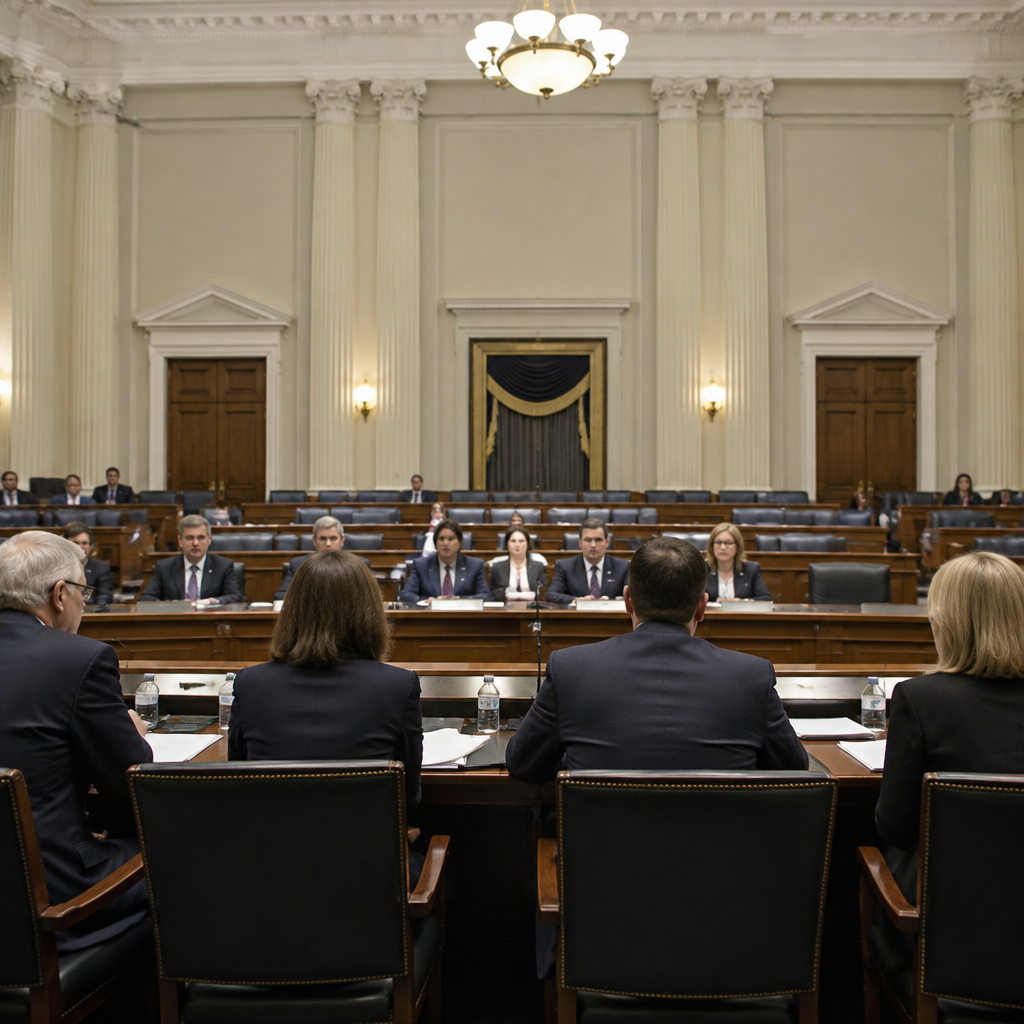
"democracy’s greatest strength is not that it prevents political mistakes but that it gives citizens a way to challenge them and, sometimes, to change course," the article wrote — and it used last week’s US midterm election as its proof point.
US midterms as a lens: democracy’s corrective power
The piece frames the recent US midterm election as a reminder that democratic systems allow citizens to challenge policy and leadership in ways authoritarian systems do not. It contrasts that capacity for correction with what it describes as an absence of political checks inside the People’s Republic of China under Xi Jinping. The commentary argues that democracies are not immune to mistakes, but they offer mechanisms for reversal; Xi’s China, by contrast, presents no comparable institutional outlet for popular or elite correction.
Kylian Mbappé and a coordinated CCP backlash
Last month, the article recounts, the Chinese Communist Party orchestrated a strong backlash against French football star Kylian Mbappé after he made a casual comment referencing Mao Zedong’s dominance of games. The piece presents this incident as emblematic: language that was not a political statement provoked an official, party-driven campaign of punishment. The author uses the episode to argue that the CCP’s responses are calibrated to enforce domestic narratives and to deter even nonpolitical remarks that touch on the party’s historic figures.

Audit-ready is a season. It shouldn't be.
Evidence in spreadsheets, controls drifting between audits, frameworks multiplying on flat headcount. Nubivance runs continuous compliance on Rapid7 Cyber GRC - SOC 2, HIPAA, ISO 27001, PCI, CMMC.
End the scrambleXi Jinping’s consolidation of power: institutional changes and purges
The article outlines several specific institutional shifts it attributes to Xi’s tenure. It notes that the two-term limit for state president was removed in 2018 and that "Xi Jinping Thought" was written into the constitution. In 2022 Xi secured a third term as party leader, breaking what the piece calls the post-Mao practice of orderly leadership succession, and the author says Xi is "now on track to secure a fourth term at next year's party congress." The commentary also documents a continuing series of high-level purges under the banner of anti-corruption, and says the opaque nature of those investigations and the concentration of disciplinary power have reinforced Xi’s control over party and state.
Human-rights allegations: Xinjiang, Hong Kong, and Yang Hengjun
The article cites the UN human-rights office’s findings on Xinjiang, saying they documented "large-scale arbitrary detention of Uyghurs, restrictions on religious and other rights, credible allegations of torture or ill-treatment and indications of coercive birth-control and labour practices." It also describes Hong Kong’s political space as dismantled through national-security laws that enabled prosecution of pro‑democracy figures, disqualification of legislators and changed election rules that restricted who could serve. The piece further names an Australian citizen, Yang Hengjun, as being "held arbitrarily and under a suspended death sentence in China" after a closed-door trial for advocating political reform, presenting that case as illustrative of how the regime treats dissent.
Exporting an authoritarian model and the Russia partnership
Moving beyond domestic politics, the article argues Xi’s China exports its model and tools. It says Beijing supports regimes resisting democratic ideals, helps spread surveillance technology and state-centred digital governance ideas, and pursues securitisation that undermines open trade and globalisation. The commentary singles out what it calls a "no-limits partnership" with Vladimir Putin, describing China’s "deep assistance to Russia’s imperialist and genocidal ambitions in Ukraine" and saying that assistance prolongs the conflict and forms part of an "anti-Western axis." The piece asserts that Xi’s China is "currently the only country with the intent and capability to supplant the post-1945 order" and that it is laying foundations for a new order favoring authoritarian interests.
What this means for policymakers, technologists, and the Australian public
- Policymakers and regulators: The article suggests they should treat China’s global conduct — from surveillance exports to diplomatic alignments — as part of a strategic competition that seeks to reshape international rules and institutions.
- Technologists and security teams: According to the piece, the diffusion of surveillance technology and state-centred digital governance raises risks for privacy, information integrity and the openness of trade-dependent systems.
- The Australian public and political actors: The commentary directly criticises "those in Australia" who draw equivalence between the US and China and describes the AUKUS inquiry as influenced by "anti-American ideology" rather than a sober assessment of capability and security threats. The author frames Yang Hengjun’s detention as a specifically Australian concern that underscores the human-rights stakes.
In closing, the article reaffirms its central contrast: for all the faults of democratic governance, it argues, "democracy has shown that a government’s worst impulses can be curbed, checked and held accountable." By contrast, the piece warns that "there’s nothing within China that can check Xi’s trajectory," and urges consideration of which international model the world should emulate.