Through its Fox Hunt and Sky Net campaigns, it has forcibly repatriated some 12,000 Chinese nationals from more than 120 countries.
China’s policing model: centralised, pre-emptive, population-focused
Beijing is exporting a model of policing that the source describes as answering "solely to the CCP." That model emphasises continuous surveillance, household-level data collection and pre-emptive intervention — tools designed to protect the state and party rather than to strengthen independent oversight, courts or the free press. The result, according to the reporting, is an "authoritarian policing" template that partner countries risk adopting, training police forces to focus inward on citizens instead of outward on criminal threats.
Triads, scam compounds and the outward push from Myanmar
Chinese organised crime has a long history in Africa, but the recent pattern is one of scale and geographic spread. Successive crackdowns pushed many Triads from the mainland in the 1950s into Hong Kong and Macau and then to Myanmar’s border regions, where they now run industrial-scale scam operations. Since 2020, "China-linked compounds have been uncovered across at least nine countries," with more nations assessed to be at risk. The World Hongmen History and Culture Association, chaired by Wan "Broken Tooth" Kuok-koi and sanctioned by the US Treasury, is documented in the reporting as a front that expanded through Southeast Asia and the Pacific under the Belt and Road Initiative and is now moving into Africa. The source links individual organised-crime activity — including attempts to shape local economic projects, as in Palau — to Beijing’s broader reach.

The cyber insurance questionnaire just landed. Now what?
SOC 2, HIPAA, insurance renewals - someone has to own security strategy. Nubivance provides fractional CISO leadership without the full-time salary.
Get a security leadPolicing partnerships: Kunming, the Mekong and Africa’s police ties
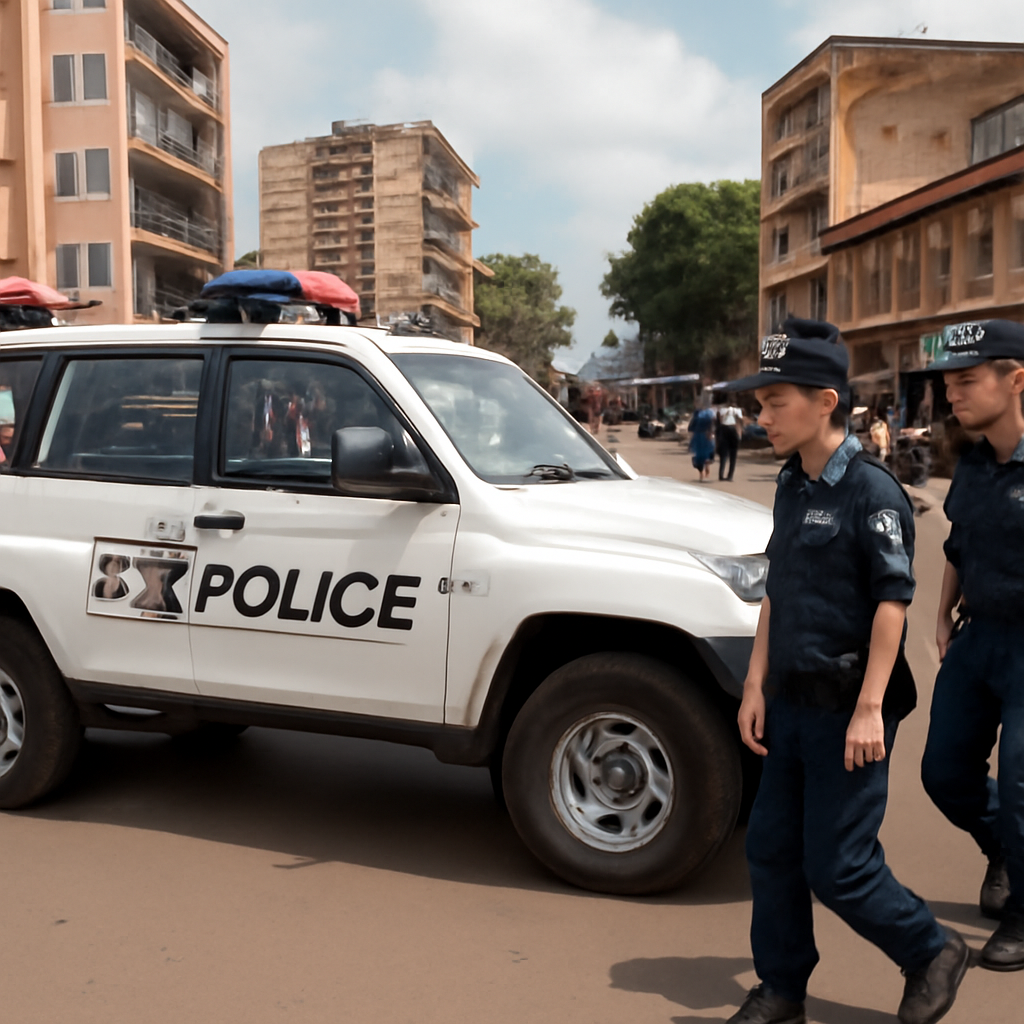
Where organised crime establishes itself, China’s policing offer often follows. In the Mekong, Beijing set up the Lancang-Mekong law enforcement centre in Kunming, conducts joint river patrols with Laos, Myanmar and Thailand, and maintains liaison relationships with Cambodia. In Africa, the footprint is already extensive: China is publicly recorded as having trained police from 33 African countries, holds bilateral policing agreements with at least 24 countries, and has embedded officers or runs joint operations in 10. The reporting notes the trajectory in Madagascar as a recent example — labelled "at‑risk" in May and hosting Chinese police by September.
What Beijing gains: access, reach and coercive repatriation
The policing partnerships deliver concrete capabilities to Beijing. They provide "access" to partner forces, reach into diaspora communities and relationships with political and security elites. They also complement economic and diplomatic influence. The source highlights that these arrangements make China’s Fox Hunt and Sky Net campaigns — which have forcibly repatriated some 12,000 people from more than 120 countries — operationally possible; those campaigns are alleged to violate international law and to target dissidents and critics rather than criminals. The reporting frames Africa as strategically consequential: its countries "hold the minerals that humanity's energy transition depends on and a quarter of the votes at the United Nations."
Australia, the Pacific, and the alternatives on offer
China’s policing expansion is not limited to Africa or Southeast Asia; it is underway in the Pacific as well. Beijing has provided policing support to six Pacific countries and continues to press for deeper arrangements. The reporting cites Fiji as an example where organised crime tied to Chinese networks remains a challenge: in April a vehicle fleeing with suspected methamphetamine drove into a police and military checkpoint outside Suva, critically injuring an officer who is the daughter of Defence Minister Pio Tikoduadua — who, when he served as home affairs minister, significantly narrowed Fiji’s policing agreement with China. Australia, the reporting says, has built a working counter in the region: decades of Australian Federal Police engagement, the Pacific Transnational Crime Network, the Pacific Policing Initiative and several bilateral treaties provide Pacific countries with alternative policing partners and training.
What this means for African governments, Pacific states and Canberra
- African governments: Hold external policing assistance to the standards they have endorsed — emphasising oversight, judicial accountability and the AU’s commitments — when deciding whether to accept training, embedded officers or joint operations.
- Pacific states: Prioritise credible alternative policing support; the reporting argues they need such options "before they can fully distance themselves from China."
- Canberra: Use the Pacific model as a template for partners with capacity to act in Africa, offering policing support that aligns with democratic oversight and the kinds of commitments African governments have made.
The pattern is clear in the source material: where Chinese organised crime moves, policing ties often follow, and those ties deliver access and influence as much as traditional law enforcement cooperation. The reporting closes with a direct policy prescription: Canberra should help show the world how to counter it.