PLA's shift to phalanx‑style heavy infantry
The April 11, 2026 post documents a visible doctrinal and equipment shift in PLA land units: "long pikes, tight ranks, and a wall of shields up front." The entry characterizes these formations as a return to heavy, block‑type infantry designed for holding ground, and notes that photographs show close formations though "the photos don’t show the flanks." The post argues that, in practice, commanders will likely "anchor the formation with fast movers, light cavalry or light infantry to keep the wings from being rolled up." It also records a parallel equipment upgrade: "PLA frontier defense heavy infantry is now receiving much‑needed equipment standardization and enhanced armor, including leg and elbow guards."
Mandarin Duck Formation and shipboard boarding tactics
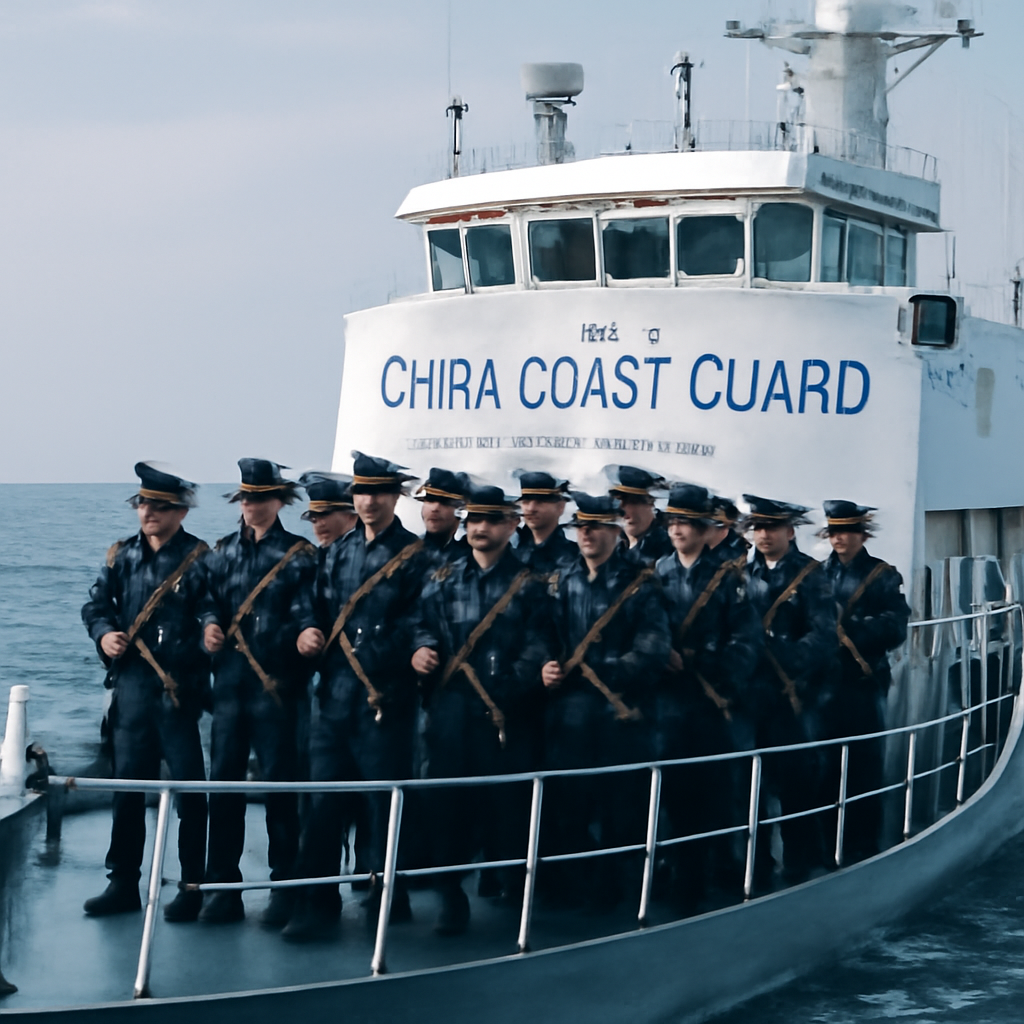
The blog recommends adapting an old Chinese close‑quarters squad concept — the Mandarin Duck Formation (鸳鸯阵) — to maritime boarding contexts. It describes Qi Jiguang’s original as "a famous 12‑man close‑quarters squad built around coordinated movement and mutual protection," and explains a suggested maritime variant that "could split into two mirrored 5‑man teams, each covering the other like paired mandarin ducks." The post frames this not as nostalgia but as "recognizing that the China Coast Guard increasingly operates in environments where deck‑level melee, ship‑to‑ship confrontations, and close‑quarters control actions are not hypothetical."

Audit-ready is a season. It shouldn't be.
Evidence in spreadsheets, controls drifting between audits, frameworks multiplying on flat headcount. Nubivance runs continuous compliance on Rapid7 Cyber GRC - SOC 2, HIPAA, ISO 27001, PCI, CMMC.
End the scrambleChina Coast Guard operations in the South China Sea
The entry explicitly ties the tactical proposal to recent coast guard activity, arguing that a "compact, well‑drilled, boarding team" modeled on the Mandarin Duck Formation "might be far more practical than people assume." The post accompanies this argument with an image captioned: "China Coast Guard personnel confront Philippine Navy Sailors at Second Thomas Shoal in the South China Sea in July 2026. ARMED FORCES OF THE PHILIPPINES/THE ASSOCIATED PRESS (link)", using that confrontation as illustration that ship‑to‑ship and deck‑level encounters are occurring.
Equipment, critique, and doctrinal evolution in posts from 2024–2026
The blog places the April 2026 phalanx entry in a running series that traces earlier critiques and experiments. An October 2, 2024 item criticized a PLA phalanx for short spears, the absence of standards and shields, and shallow depth ("only four rank deep"). An October 12, 2024 entry observed the PLA Light Cavalry's tradeoffs between speed and protection, noting they were "not protected with plate armor" and lacked some expected gear. These earlier posts are used to show a progression from lighter, less‑protected units toward heavier, more standardized equipment and formation experimentation.
What this means for the China Coast Guard, the PLA, and the Armed Forces of the Philippines
- China Coast Guard: The post urges adoption of a compact, disciplined boarding team modeled on Qi Jiguang’s formation to manage "deck‑level melee" and "close‑quarters control actions," implying a shift toward closer‑in, formation‑based boarding tactics.
- PLA / PLAN: The documented movement toward heavy pike blocks, enhanced armor, and standardized equipment is presented as doctrinal experimentation that could be adapted across domains — from land to sea — if leaders choose to leverage similar discipline and formations aboard ships.
- Armed Forces of the Philippines: The blog references a July 2026 confrontation at Second Thomas Shoal and uses it to illustrate the kinds of encounters where small, well‑drilled boarding teams and tight formations could matter operationally.
The argument on the blog is straightforward: historical close‑order tactics translated effectively from land to sea in the past, and recent PLA and coast guard activity suggests a contemporary appetite for similarly tight, armored, and disciplined units. Whether the Mandarin Duck Formation as configured in the post — split 5‑man teams, mutual coverage, and compact boarding maneuvers — will be formally adopted or tested at sea remains framed by the author as a tactical suggestion rooted in observed shifts in formation style and equipment standardization across 2024–2026 entries.
Original story: https://china-defense.blogspot.com/2026/07/adopting-land-heavy-infantry-tactics.html