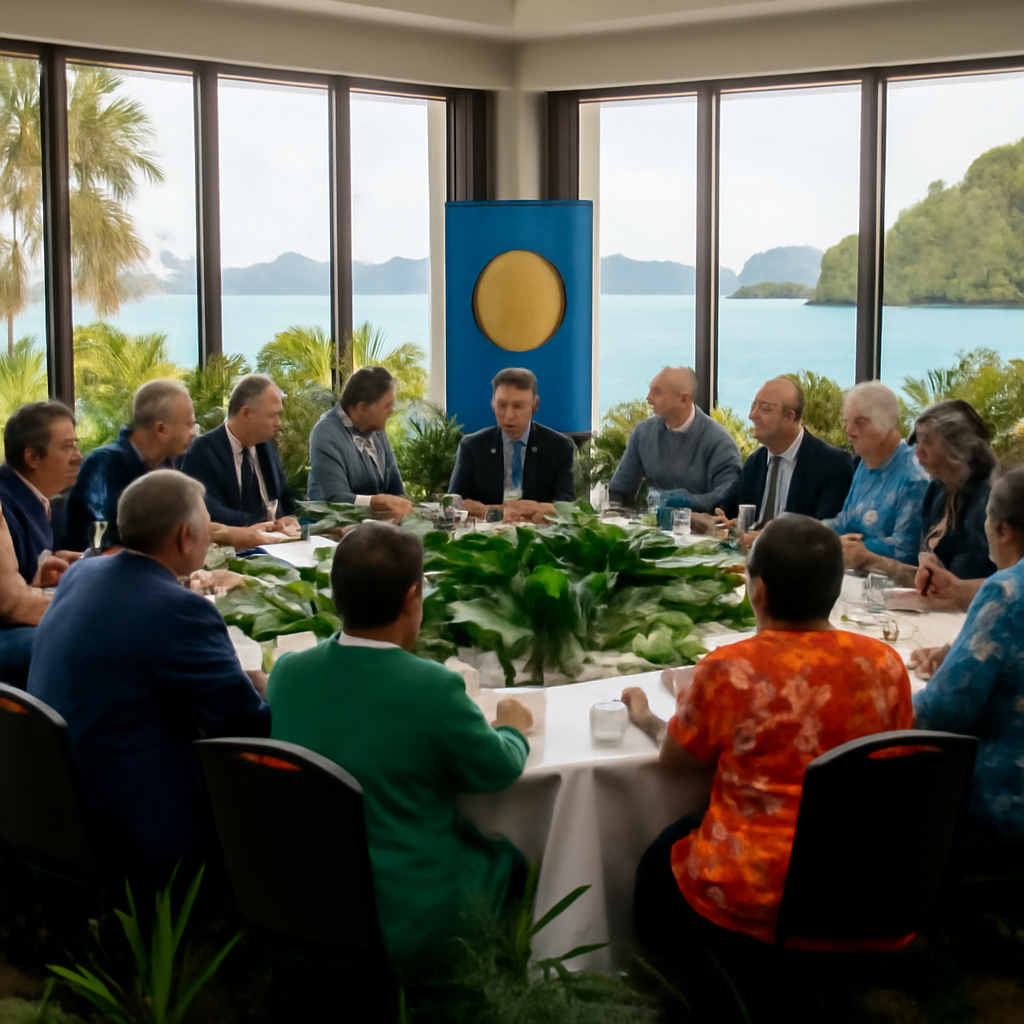
About 28 percent of the world’s exclusive economic zones sit beneath the Pacific — a blue continent whose vast maritime domain helps explain why leaders have gathered in Koror for the 55th Pacific Islands Forum Meeting under the theme “BELAU – Building Economies: Life. Action. Unity.”
Palau, the forum theme, and what leaders say they must fix
Delegates have convened in Koror, Palau, where the local name for the country — Belau — gives the forum its theme. The gathering is focused on building economies: jobs, infrastructure, transportation, communications, health care and housing. The source describes these as everyday struggles for many islanders, made harder by the “tyranny of distance” and the problems of scale that characterise Pacific life.
The author notes arriving in Palau as a guest of President Surangel Whipps Jr., and writes that action and unity are central goals — but slow to achieve in a region where long-standing habits of consensus, “the Pacific Way,” meet new external pressures.
Attendance, diplomacy, and the Taiwan question
Attendance by some leaders suddenly became uncertain as the forum approached. Australian media have reported possible no-shows and interpreted them as a consequence of China exerting pressure in response to the forum’s decision to invite Taiwan. The source cautions that “it’s a tad too early to be sure” and reminds readers that “all politics is local.”
Last year’s meeting in the Solomon Islands produced a controversy when the host declined to invite the forum’s dialogue and development partners, including Taiwan. This year, Palau — one of 12 nations in the world with diplomatic relations with Taiwan — was therefore almost certain to invite Taiwan, a decision that drew a public reaction from Beijing. A Chinese spokesperson said, “Beijing urges the Secretariat of the Pacific Islands Forum (PIF) to abide by the one-China principle and properly handle Taiwan-related issues to avoid disrupting the sound and steady development of the relations between China and the PIF.”

Your town's IT department is one person. Maybe.
Ransomware crews target small municipalities because nobody's watching. Nubivance gives Maine and New Hampshire towns a security program sized to a town budget.
Protect the town officeThe July missile test, Australia–Fiji defence ties, and a divided reaction
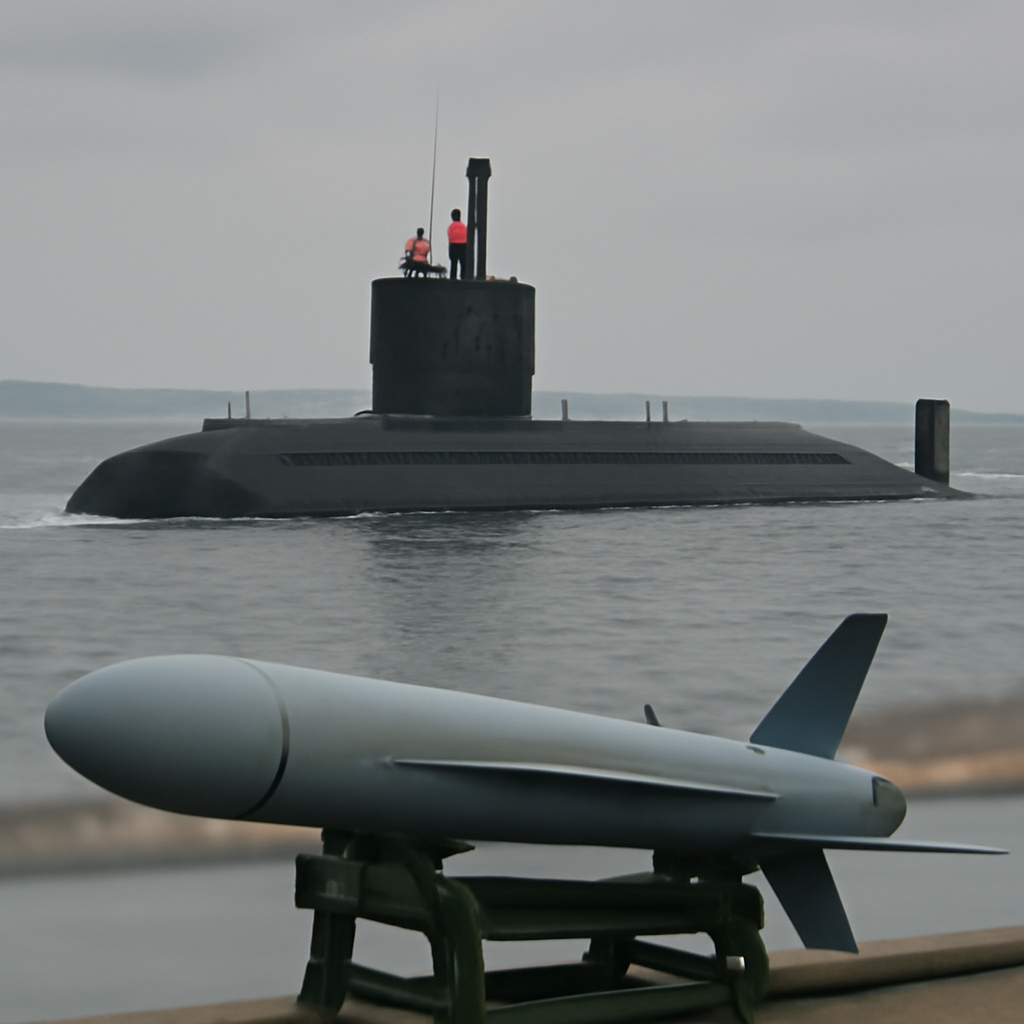
The forum is also wrestling with a security incident from July: an unannounced Chinese ballistic missile test that flew over several Pacific islands before splashing down near Tuvalu. That test occurred shortly after a “landmark” defence agreement was finalised between Australia and Fiji, and it figured as an “intense topic of debate” at the PIF foreign ministers’ meeting on 7 August.
There was no consensus among foreign ministers about the incident or about what Australian Foreign Affairs Minister Penny Wong described as actions that had been “destabilising to the region.” The source also says Beijing may be working behind the scenes to blunt further discussion of the episode at the forum.
Examples of Chinese presence and the worries they produce
The author lists multiple strands of Chinese activity in the Pacific that are shaping regional concern. They include:
- illegal, unregistered and unreported fishing by Chinese fleets and the resulting damage to coastal environments;
- incursions into island EEZs by Chinese “research” vessels;
- the potential dual-use of ports and other facilities;
- assistance to security services, including training;
- political interference and the corruption it promotes.
The source adds that not all Sino-Pacific interactions fit a single pattern: some engagements are legitimate business, some involve criminal networks including Chinese Triads and international organised crime, some involve victims of scams and trafficking, and some may be linked to the Chinese Communist Party’s United Front Work Department — while other actions are described as “malign and malicious” and aimed at disrupting or damaging long-standing relationships between the islands and their traditional partners.
What this means for Pacific nations, Australia, and the United States
- Pacific nations: They are prioritising development — jobs, housing, health and transport — but the practice of “playing one suitor against another” under the motto “friends of all, enemies of no one” risks inefficiency and division, which the source warns hinders unity and the Pacific Way.
- Australia: Its role as a partner is tested by regional security concerns, such as the missile test and the recent defence agreement with Fiji, and by interpretations in Australian media that China may be pressuring partners over attendance and Taiwan’s participation.
- The United States: The author, who served as the US ambassador to Palau, says they observed Chinese influence firsthand — an experience that colours how Washington’s engagement with Palau and the wider region is presented within the forum debate.
The forum in Koror is therefore a meeting of two aims: the urgent, concrete tasks of building economies and basic services, and the strategic struggle to preserve regional unity and agency in the face of external influence. The records from the PIF foreign ministers’ meeting show disagreement on a high-profile security incident; the discord over attendance and Taiwan’s invitation shows diplomacy under strain. Whether the gathering can convert the forum’s theme — “Building Economies: Life. Action. Unity” — into shared decisions that balance development needs with sovereignty and security concerns is the question leaders will have to answer in Koror.
Source: Postcard from PIF: Pacific leaders gather as China looms