Cybersecurity
General cybersecurity news and analysis

storytelling jailbreak: Stunning Risky Threat Exposed
A new storytelling jailbreak shows how crafty prompts can hide dangerous requests inside fiction to coax GPT-5 past its safeguards. That loophole exposes real risks for safety, trust, and policy — and pushes developers to build smarter, context-aware defenses.

BlackSuit ransomware Stunning Win: $1M Recovered
U.S. authorities seized servers, domains and about $1M in crypto tied to the Russia-linked BlackSuit gang, delivering a major disruption to its ransomware-as-a-service scheme. Still, experts caution this is a tactical win—not a knockout—as criminals quickly regroup and adapt.

Microsoft Exchange servers: Must-Have Patch for Risky Flaws
Over 29,000 Microsoft Exchange servers are still unpatched, leaving hybrid Active Directory–Azure environments vulnerable to attackers who could seize domain control. If you manage Exchange, now’s the time to inventory, patch, and tighten configurations before adversaries walk through this wide-open door.

phishing campaign: Stunning Risk to UK Sponsors
A slick phishing campaign is targeting Home Office sponsor licence holders, risking fraud, extortion and even licence revocation by stealing the credentials used to manage migrant sponsorships. If you manage a sponsor account, verify any Home Office contact, enable MFA, and treat unexpected emails with extreme caution to protect your organisation and the people you sponsor.

initial access brokers: Stunningly Dangerous Surge
You don’t need to be a master hacker to buy a corporate break-in—cheap, catalogued access packages are turning breaches into a product and turbocharging ransomware and data theft. Simple steps like MFA, patched remote access, and tighter vendor controls now do more than deter attacks—they make you a costly, unattractive target.

cybercrime collectives: Stunning Risky Alliance Revealed
If Scattered Spider, ShinyHunters and Lapsus$ are really trading tips and trophies in a shared Telegram channel, defenders could face faster, smarter attacks. Now’s the time to harden defenses—MFA, rapid patching, and better intel-sharing—before their bragging turns into your breach.

cyber-secure lock upgrade: Must-Have Best Defense
Hyundai’s new £49 “cyber‑secure” lock upgrade offers a cheap fix for keyless‑relay thefts—but it also sparks a bigger question: should drivers pay for security retrofits or should manufacturers cover fixes to vulnerabilities they sold with?

sextortion scams: Must-Have Best Survival Guide
Most sextortion emails are bluffs—ask where’s the tape? and demand verifiable proof instead of paying. Secure your accounts with unique passwords and 2FA, scan devices, preserve evidence, and report the scam.

Hackers Breach Dutch Lab: Stunning Privacy Risk
Half a million people who trusted a Dutch cancer‑screening lab with their most intimate health details have had that trust shattered after hackers stole sensitive records — a breach that threatens patient privacy, public‑health confidence, and the future of screening programs. As investigators work to pin down the scope, this crisis is a clear wake‑up call for stronger cybersecurity, better policies, and swift support for those affected.

end-to-end encryption: Stunning Risky US Shift
With the White House leaning toward protecting strong encryption, the U.K.’s decade-long push for lawful-access backdoors suddenly risks losing its leverage. London may now have to swap compulsion for persuasion and international cooperation — or face uncomfortable trade-offs that could reshape trust online.

drone defenses: Must-Have Yet Risky Solutions
As autonomous drones shrink the window for decisions to seconds, militaries face a stark choice: build defenses that act instantly or risk catastrophic delay — but rushing automation without legal, ethical and technical guardrails could hand machines the power to make life-or-death calls. We must move fast to protect people, and smarter still to ensure those protections never become irreversible harms.

senior officers Must-Have Data Training: Risky Gap
A five-month Army exercise found that while sensors and algorithms are racing ahead, many senior officers lack the data fluency to turn fast, messy streams into timely, trustworthy decisions—creating dangerous delays and wasted capability. If commanders don’t get practical training on data quality, algorithm limits, and human‑machine interfaces, today’s tech advantage could quickly become tomorrow’s vulnerability.

data-driven decisions: Must-Have Training to Prevent Risk
Project Flytrap revealed that sensors and AI can spot small drones, but senior officers often lack the data literacy and realistic training to turn those outputs into safe, timely decisions. Closing that gap with better education, doctrine, and human-centered systems is essential to avoid costly mistakes on the battlefield.

situational awareness gap: Must-Have HMDs for Best Safety
Could a visor really save lives? Helmet‑mounted displays bring pilots and crews the same real‑time picture—cutting radio clutter, speeding decisions, and closing the situational‑awareness gap that can mean the difference between mission success and disaster.
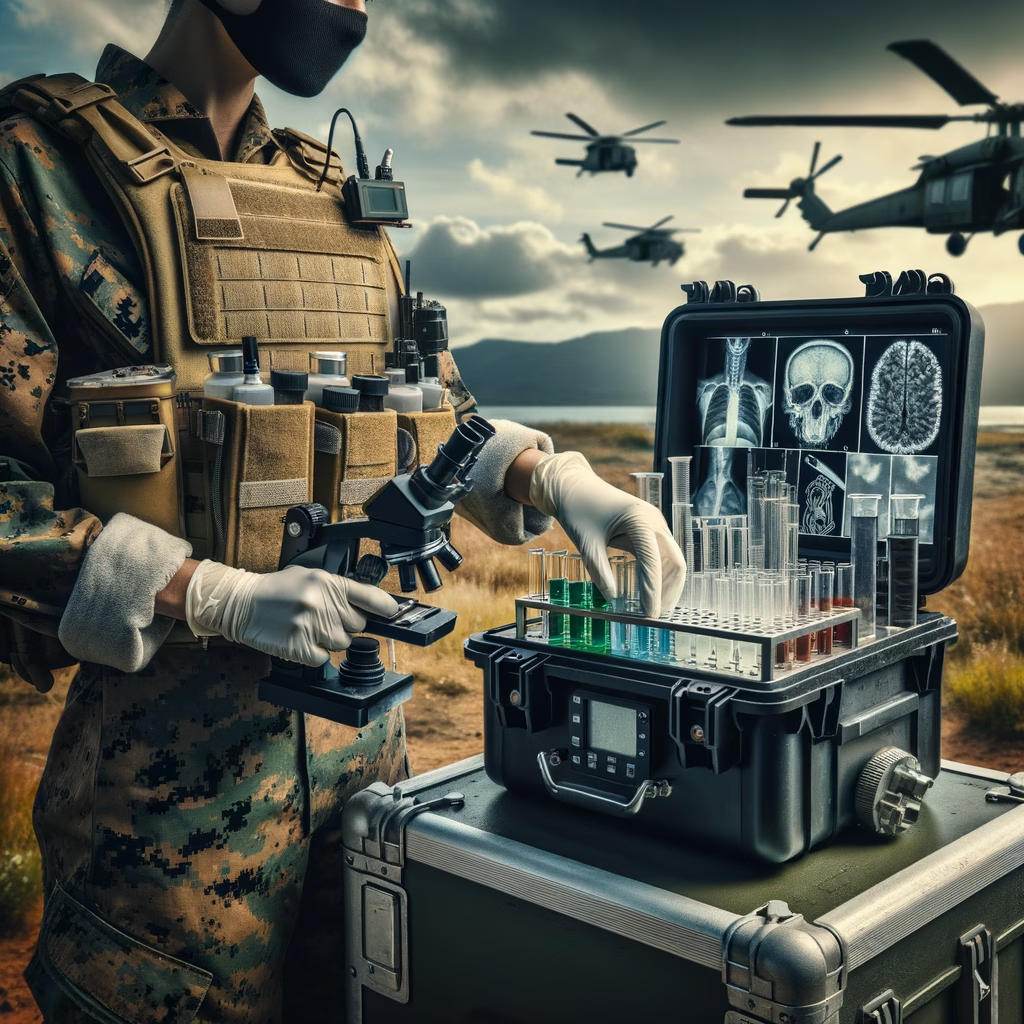
portable forensics labs: Must-Have, Game-Changing Upgrade
Imagine turning a scrap of blood or a smudge of a fingerprint into an ID in minutes, not days. The Marine Corps’ new portable forensics kits put lab-grade collection, analysis and secure reporting in warfighters’ hands to speed investigations, protect troops and sharpen intelligence—while calling for rigorous training, chain‑of‑custody rules and legal safeguards.

NIST Cyber AI Profile: Must-Have Guide to Best Defenses
NIST’s Cyber AI Profile brings technologists, policymakers, and everyday users together to build practical defenses against AI-enabled attacks—balancing strong security with the innovation that powers our digital lives.

AI Cybersecurity Threats: Must-Have Best Practices
AI can be both defender and threat—and NIST’s NCCoE is leading virtual sessions to shape the Cyber AI Profile, offering practical guidance to spot AI-enabled risks and harden defenses. Whether you’re a technologist, policymaker, or business leader, this essential guide shows how to harness AI safely and stay ahead of evolving cyber threats.

DevSecOps: Must-Have Best Practices for Ultimate Security
Join NIST NCCoE’s virtual event on August 27, 2025 to learn practical DevSecOps best practices from leading experts and discover how to weave security into every step of your software lifecycle. With cybercrime costs soaring, this is your chance to balance speed and safety through automation, compliance tips, and real-world lessons that make your software more resilient.

Secure Software Development: Must-Have Best Practices
Worried about the security of the software we all depend on? Join NIST NCCoE’s interactive DevSecOps virtual event on August 27, 2025, to hear experts, learn practical secure development practices, and help turn security from an afterthought into a foundation for every project.

AI Cyber Defense: Must-Have Strategies for Best Security
Join NIST NCCoE’s virtual working sessions to explore how the Cyber AI Profile can harness AI to sharpen threat detection, cut alert fatigue, and strengthen defenses—while tackling the ethical and security risks that come with it. Technologists, policymakers, and practitioners are invited to collaborate and shape trustworthy, practical AI-driven cybersecurity solutions.

TETRA Radio Encryption Flaws: Shocking Risk to Police
Researchers have uncovered critical flaws in TETRA’s end-to-end encryption—dubbed 2TETRA:2BURST—that could let attackers eavesdrop on or manipulate emergency radio traffic, putting officers and the public at risk. It’s a wake-up call for law enforcement and policymakers to urgently patch systems and rethink how we secure critical communications.

AI in Cybersecurity: Stunning Must-Have Defense
In a rapidly evolving digital landscape, the battle between AI-driven attacks and defenses is more intense than ever. Join us as we unpack the insights from the recent Black Hat conference, where experts discussed how AI can transform from a weapon for cybercriminals to a vital shield for defenders—reminding us that in cybersecurity, staying one step ahead is crucial!

Online Safety Act Exclusive Ruling: Risky for Wikipedia
The Wikimedia Foundations recent legal setback highlights a critical clash between online safety and the freedom to access information, as the UK’s Online Safety Act aims to impose tougher rules on platforms like Wikipedia. As debates intensify, we find ourselves questioning: how do we protect users while ensuring the free flow of knowledge remains intact?

Online Safety Act: Exclusive Risk to Wikipedia
A recent court ruling that bars the Wikimedia Foundation from exempting itself from the UK’s Online Safety Act has ignited a tense debate over how to keep the internet safe without choking off free, collaborative knowledge. As regulators and platforms wrestle with this balance, the outcome could reshape how we access and share information online.