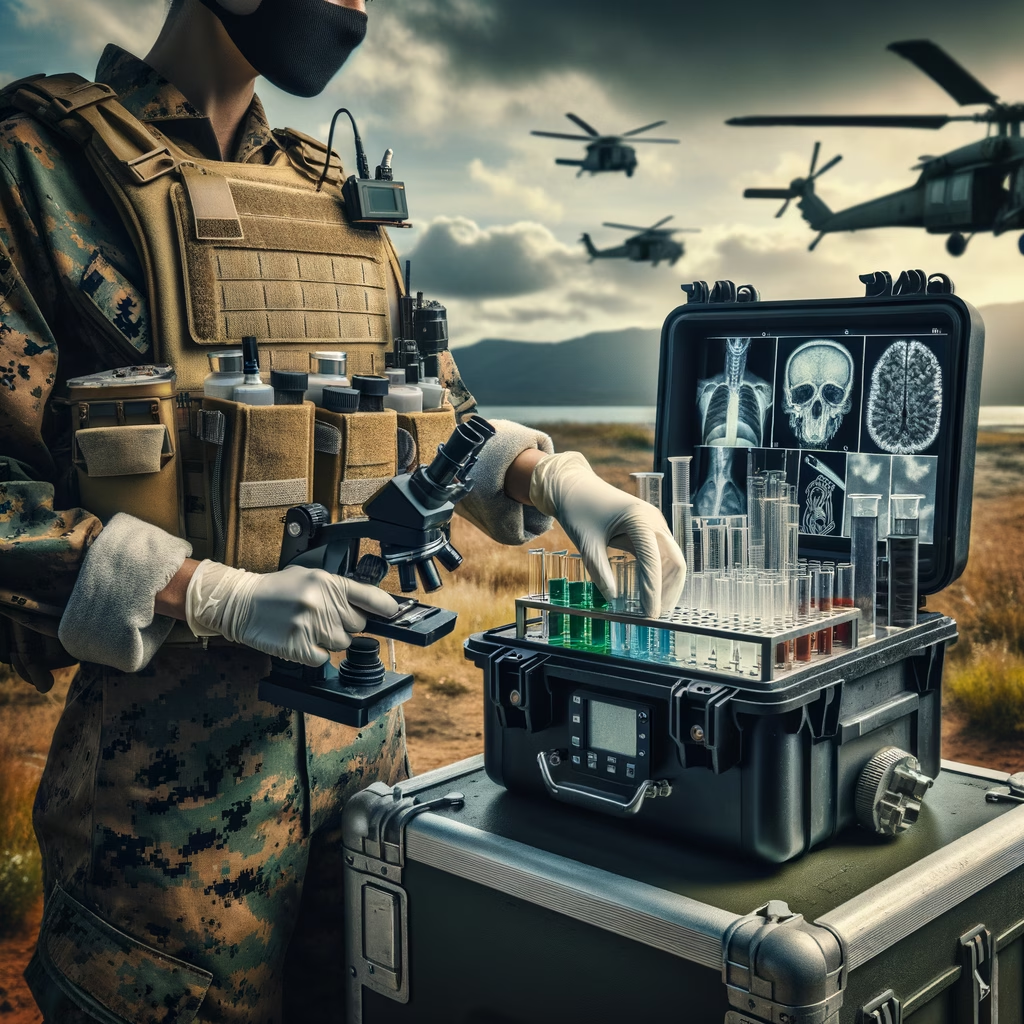
How quickly should a Marine turn a scrap of blood or a smudge of fingerprint into an identification that sends investigators and commanders in pursuit? That question sits at the heart of the Marine Corps’ push to field upgraded portable forensics labs. These compact toolkits promise near‑immediate capability to collect, analyze and forward evidence from the point of contact, allowing warfighters to act on intelligence in minutes or hours rather than days.
Portable forensics labs: shrinking the lab to the battlefield
The trend is clear across U.S. security services: compressing laboratory capability into field‑deployable packages so evidence gathered in austere environments can be acted upon more rapidly. For Marines operating in expeditionary, urban, or counterinsurgency settings, that can be the difference between closing a case quickly or watching a suspect melt into a crowd while samples travel through a traditional forensic pipeline.
Portable forensic kits are not new. Historically, Marines collected latent prints, biological samples, trace materials and ballistic fragments, then shipped them to centralized labs for processing and confirmation. What’s different now is integration and capability: smaller hardware combined with secure communications, evidence‑management protocols and software designed to document and transmit preliminary results for corroboration. In short, these portable forensics labs are intended not to replace accredited laboratories but to triage, prioritize and accelerate investigative leads.
Operational advantages and real‑world impact
Commanders and operators see obvious benefits. Faster identifications compress operational timelines, improve force protection, and produce tactical intelligence that can shape follow‑on missions. For investigators with agencies such as NCIS or military justice authorities, field‑collected forensics can narrow suspect lists, focus searches, and enable interdictions that otherwise might be delayed.
Technological advances in molecular biology, imaging and secure data transfer have made this evolution practical. Miniaturized DNA analyzers, high‑resolution portable imaging for fingerprints and automated evidence‑management systems can deliver actionable data from forward positions. When used correctly, that can turn hours of waiting into minutes of decisive action.

Audit-ready is a season. It shouldn't be.
Evidence in spreadsheets, controls drifting between audits, frameworks multiplying on flat headcount. Nubivance runs continuous compliance on Rapid7 Cyber GRC - SOC 2, HIPAA, ISO 27001, PCI, CMMC.
End the scrambleRisks, limitations and the need for rigorous standards
Speed brings tradeoffs that go beyond engineering. Rapid, forward testing is rarely as comprehensive as analyses performed in accredited labs, so validation—and the procedures surrounding use—matters immensely.
– Reliability and accuracy: Field devices accelerate initial screening but can produce false positives or inconclusive results if not properly validated and calibrated. Preliminary identifications must be treated with appropriate caution and, when necessary, confirmed through established laboratory channels.
– Chain of custody and legal admissibility: Evidence gathered and analyzed under battlefield conditions must be documented, stored and handed off in ways that preserve legal defensibility. Secure packaging, time‑stamped metadata and auditable handoffs are essential.
– Training and human factors: Advanced equipment only helps when operators follow forensic best practices. Proper training reduces contamination risk and improves the evidentiary value of samples.
– Operational security and data protection: Genetic and biometric outputs are highly sensitive. Protecting that information during transmission and storage is critical to prevent compromise or adversary exploitation.
– Adversary adaptation: As forward forensics improve, adversaries will adapt—using deniable materials, deliberately contaminating scenes or tightening operational security to frustrate identification.
Scientists and criminal investigators emphasize robust validation: portable systems must meet standards that allow their outputs to be used responsibly in investigations and, when appropriate, in courts or military justice forums. Without that rigor, rapid results risk misdirecting scarce investigative resources or producing unjust outcomes.
Policy, oversight, and international considerations
Deploying portable forensics labs raises important policy questions about oversight, civil liberties and rules of engagement. How will evidence collected in theaters with civilians or in foreign jurisdictions be governed? Which agencies will control and vet the data? What safeguards ensure compliance with domestic and international law?
Establishing governance mechanisms—accreditation pathways, relationships with confirmatory laboratories, and clear policies on biometric and genetic data—is as important as buying hardware. The Marine Corps must ensure that capability is matched by procedural discipline.
Turning capability into responsible practice
For Marines on the ground, the appeal is unambiguous: a toolkit that turns hours into minutes can save lives, shorten missions and give small units leverage they previously lacked. For investigators, the crucial requirement is that forward results be reliable enough to direct further work and withstand scrutiny.
The practical work ahead centers on distribution, training and institutionalizing controls that convert upgraded kits into responsible capability. That includes validated equipment, rigorous operator training, secure communications, and clear chains of custody linking field actions to centralized forensic confirmation.
In the end, the question posed by these upgraded portable forensics labs is philosophical as well as practical: will commanders and investigators treat battlefield results as sufficient for action, or will they regard them as provisional pending formal lab confirmation? The answer will shape tactical outcomes, evidentiary standards and accountability in conflicts to come. Portable forensics labs offer a powerful advantage, but their value will be determined less by widgets and more by the discipline, oversight and legal frameworks that govern their use.



