[SPONSOREDNUBIVANCE]
Rapid7 deployed right the first time.
Full-platform Rapid7 rollouts - InsightVM, InsightIDR, event sources, agents, tuning - by a Registered Partner who has done it at state-agency scale, including OT/SCADA.
Talk deployment
Most organizations are flying blind when it comes to GRC AI tools, with a staggering 87% of IT and security pros admitting they can't fully see the AI tools active within their organization. This visibility gap poses a foundational risk, making it harder to rely on other controls and assurances.
South Korea is racing to develop its own AI model for bug detection by 2026, driven by concerns that relying on foreign models could leave the country vulnerable at critical moments. The homegrown AI model aims to rival leading security-focused models, ensuring the nation has control over its bug-finding capabilities.

As AI continues to shape our world, a crucial question emerges: will our privacy protections rely on individuals controlling their data or on companies being held accountable for how they collect and use it? By shifting the focus from personal control to corporate responsibility, we can create a more effective and fair approach to safeguarding our personal information.

OpenAI just unveiled GPT-Red, an automated red-teaming model that's a game-changer in detecting prompt injection attacks, helping to shield its GPT models from vulnerabilities. By mimicking human red-teaming tactics, GPT-Red identifies and feeds back crucial insights to strengthen model defenses before they go live.

Imagine a cybersecurity system that can launch complex attacks autonomously, accelerating threat detection and response - a recent experiment by Cato Networks has made this a daunting reality. By harnessing AI's potential, their production tool paired with OpenAI models produced end-to-end attack chains in as little as 40 minutes.
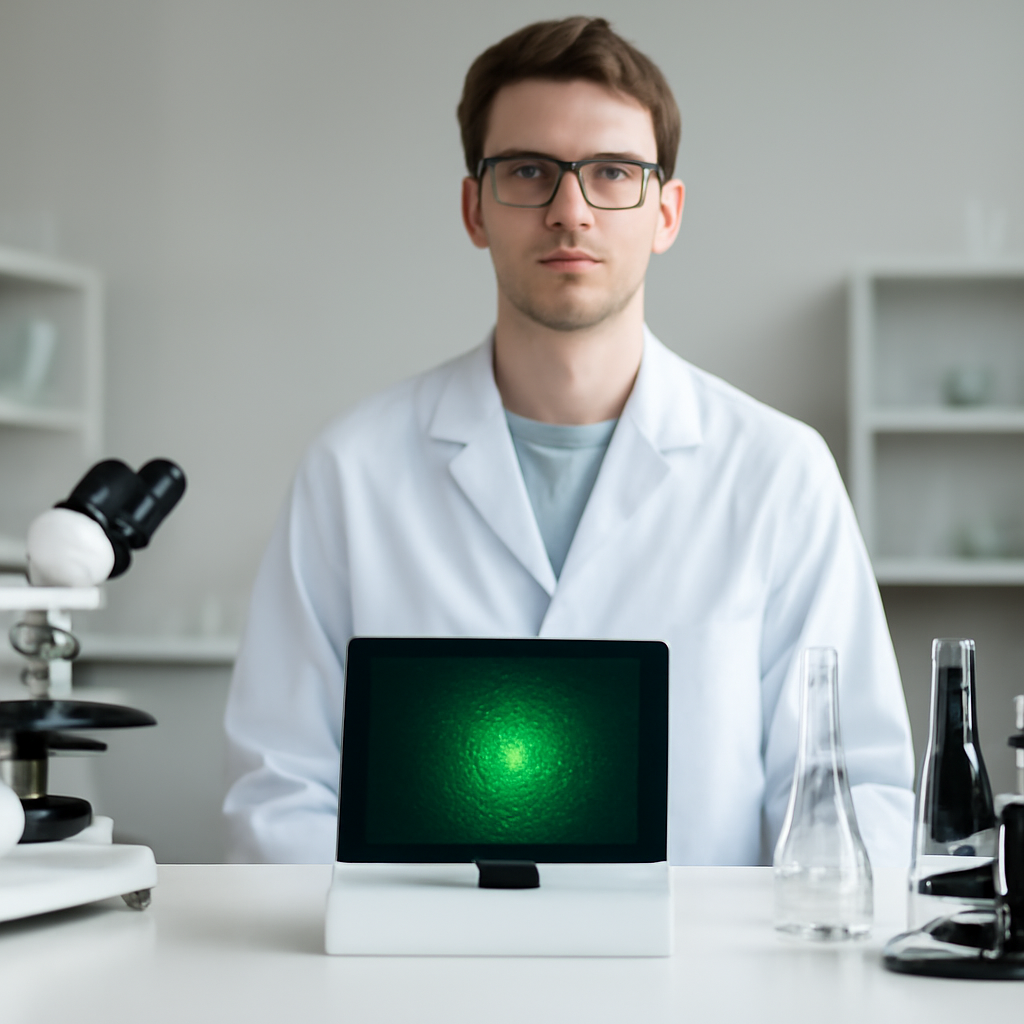
Imagine a screen that can see and show you more than just images - Swiss researchers have just made that a reality with the development of a dual-function pixel that can sense and display simultaneously. This innovative Fourier pixel can generate and sense arbitrary light fields, opening doors to a new world of interactive technology.

The AI marketing revolution is in full swing, with 70% of companies now deploying custom AI agents to tackle real marketing tasks - but as adoption surges, a new challenge emerges: how to scale and govern these powerful tools effectively. With only 3% of businesses not using marketing AI at all, the focus has shifted from "should we adopt?" to "how do we manage?"

Imagine sitting with a Fortune 50 CISO, witnessing a critical moment of clarity: "This is exactly what is wrong with how most security teams are designing their AI architecture right now." It turns out, current AI designs in the SOC are misguided, asking the wrong part of the decision process to do the wrong work.
Full-platform Rapid7 rollouts - InsightVM, InsightIDR, event sources, agents, tuning - by a Registered Partner who has done it at state-agency scale, including OT/SCADA.
Talk deployment
Big news for ChatGPT fans: OpenAI has temporarily lifted usage limits for Plus, Pro, and Business plans, giving you more time to tap into the power of its most advanced model. This move comes after a surge in demand over the past 48 hours, with the company also resetting current usage for all customers.

Big news for paid subscribers: Anthropic is extending access to Claude Fable 5 through July 19, 2026, giving you even more time to experience the power of this cutting-edge tool. This extension applies to Claude Pro, Max, Team, and premium seats on seat-based Enterprise plans.

Imagine interacting with ChatGPT and receiving a response that sounds like a robotic, three-part formula - it's a pattern that's distinctly non-human and may be changing the way we communicate. From affirmations to multiple-choice queries, these new rhythms of reply are a far cry from the emotional ebbs and flows of live speech.

Estonia is taking a groundbreaking step by introducing digital IDs for AI agents, empowering users to track and control what these autonomous software programs can access and do on their behalf. This innovative approach, dubbed "Know Your Agent," is set to revolutionize the way we audit and regulate AI actions.

Meta just made it easier to create stunning AI images with Instagram photos - simply @-mention a public profile in its AI app and watch your visuals come to life. By default, public photos and reels can be reused to generate new images, opening up endless creative possibilities.

The Paris Peace Forum is tackling the growing threat of AI-driven cyber attacks by launching INTAiC, a groundbreaking global hub that unites experts from two previously separate spheres: network defense and AI security. By bridging this gap, INTAiC aims to provide a unified front against the evolving risks to global internet infrastructure.

Researchers have made a surprising discovery about GitHub Copilot, finding that it can be vulnerable to AI safety bypasses, even when it refuses harmful prompts in isolation. This weakness emerges when the same objective is embedded in a typical multi-turn IDE session.

Big news for Fable 5 fans: Anthropic is temporarily sweetening the deal for subscription customers, now including access to its powerful model for up to 50% of weekly usage limits on Pro, Max, Team, and select Enterprise plans through July 7. After that, Fable 5 will be available à la carte via usage credits.
Evidence in spreadsheets, controls drifting between audits, frameworks multiplying on flat headcount. Nubivance runs continuous compliance on Rapid7 Cyber GRC - SOC 2, HIPAA, ISO 27001, PCI, CMMC.
End the scramble
The Pentagon's GenAI.mil platform is blowing up, with a whopping 1.7 million users and over 100,000 custom agents created - and it's only getting bigger with new models and higher classification levels on the way. This generative AI marketplace is revolutionizing the Department of Defense's approach to innovation, with top vendors like SpaceX, OpenAI, and Google already on board.

DeepSeek is turbocharging its growth with a bold plan to double its team size, signaling a major shift from research to commercial AI development with a focus on cybersecurity. The company's ambitious hiring spree, with over 30 new roles, follows a whopping $7.4 billion funding round.

Meet Sonnet 5, Anthropic's latest AI model that's setting a new standard for safety and reliability, outperforming its predecessor with a lower rate of undesirable behaviors and enhanced defenses against malicious requests. This cutting-edge model is designed to be more agentic, accurate, and secure, making it a game-changer for users.

Big news for AI innovation: the US has lifted export restrictions on Anthropic's cutting-edge AI models, Fable 5 and Mythos 5, after implementing robust safeguards to ensure responsible use. This move paves the way for global collaboration and strengthens America's leadership in AI.

Anthropic is stepping up its AI security game with enhanced guardrails, but acknowledges a trade-off: its new classifier may flag more harmless requests during everyday coding and debugging tasks. The company is moving forward with redeploying its advanced models, Claude Mythos 5 and Claude Fable 5, starting July 1.
Big news: the US has lifted export controls on Anthropic's AI model Fable 5, allowing it to be accessible to users worldwide again after a brief shutdown. This comes after Anthropic made significant strides in curbing a concerning technique, successfully stopping it in over 99% of attempts.

State technology leaders are turning to artificial intelligence to deliver better, more efficient services to constituents, but must navigate trade-offs around budgets, staffing, and legal obligations. AI dominated discussions at the NASCIO Annual Conference, highlighting its potential to match the pace of change and revolutionize state agency operations.

Imagine being able to ask a surveillance system, in simple terms, to find what you're looking for - and getting an instant answer. AI video surveillance has just reached a new level, allowing users to pose natural-language questions about footage and receive accurate results.