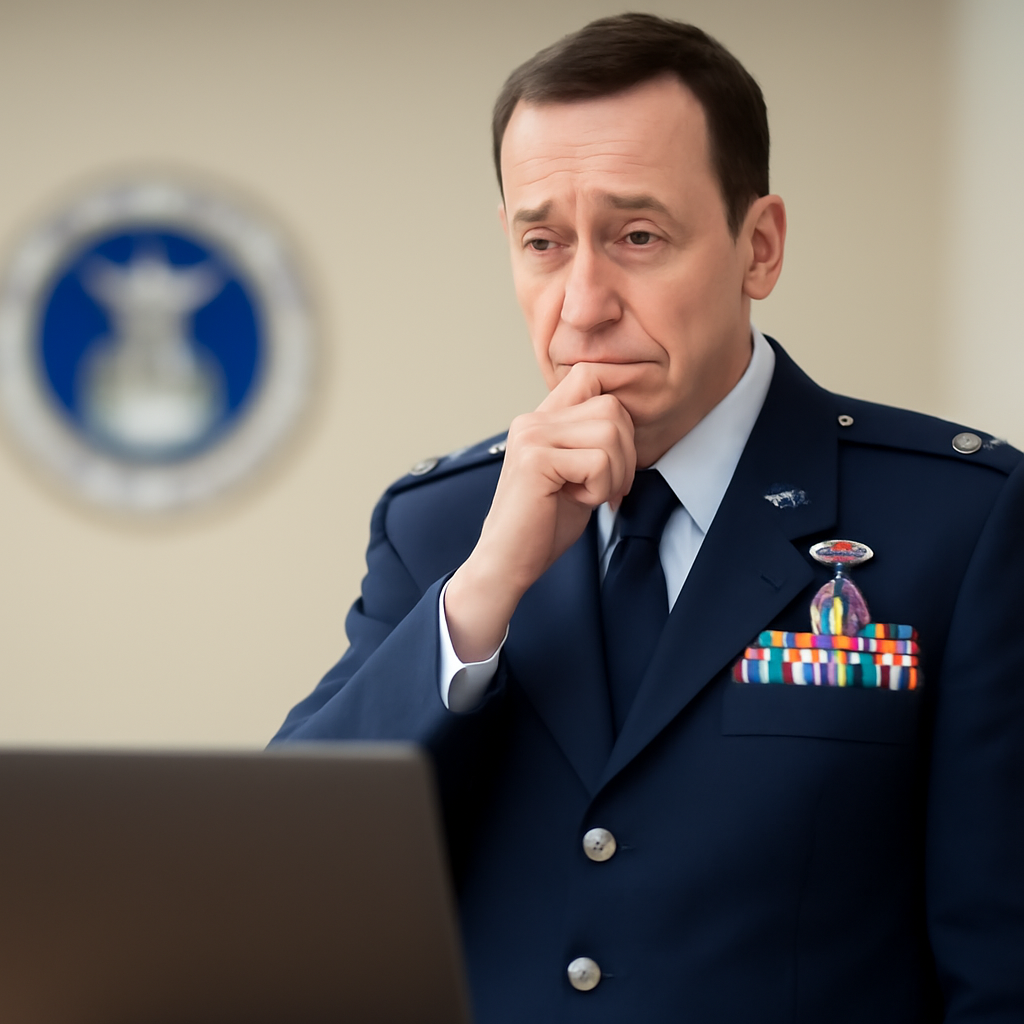
"We will not in any way hinder or stifle the Growth of this incredible Industry. Rather, we will cherish it, help it, and watch over it, as it grows!" President Donald Trump wrote in a Truth Social post announcing plans to form an "AI Force" and appoint an AI "Czar."
What the president proposed
In a weekend post on Truth Social, President Donald Trump said he is "forming the AI Force, much like I did Space Force," and that he will soon announce an AI "Czar" — adding the line, "Only High I.Q. individuals need apply!" The post also included the assertion that authorities "will also be looking for BAD, and we can do that, very easily, with our already existing Criminal and Civil Justice System." The announcement did not provide details about the AI Force's mission, authorities, or structure.
White House coordination framed by OSTP
The White House did not respond to a request for comment about the role of the AI Force or its primary mission. Michael Kratsios, who heads the White House Office of Science and Technology Policy, told Fox News Sunday that the president's post “describes how important it is that we as an administration coordinate in order to make sure that this great technological innovation that’s transforming the country, that’s driving economic growth, continues to do so.” Kratsios added that “these implications of AI spread across so many different agencies, so being able to have someone at the White House to be able to work on all those issues across the agencies is really critical.”

This site is the portfolio.
OSINTSights runs on Cloudflare Workers, D1, R2, and Vectorize, with an AI pipeline on Hetzner ARM. Nubivance designed, built, and operates it. We do the same for clients.
See what we buildResponses from former officials and industry-aligned supporters
David Sacks, who served as the Trump administration's AI and crypto czar until March, shared the president’s post on X and backed the line of argument that halting development would be counterproductive. Sacks agreed that a pause on AI development “would not make America safer” and that such a pause “would hand the frontier to China,” conveying concern that restrictions could cede advantage to rivals.
Safety advocates and the public alarm
Not all reactions were affirming. A spokesperson for AI safety advocacy group Americans for Responsible Innovation said, “Poll after poll shows the American public is alarmed by recent warnings from AI developers and whistleblowers as well as the rogue AI incidents that took place this summer. There’s pressure on the President to do something, and that’s what this announcement could be designed to address.” The spokesperson's comment framed the announcement as a possible political response to public anxiety about AI risks.
Security community survey and the Space Force comparison
The Institute for Security and Technology recently released a survey of current and former national security officials in which one-third of respondents believe an AI model will operate outside human control within the next decade. Philip Reiner, the think tank’s CEO and co-founder, characterized the president’s likening of an AI Force to Space Force as “the shape of an answer, but without the substance.” Reiner noted that Space Force was created through congressional action — Congress directed its creation as part of the 2020 National Defense Authorization Act — and argued there is no straightforward legislative equivalent for an AI capability that “cuts across every domain.” He said the sense he gets is that an AI Force would fall more squarely in a Defense Department lane.
How AI safety advocates, congressional actors, and tech executives are positioned
- AI safety advocates: Americans for Responsible Innovation and similar groups are watching for concrete steps and view the announcement as a response to public concern following whistleblower warnings and recent "rogue AI incidents" the source references.
- Congressional lawmakers and state leaders: The source notes lawmakers and state officials have floated proposals such as so-called “kill switches” to disable AI systems, indicating these actors are exploring regulatory and legislative levers unrelated to the proposed AI Force.
- Tech executives and industry proponents: Leading tech executives have issued high-profile warnings about potential harms from advanced models, but some figures, including former administration appointees like David Sacks, oppose broad development slowdowns and argue a pause would be harmful strategically.
Trump's announcement places a high-profile label — an "AI Force" and an imminent "Czar" appointment — on a policy area where, according to sources quoted, public concern, executive warnings, and nascent legislative ideas already swirl. The published comments point to competing priorities: preserving rapid technological growth and economic benefit, while responding to a segment of national security and public safety voices who urge concrete guardrails. The next step the post implies is a formal designation of the czar and a clarifying outline of the Force's mandate — specifics the White House has not yet provided.
https://www.defenseone.com/policy/2026/09/trump-ai-force/416125/