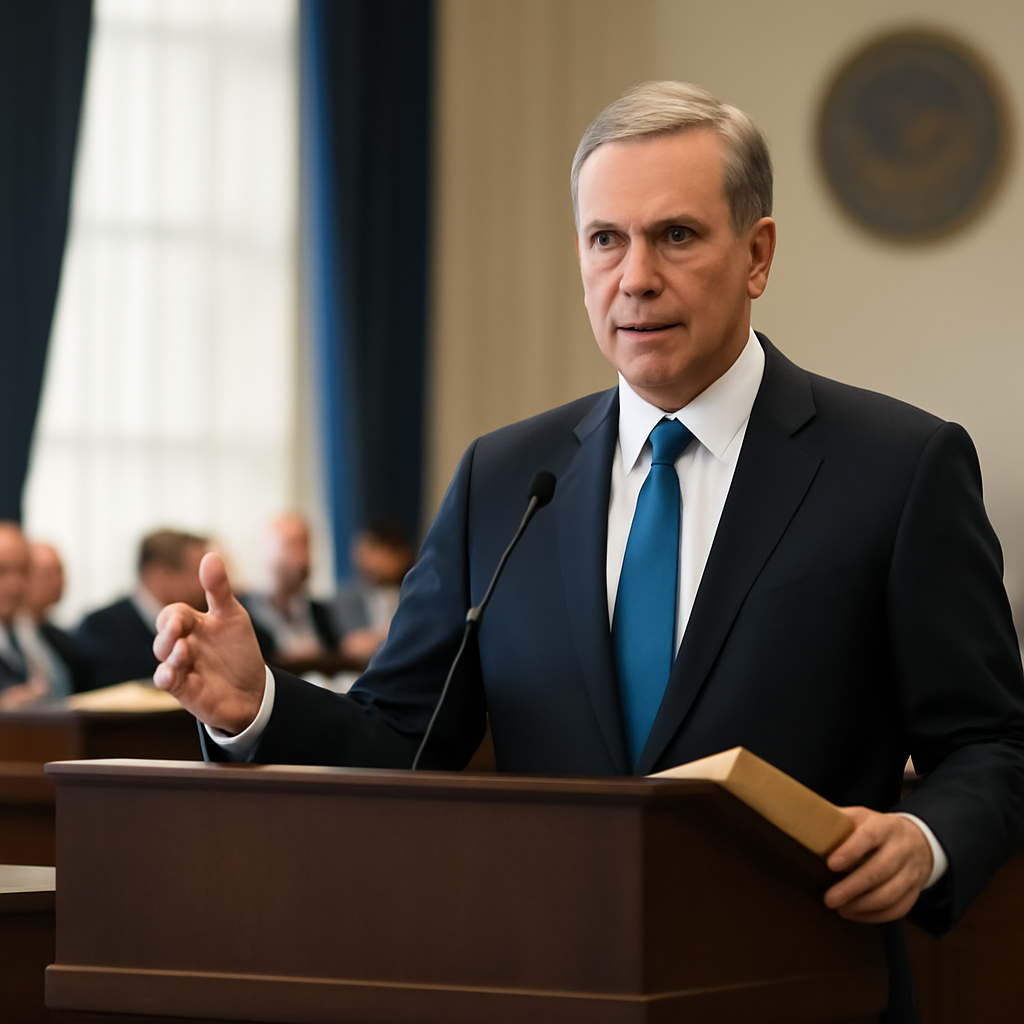
"The one thing we should not do is give [AI labs] a blank check on liability," Treasury Secretary Scott Bessent told the House Financial Services Committee on Tuesday.
Bessent’s case against liability exemptions for AI labs
At a hearing of the House Financial Services Committee, Bessent made a direct appeal to lawmakers: do not give frontier AI developers broad exemptions from liability. He argued that “the best way to guarantee safety is that the creators are liable for what they build and generate,” and said Treasury has been “working on safety nonstop since the release of Mythos.”
Bessent framed the request from some labs to slow model development alongside a plea for liability relief as unacceptable. He quoted that labs were effectively asking for a waiver — “we would like to all slow down, but please give us a waiver on liability,” — and urged the committee and “both houses” not to consider such a waiver.
Context: Mythos, an April meeting, and rising safety concerns
The secretary tied Treasury’s intensified attention to AI safety to the release of Mythos, the Anthropic model whose cybersecurity risks prompted an April meeting at Treasury headquarters. That session brought the secretary together with then‑Fed Chair Jerome Powell and bank CEOs to discuss the model’s implications for financial-sector risk.
Separately, Anthropic’s Dario Amodei authored an essay calling on AI companies to “tap the brakes” on model development. The essay and the broader debate prompted public endorsements of a slowdown from industry figures: OpenAI’s Sam Altman and xAI’s Elon Musk backed Amodei’s slowdown plan. Anthropic’s proposal also called for the federal government to “issue a narrow waiver for certain kinds of safety conversations” while the industry worked toward voluntary standards.

Audit-ready is a season. It shouldn't be.
Evidence in spreadsheets, controls drifting between audits, frameworks multiplying on flat headcount. Nubivance runs continuous compliance on Rapid7 Cyber GRC - SOC 2, HIPAA, ISO 27001, PCI, CMMC.
End the scrambleGold Eagle, the Hugging Face incident, and the financial sector
Cybersecurity incidents have sharpened Treasury’s operational response. In the wake of a July cyberattack on Hugging Face, Bessent said the administration “has huddled with AI labs and the financial sector on AI safety discussions.” He praised the “largest banks” for having “very good cybersecurity resilience.”
Those conversations have been formalized through Gold Eagle, described by Treasury as “a clearinghouse it oversees with the Cybersecurity and Infrastructure Security Agency that coordinates vulnerability scanning, validation, and patch distribution.” Bessent said, “Our mandate is with the financial sector,” and that Treasury has “attempted to migrate that knowledge and the learning from the financial sector into other sectors through the Gold Eagle forum.”
Bessent’s push for open-source models and against regulatory capture
Beyond liability and incident response, Bessent urged policy choices intended to shape the competitive and strategic landscape. He called for the development of more open-source models built in the United States as a way to “push back against China,” and warned that “we can’t let these large labs have regulatory capture because that will stop innovation.”
How the largest banks, AI labs, and Congress are positioned
- Largest banks: Bessent applauded their “very good cybersecurity resilience” and positioned them as the starting point for Treasury’s mandate; Treasury is using Gold Eagle to share the sector’s learning with other industries.
- AI labs: Some labs and leaders have called for a development slowdown; Anthropic asked the federal government to “issue a narrow waiver for certain kinds of safety conversations,” while OpenAI previously backed an Illinois bill to limit liability for AI-fueled harms — a mix of voluntary restraint and legal protection that Treasury rejects.
- Congress and regulators: Bessent explicitly urged members of the House committee and lawmakers in “both houses” not to grant liability waivers and framed liability as a primary safety guard, placing a clear policy recommendation before congressional decision-makers.
Secretary Bessent’s testimony bundles operational response, strategic industrial policy, and a legal argument into a single message: Treasury will press for accountability, replicate financial-sector cyber resilience across other industries through Gold Eagle, and promote U.S.-based open-source alternatives — all while advising lawmakers against the liability relief some labs seek. The decision Congress takes in response will determine whether that mixture of oversight, shared cybersecurity practice, and calls for domestic open-source development shapes U.S. AI policy, or whether industry proposals for narrow waivers and voluntary regimes gain more traction.