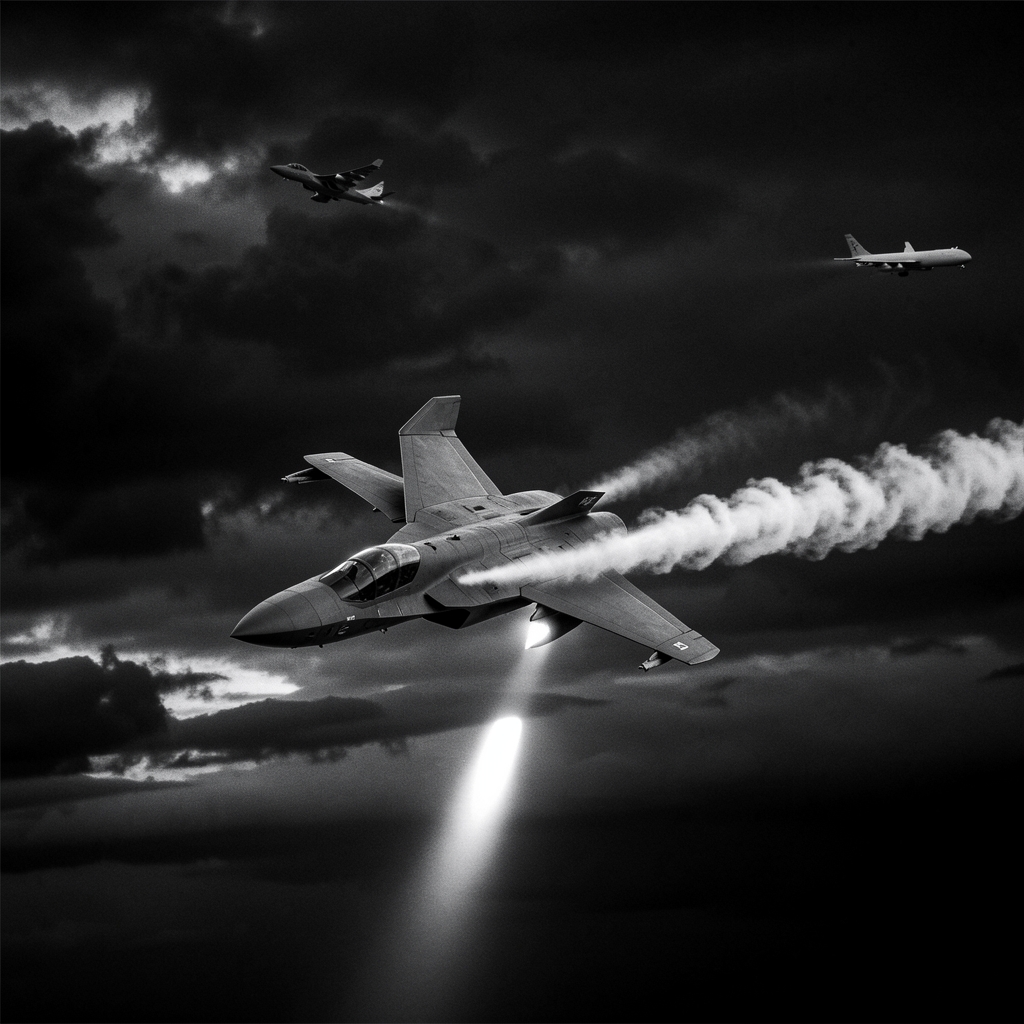
What does a single photograph change about a secretive weapons program? For the B-21, a recently published aerial image appears to do something few official releases have: it gives a clear, overhead view of the aircraft in flight and, in doing so, reveals physical details that observers had not seen before.
What the image shows
The War Zone published a new image taken during aerial refueling trials that, according to its reporting, provides the first full overhead look at the B-21. The photograph captures the aircraft from above while it was engaged in a refueling event and, as The War Zone notes, offers a glimpse of several features that had not previously been visible in public images.
Why an overhead view matters
An overhead perspective alters what can be seen and inferred. Side and three-quarter views emphasize silhouette and profile; from above, planform, wing geometry, and surface details become clearer. The War Zone's image places those elements on display during a routine operational activity — aerial refueling — which compounds the significance because the subject is photographed while airborne and configured for mission support.

This site is the portfolio.
OSINTSights runs on Cloudflare Workers, D1, R2, and Vectorize, with an AI pipeline on Hetzner ARM. Nubivance designed, built, and operates it. We do the same for clients.
See what we buildDifferent stakeholders, different readings
- Technologists and analysts will focus on shape and surface cues. A clear overhead image allows assessment of planform, control surface layout and other design details that influence aerodynamic performance and signature management. The War Zone’s coverage highlights that new vantage point as the primary value of the photograph.
- Policymakers and program managers may weigh the implications of unintentional disclosures. Even a single image can prompt questions about operational security, public messaging, and the balance between demonstration and discretion. The War Zone’s reporting of the photo underscores that the image surfaced during an in-flight refueling trial, a routine but operationally sensitive activity.
- Observers and potential adversaries may use high-quality imagery to update assessments. When a previously unseen angle becomes public, it can refine existing opinions about capability and design. The War Zone frames the photograph as a new point of public data, one that changes what is publicly knowable about the aircraft’s external features.
What this means going forward
Images like the one reported by The War Zone do more than satisfy curiosity; they shift the publicly available baseline for analysis. A single photograph can prompt technical re-evaluation, policy discussion, and media scrutiny — and that sequence often accelerates as others examine pixels and compare notes. The War Zone’s publication of the overhead refueling shot thus represents a moment when the visual record of the platform expanded in a way that invites fresh scrutiny.
Who ultimately benefits from, or is challenged by, that scrutiny depends on perspective: those who design and operate the system, those who oversee it, those who evaluate it, and those who might oppose it. The image does not resolve those debates, but by widening the window of visibility it narrows the space where uncertainty once prevailed.
As public images continue to surface, one question persists: how will the balance between operational security and transparent reporting evolve when the simplest airborne snapshot can change the conversation?
https://www.twz.com/air/b-21-raider-like-you-have-never-seen-it-before