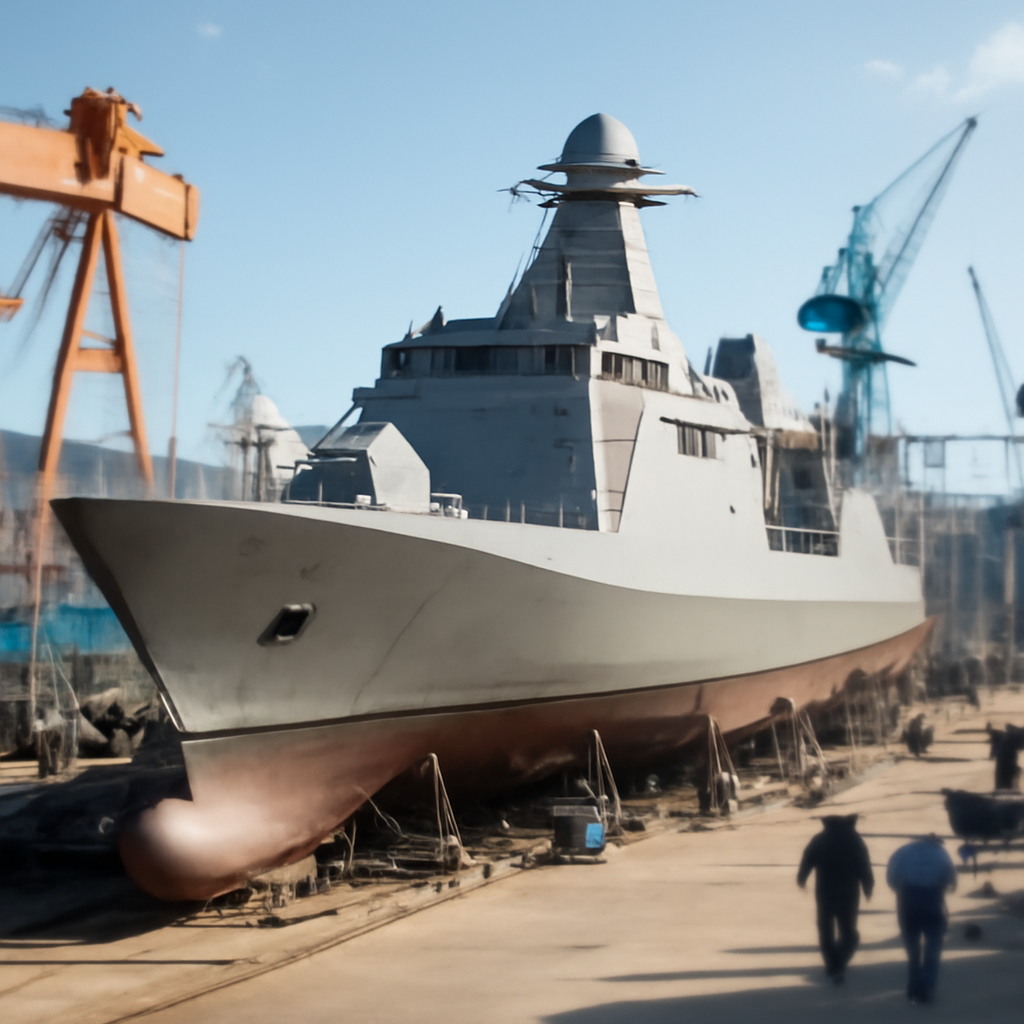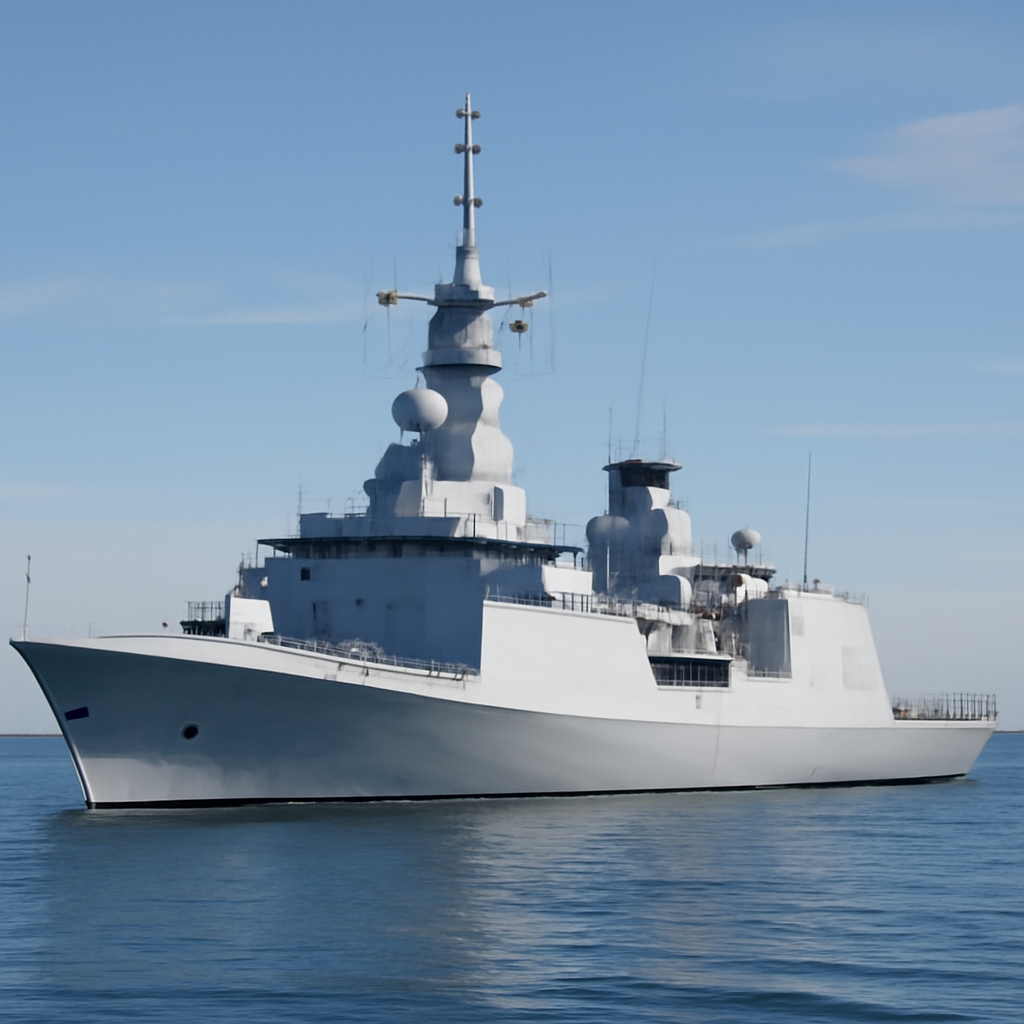
Design and mission profile of the GMF 140
Rheinmetall unveiled the GMF 140 as a 140‑meter, more‑than‑6,600‑ton frigate intended for blue‑water operations while retaining flexibility for expeditionary, littoral, and coalition missions. The company describes the ship as a single platform combining area air defense, ballistic missile defense (BMD), anti‑submarine warfare (ASW), and long‑range strike capabilities for operations in contested maritime environments. The design emphasizes interoperability with NATO systems and is being positioned to meet “the requirements of NATO and allied navies.”
Weapons, sensors and U.S. integrations
The GMF 140 is built around widely fielded U.S. and NATO technologies, according to Rheinmetall. The design accommodates the AEGIS combat system and multiple U.S.‑sourced radar options capable of detecting, tracking, and engaging conventional air threats, hypersonic weapons, and ballistic missiles. As an alternative combat management architecture, Rheinmetall says the ship can be fitted with Lockheed Martin’s CMS330, described as an open and scalable architecture that can integrate both U.S. and European sensors and weapons.
Primary weapon capacity centers on 64 strike‑length Mk 41 vertical launch system (VLS) cells. Rheinmetall notes that a 64‑cell install could, in theory, carry up to 256 Evolved Sea Sparrow Missiles in quad‑packed configuration, while adding that typical load‑outs would balance larger, longer‑range munitions such as Tomahawk cruise missiles and the Standard family of surface‑to‑air missiles. Additional armament listed in the concept includes anti‑ship missiles, torpedo launchers, a 5‑inch (127mm) main gun, laser weapon systems, close‑in weapon systems (CIWS) and secondary guns; concept art shows a Mk 45 main gun and SeaRAM CIWS fore and aft.

This site is the portfolio.
OSINTSights runs on Cloudflare Workers, D1, R2, and Vectorize, with an AI pipeline on Hetzner ARM. Nubivance designed, built, and operates it. We do the same for clients.
See what we buildHull, acoustic, aviation and unmanned systems fit
Rheinmetall describes the ship as having a low‑signature hull with integrated acoustic management measures, hull‑mounted and towed sonar systems, and facilities to support embarked helicopters and uncrewed systems from U.S. or European suppliers. The design includes a wave‑piercing bow and a pronounced chine running the hull — features the source compares visually to the French FDI (Frégate de Défense et d’Intervention) class — and is sized to provide margins for large radar arrays, directed‑energy weapons, additional electronic‑warfare systems and computing growth.
Size, crew and comparisons to contemporary frigates
At roughly 460 feet long and displacing more than 6,600 tons, Rheinmetall places the GMF 140 near the upper boundary of modern frigate sizing and close to a small destroyer. The company promotes that displacement as deliberate: to deliver electrical power and internal volume sufficient for large sensors and future weapons. The GMF 140 is presented alongside other modern classes — the canceled U.S. Constellation class, the British Type 26, and the Franco‑Italian FREMM — but Rheinmetall stresses a different emphasis: the GMF 140 was “conceived from the outset as a fully integrated air and missile defense combatant” while retaining ASW and long‑range strike roles. Crew size is compact for the platform’s scale: a core complement of 90 with an option to add 35 additional personnel.
Export strategy, shipbuilding and procurement prospects
Rheinmetall is marketing the GMF 140 for export, saying it will offer the design “initially as part of a procurement project in North America” before pursuing other allied navies. The company acquired Naval Vessels Lürssen earlier this year, which includes several German yards; Blohm+Voss in Hamburg is singled out as the most likely candidate for construction because of its history building surface combatants. The article notes constraints inside potential North American markets: Canada has already selected a River class destroyer based on the Type 26, and in the United States the Constellation class was terminated last year with the National Security Cutter design selected as the basis for a new U.S. Navy frigate program named FF(X), making the introduction of an entirely new design into that U.S. program unlikely.
How Canada, the United States, and allied navies will respond
- Canada: Rheinmetall would be pitching into follow‑on tranches or future requirements, because Canada has selected the River class (Type 26) for its current programme.
- United States: The GMF 140 appears to seek a market niche between the new FF(X) and larger destroyers; the article judges introducing an entirely new design into FF(X) unlikely because that program is already based on the National Security Cutter design.
- Allied navies with NATO interoperability needs: The GMF 140’s reliance on AEGIS, U.S. radars and Mk 41 VLS aims to reduce integration risk for fleets already using U.S. systems and to improve coalition interoperability.
Rheinmetall’s entry into the full‑warship market is deliberate and public: the company — long a supplier of naval weapons, sensors, ammunition and mission systems — is now offering a complete surface combatant. The gamble is visible in the package: heavy VLS capacity, integrated U.S. combat systems, and a hull scaled for future‑proofing. That package also makes clear the trade the company is offering navies considering cost, integration risk and capability — a heavily armed frigate that intentionally blurs traditional lines between frigates and destroyers. Critics have already surfaced on social media; one commentator, Alex Luck (@AlexLuck9), tweeted skepticism about North American prospects and noted Rheinmetall’s lack of previous prime‑contract warship builds beyond offshore patrol vessels.
Whether buyers prioritize a new entrant offering interoperability with U.S. systems or prefer lower‑risk, domestically proven hulls will determine how many navies take Rheinmetall up on its offer. For now, the GMF 140 is Rheinmetall’s statement of intent — a full‑sized bid to move from supplier to shipbuilder in a competitive export market.