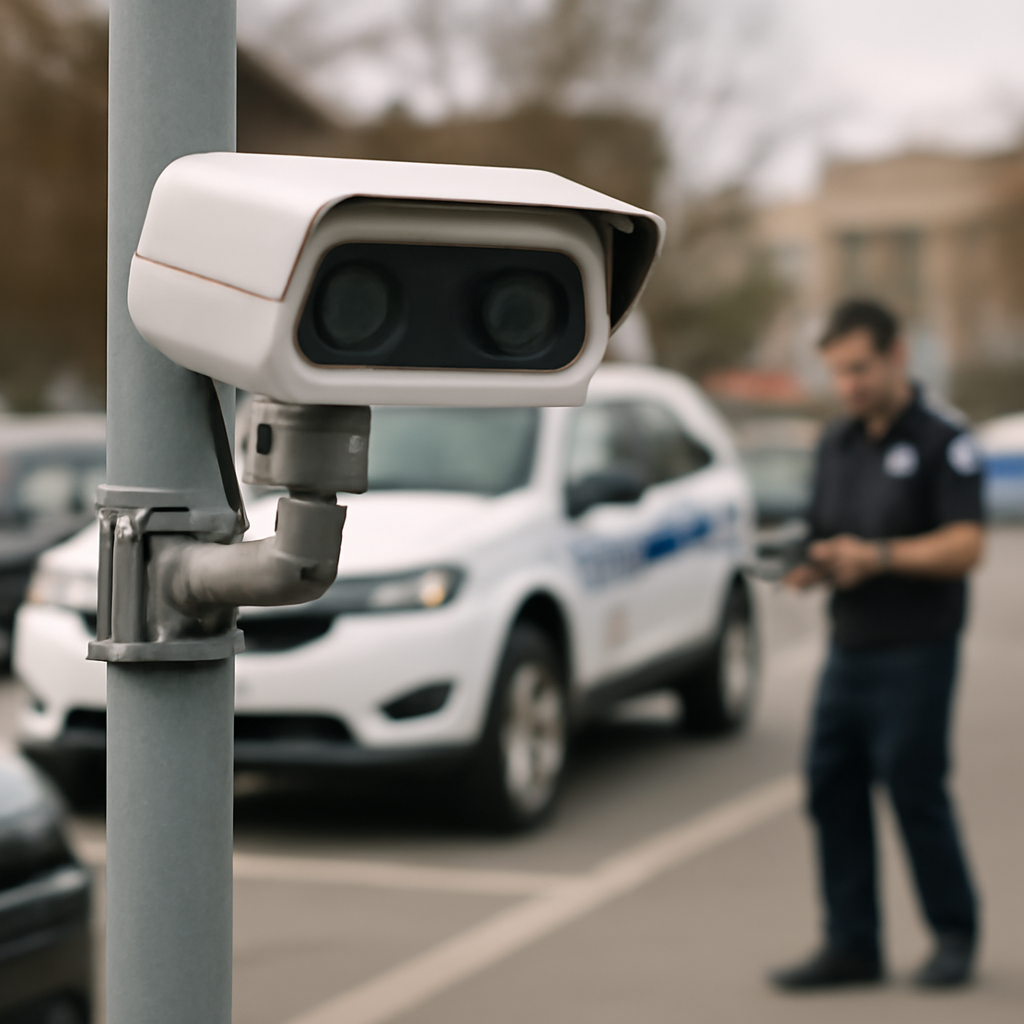
Denver, Colorado, is among the municipalities that have stopped using Flock license-plate reader arrays — a specific change in procurement that a recent post argues may amount to little more than swapping one brand of the same surveillance tool for another.
Municipal switches: Denver and others
The report states that "some municipalities, including Denver, Colorado, are ditching their Flock arrays." That sentence captures the concrete movement on the ground: local governments are making active decisions to remove one vendor's hardware from public spaces. The fact of the removal is clear; the source treats it as part of a broader pattern of governments "switching" readers rather than abandoning the capability entirely.
Brand swap vs. functional change
The source offers a blunt analogy to describe what happens when a city replaces one vendor with another: it is "like a gambling addict trying to kick the habit by switching from FanDuel to DraftKings." In other words, the choice of manufacturer does not, by itself, alter the underlying capability that concerns critics — the continuous capture and storage of vehicle movements and associated data. The implication drawn is that swapping brands may be a cosmetic or procurement-level change rather than a meaningful policy shift on how surveillance is conducted.

This site is the portfolio.
OSINTSights runs on Cloudflare Workers, D1, R2, and Vectorize, with an AI pipeline on Hetzner ARM. Nubivance designed, built, and operates it. We do the same for clients.
See what we buildAxon cameras and what they collect
The post challenges some vendor-facing narratives and flags Axon specifically. It says that "Axon cameras are pretty effective when it comes to hoovering up personal details that can go far beyond your license plate numbers." That wording emphasizes that the capabilities of the cameras are not limited to reading alphanumeric license plates; they can capture additional personal details. The post contrasts this with messaging found on Flock's website, implying that marketing claims from vendors do not eliminate the technical capacity for broader data collection.
Privacy impact remains unchanged by a vendor swap
On that basis the source draws a clear conclusion about privacy: "a municipality that opts for Axon cameras instead of Flock units won’t necessarily reduce the amount privacy its citizens lose through their use." The point is procedural and narrow: the act of replacing Flock equipment with Axon equipment should not be assumed to reduce privacy harms unless accompanied by specific policy, technical, or contractual changes that the post indicates are absent in mere vendor replacement.
How municipalities, citizens, and vendors are positioned
- Municipal procurement leaders: The source implies that procurement swaps (from Flock to Axon) may address political or contractual pressures without resolving the underlying privacy question; buyers should recognize that hardware replacement alone does not equal a change in data-collection practice.
- Citizens and privacy-minded residents: The post warns that privacy losses tied to automated license-plate reading can persist after a vendor change, because Axon cameras "hoover up personal details" beyond plate numbers; residents therefore should treat vendor switches with caution when assessing real-world privacy outcomes.
- Vendors (Flock, Axon): The contrast between vendor marketing and technical capability is highlighted implicitly; the source suggests that public messaging does not erase device capability, and that competing brands can provide similar downstream privacy effects.
Conclusion: procurement is not the same as policy
The succinct through-line of the source is straightforward: removing one company's arrays and installing another's does not automatically change the surveillance footprint in a community. The comparison to switching gambling platforms underscores a central skepticism — that the act of changing suppliers can be mistaken for meaningful reform. If municipalities and their publics want a different balance between automated vehicle-tracking capability and individual privacy, the source suggests they should look beyond vendor names to concrete limits on what devices collect, what data are retained, and how the data are used.