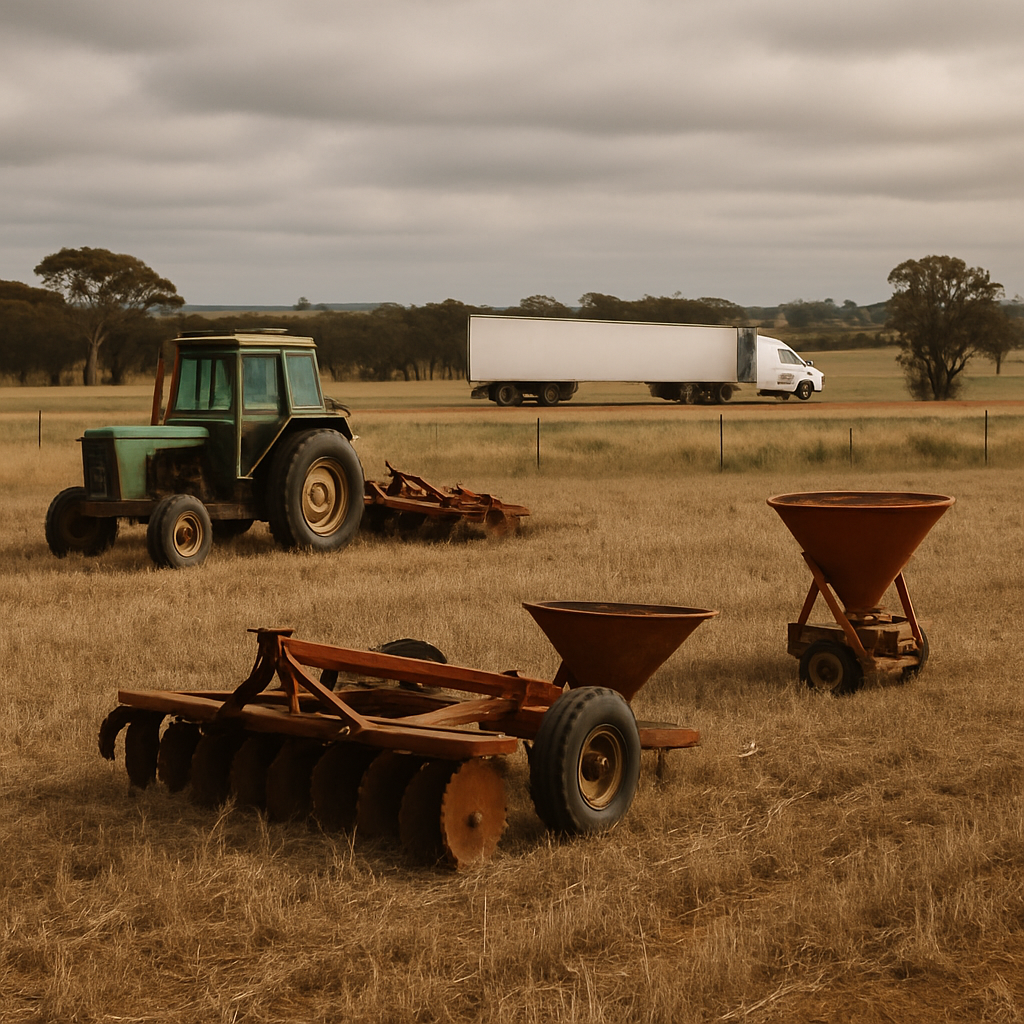
Australia imports some 95 percent of its urea, and of that, around 65 to 70 percent typically comes from Middle Eastern producers — a concentration that turns disruptions in the Gulf into immediate pressures on food, transport and the wider economy.
How urea shortages ripple through farming and food prices
Urea is a core ingredient in high‑nitrogen fertiliser used for growing grains, horticultural crops and pasture. The article warns that higher urea prices "lead to less fertilising, which reduces crop yields and raises food prices." Past global shocks — the 2007–08 world food price crisis, the 2021–22 global fertiliser shock driven by soaring gas prices, China’s 2021–22 fertiliser export restrictions, and Russia’s disrupted fertiliser exports after 2022 sanctions — show how rapidly shortages in fertiliser can translate into higher consumer prices and broader food security pressures.
Diesel exhaust fluid shortages and transport interruption
Urea is also an input to diesel exhaust fluid, which trucks need to meet emissions standards. The source notes that a shortage of diesel exhaust fluid "can stop trucks, disrupting supply chains and production lines." That single link — between a fertiliser chemical and the movement of goods — demonstrates how an imported commodity can propagate stress from ports and ships to supermarket shelves and factory floors.

Audit-ready is a season. It shouldn't be.
Evidence in spreadsheets, controls drifting between audits, frameworks multiplying on flat headcount. Nubivance runs continuous compliance on Rapid7 Cyber GRC - SOC 2, HIPAA, ISO 27001, PCI, CMMC.
End the scrambleSupply concentration: Gulf production, gas markets and shipping routes
Much of Australia’s urea comes from the Middle East, where natural gas is converted into ammonia and then into urea. The suppliers named include the United Arab Emirates, Saudi Arabia, Qatar, Bahrain and Oman. Production is therefore closely tied to gas markets, and deliveries depend on maritime routes — "especially through the Strait of Hormuz." That combination of upstream energy dynamics and chokepoint shipping routes makes urea vulnerable to the kinds of geopolitical and market shocks that periodically emerge in the Gulf.
Market signals: why price moves are early warnings
The article argues that markets often "spot risks before governments do and respond to future risks in shipping." Changes in urea prices can signal tightening supply, but they frequently reflect forward‑looking behaviour — buyers anticipating shortages and locking in supply early. In early 2026, urea prices jumped "due to constraints on natural gas supply and pricing in the Gulf — driven by production caps, maintenance outages and strong export demand for liquefied natural gas" — a squeeze that reduced ammonia output and tightened export availability before the full effects reached Australian supply chains.
Because these price moves are visible and updated frequently, the recommendation is to treat them not as mere market noise but as an early‑warning indicator that can be combined with other signals.
Tracking urea prices together with freight, insurance and gas
The article sets out a practical approach: establish a system that tracks urea prices and interprets them alongside maritime insurance premiums, freight rates and natural gas prices. No new data collection would be required — "commodity prices are already widely available and frequently updated" — but the challenge lies in interpreting those signals and shortening the time between an early market warning and policy or commercial action. If prices keep rising, the government could "act quickly to find new suppliers, lock in contracts and work with industry to manage demand," the piece argues, because acting early is much cheaper than responding to shortages.
What this means for farmers, transport operators, and policymakers
- Farmers: Watch urea price trends as a signal to adjust fertiliser plans; sustained price rises will make fertilising less affordable and could reduce yields, with knock‑on effects for food prices.
- Transport operators and fleet managers: Monitor availability of diesel exhaust fluid alongside urea market signals; shortages could halt trucks and disrupt supply chains rapidly.
- Policymakers and procurement officials: Consider a formal price‑tracking and indicator integration system that pairs urea prices with maritime insurance premiums, freight rates and natural gas prices to detect stress early and coordinate contracting or demand‑management responses.
The core takeaway is stark and specific: Australia treats urea as a routine commodity but imports almost all of it from a geopolitically unstable region, and unlike fuel it is not covered by a Minimum Stockholding Obligation or strategic reserve. Establishing a price‑signal system — and interpreting those signals in real time — is presented as a low‑data, high‑value step to reduce the chance that Gulf instability translates quickly into domestic shortages and higher costs.
Source: Not just fuel: Australia also relies on Gulf urea supplies