"The rules-based international order... was always a pleasant fiction," Canadian Prime Minister Mark Carney told the World Economic Forum in January.
Carney’s observation and the operating environment Australia already occupies
The article uses that observation to frame a simple but uncomfortable claim: the grey zone is not a future category of threat but the environment Australia already inhabits. It lists concrete vectors of that contest: state actors quietly acquiring agricultural land near Australian defence facilities; research partnerships that migrate intellectual property out of universities; economic coercion reflected in trade restrictions against barley, wine and coal; and Russian disinformation that has "colonised the same digital infrastructure we built for democratic participation." These are presented not as isolated incidents but as the operating tools of contemporary statecraft—instruments that "now precede the instruments of war."
Australia’s response architecture was built for the wrong opponent
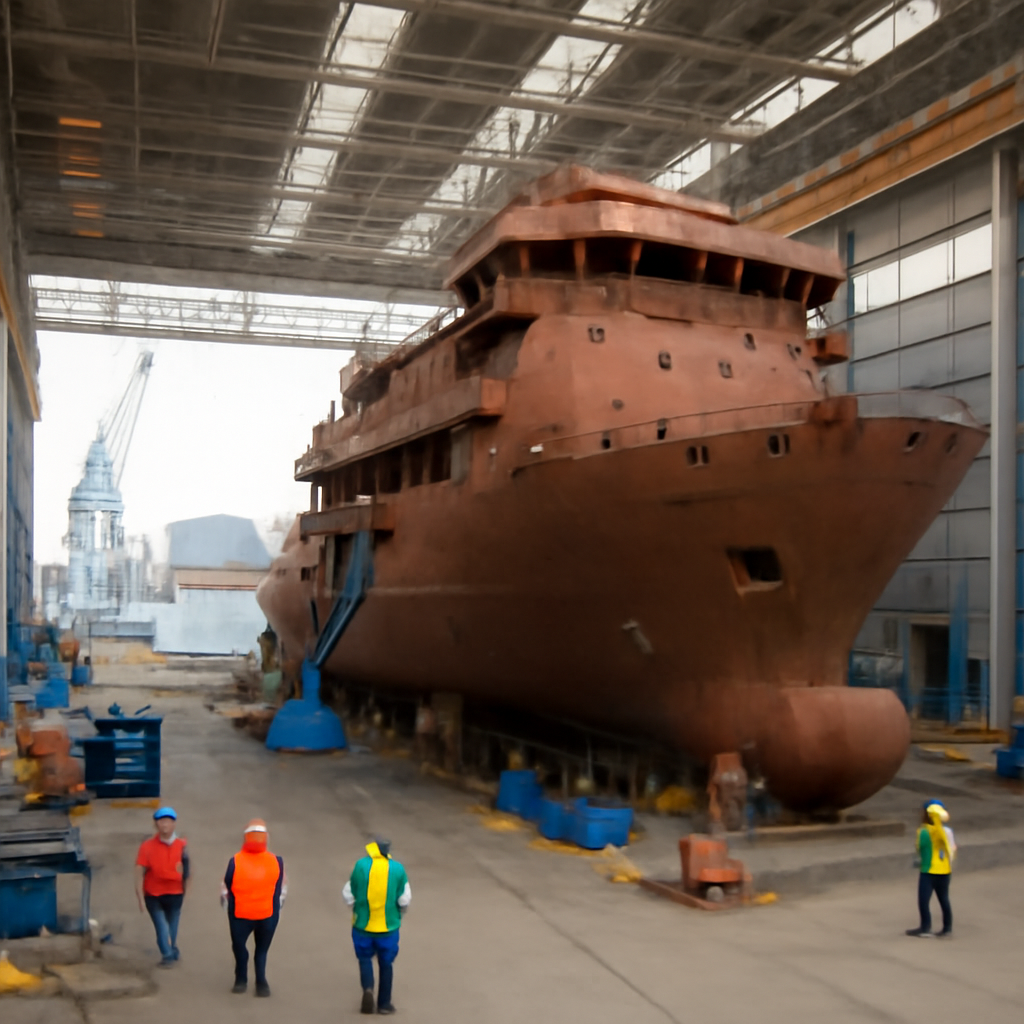
The piece argues Australia has repeatedly misanalysed its opponent. Defence and the analytical community are described as capable and earnest, but the response architecture is built on the assumption of a "rule‑breaking state"—one that understands and has chosen to violate a framework Australia values. The writer insists that this is a false premise: the adversary is not "cheating" by those rules because they never signed up to them. Japan, by contrast, is credited with developing grey‑zone doctrine formally since 2010—"15 years before the concept entered mainstream Australian strategic discourse"—and therefore possessing operational and conceptual experience Australia has underused in the bilateral relationship that produced the Mogami‑class frigate selection.

The cyber insurance questionnaire just landed. Now what?
SOC 2, HIPAA, insurance renewals - someone has to own security strategy. Nubivance provides fractional CISO leadership without the full-time salary.
Get a security leadThree decades of openness as a near‑perfect attack surface
One of the article's central contentions is that Australia has created, by design, the very vulnerability grey‑zone actors exploit. Over roughly thirty years Australia became "open, digitally integrated, data‑rich, institutionally transparent and economically interdependent"—outcomes described as the intended fruits of good policy. Those same features are now characterised as an attack surface: economic integration as coercion, supply chains as vulnerabilities, financial infrastructure as leverage, and data flows as intelligence. The implication is explicit: technical or military fixes alone cannot resolve a problem that is woven through economic and social policy.
Data treated as a technology problem, not a strategic commodity
The article identifies a conceptual gap in how institutions view data. Defence investment and appointments signal recognition that data matters, yet the dominant institutional lens remains "data as something to be integrated, governed and secured." In contrast, the platform and e‑commerce economy treats data as "the most valuable commodity"—an existential priority to be acquired, analysed and weaponised. Adversaries, unconstrained by the same governance cultures, run "data exploitation operations." The prescription is a reframing: Defence and its industry partners must treat data as the primary terrain of the grey‑zone contest—understand it, exploit it, and then protect it.
What this means for Defence, Industry, and the Australian public
- Defence: Reframe planning and procurement around a conceptual model that assumes adversaries operate without regard for the rules‑based assumptions Australia made. The article recommends deeper operational exchange with Japan's grey‑zone experience, not just industrial collaboration on platforms like the Mogami‑class frigate.
- Industry: Move beyond "a solution looking for a problem." The companies that will matter, the piece argues, are those that bring operational understanding of the contest and treat data as a strategic asset rather than a compliance checkbox.
- The Australian public and whole‑of‑nation institutions: Accept that resilience requires societal conversations—on critical infrastructure, data sovereignty, and economic dependencies—rather than treating these as merely regulatory or technical governance problems.
A concluding prescription: name reality and act on it
Drawing on Carney's counsel to middle powers to "name reality and act on it," the article urges intellectual honesty and institutional courage. The corrective it proposes is not simply more investment in the current model, but a shift in framing: start from the world as it actually operates, not from the rules we wish governed that world. That shift, the piece concludes, requires whole‑of‑nation engagement, deeper strategic exchange with partners that have long lived under persistent sub‑threshold pressure, and an industry that understands the operational contest as well as it understands its own platforms.