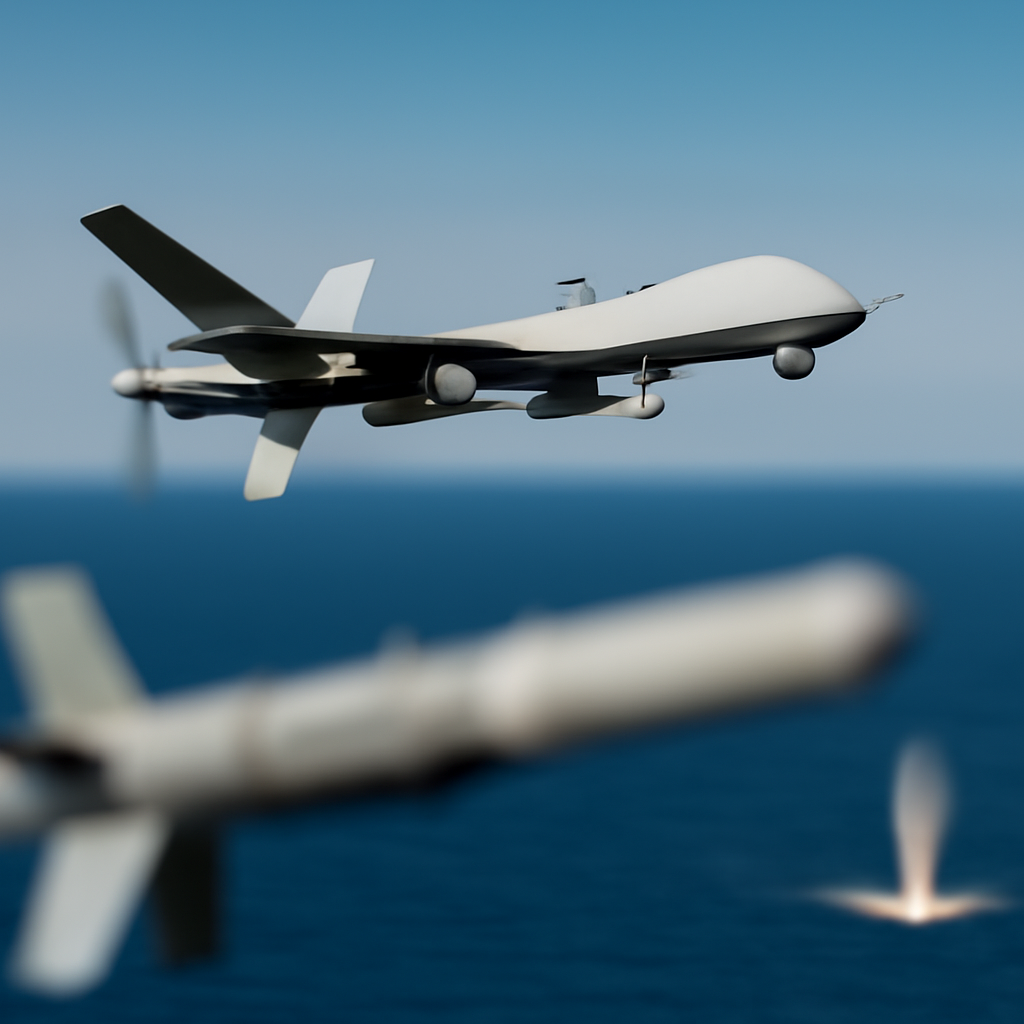
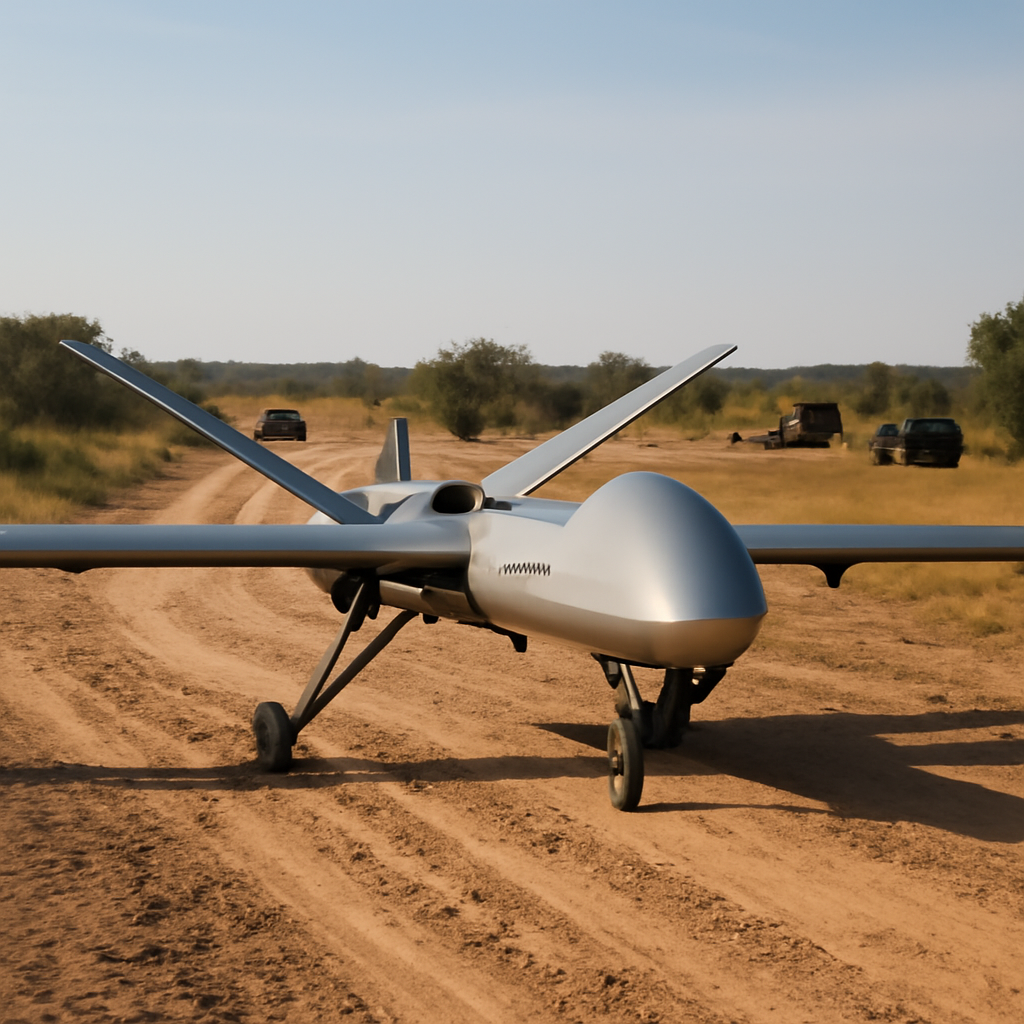
Exercise Hedgehog (Estonia, 2025) and Dynamic Messenger (off Portugal, 2025)
Those two exercises are the concrete evidence at the centre of the debate. At Hedgehog, inexpensive drones under skilled operators disrupted and degraded two battalions in mere hours. At Dynamic Messenger, a red team led by Ukrainian personnel used low-cost systems to outfight and outmaneuver NATO naval forces across every scenario, including an undetected strike that sank a frigate. According to the account, NATO forces “couldn’t detect or counter them.”
What cognitive EW systems are — and why they matter
The capability NATO lacked in these exercises is described as cognitive electromagnetic warfare (EW): software-defined, AI-enabled systems that “observe the electromagnetic environment, classify what they detect, select a response — and improve that process with every encounter.” The argument in the source is that the crucial capacity is not mere target classification, but the ability to select an effective response to signals the system has never previously seen. These systems “observe, orient, learn, decide and act,” and their models for judging threats can evolve by the hour rather than through quarterly updates.

This site is the portfolio.
OSINTSights runs on Cloudflare Workers, D1, R2, and Vectorize, with an AI pipeline on Hetzner ARM. Nubivance designed, built, and operates it. We do the same for clients.
See what we buildAustralia’s Responsible AI policy and fixed acquisition rules
Australia’s policy framework is presented as a tension point. The source says the policy’s “risk-based, proportionate framing is the right foundation,” and that its “explicit inclusion of frontier models is more forward-looking than many allied equivalents.” But it warns that Defence’s Responsible AI policy also requires that “the function and relationship between inputs and outputs of AI technologies must be traceable” and makes individual Defence officials personally accountable for “the actions, outcomes and decisions of AI-enabled functions.”
That traceability standard is framed as unachievable for cognitive EW systems that learn in the field: “Even the developers of today’s leading AI models, with their eye-watering research budgets, cannot trace inputs to outputs through the billions or trillions of parameters the models contain.” The source argues that those accountability obligations will “rationally discourage officials from fielding systems whose behaviour they can’t fully predict.”
Contrast with the US Army’s acquisition approach and the interoperability risk
By contrast, the US Army is described as moving away from detailed specifications. “In February, it abandoned detailed specifications for EW and instead issued a broad ‘characteristic of need’ for electromagnetic spectrum operations,” and the Army’s acquisition executive for command and control told Breaking Defense that being “hyper specific about what it needs to do” was failing to recognise the opportunity software-defined architectures offer. The piece frames the divergence as a practical interoperability risk: as one force moves to continuous delivery and broad problem statements while Australia tightens fixed requirements and traceability expectations, their electromagnetic capabilities will be harder to integrate.
What this means for the Defence Artificial Intelligence Centre, industry, and defence officials
- Defence Artificial Intelligence Centre: The source positions the Centre as the logical lead for working out practical governance. It says “working out what that looks like in practice is the task ahead — one the Defence Artificial Intelligence Centre is positioned to lead.”
- Industry: Developers and industry are described as ready to support, but also limited by the technical reality that modern models’ internal mappings are not traceable in the way the policy demands. The source notes that innovation units fund research but “can’t fix the acquisition and sustainment frameworks capabilities must pass through to reach the force.”
- Defence officials: The policy already asks personnel to exercise “informed judgement and care” and ties accountability to “reasonably anticipated impacts.” The source suggests accountability for cognitive EW should instead rest on “the rigour of testing, verification and validation, and on how human supervision is structured,” analogous to how soldier accountability attaches to the reasonableness of conduct rather than to unforeseeable outcomes.
The choice Australia faces is straightforward in its terms: preserve strict traceability and acceptance milestones that assume predictable behaviour, or adapt governance to technologies whose purpose is to change their behaviour in the field. The source argues the current policy risks “writing modern EW out of the force” by imposing acquisition and accountability standards that cognitive EW systems cannot meet in practice. It closes by noting that Defence personnel already operate under foreseeability standards and that AI could be framed likewise — a test the Defence Artificial Intelligence Centre is encouraged to design, with industry willing to help.