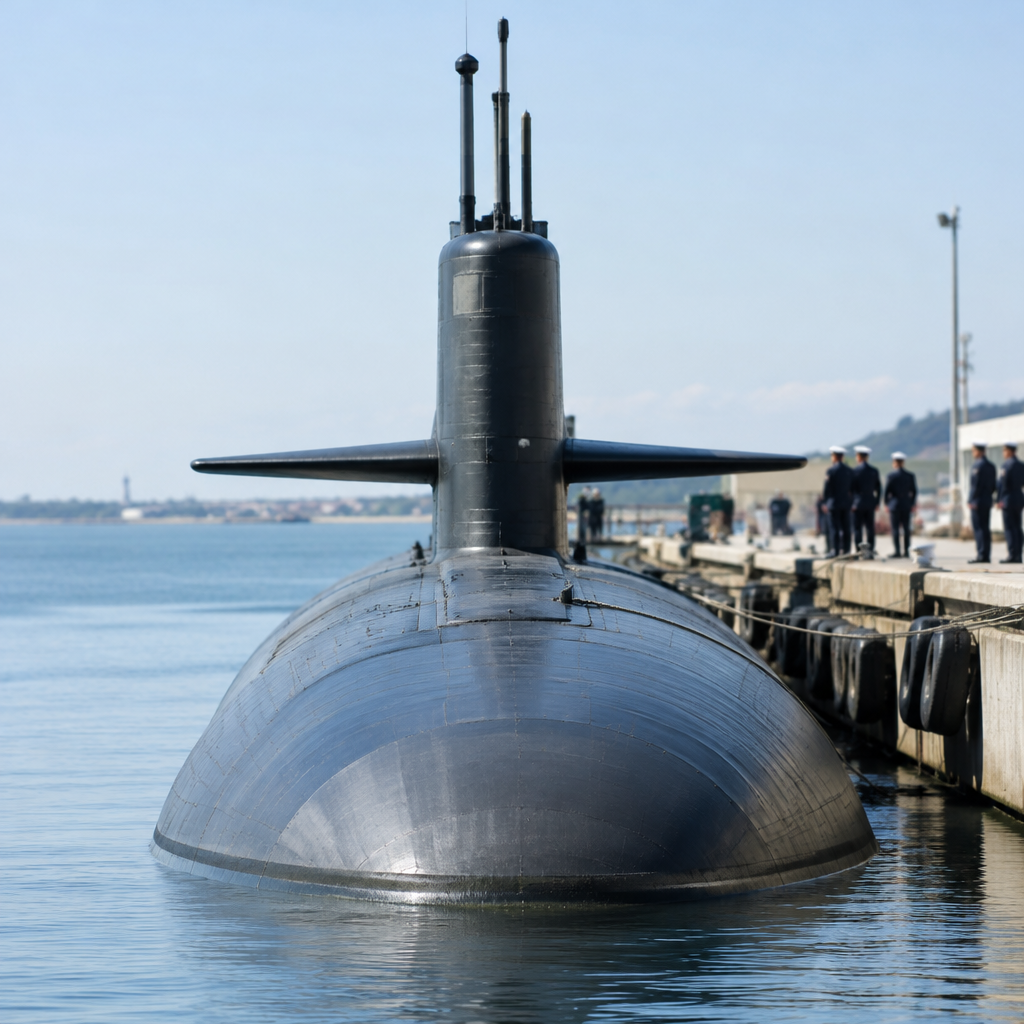
The government’s plan to acquire nuclear attack submarines (SSNs) under AUKUS carries an estimated price tag of as much as A$368 billion over 30 years. Two of the central rationales offered publicly — deterrence and protection of maritime trade — contain gaps the government has not yet filled, the record shows. Those gaps range from questions about credibility in a high-stakes crisis to the practical limits of submarines protecting complex commercial supply chains, and they intersect with difficult trade-offs about what other capabilities or economic measures might be bought instead.
Deterrence: collective logic, contested credibility
The deterrence case for Australian SSNs is framed as collective: Australian boats operating with US and allied forces are supposed to raise the costs to Beijing of initiating conflict. Yet the source reports an expert consensus that if Beijing judged Taipei and Washington were making peaceful unification with Taiwan permanently unattainable, it might accept war to prevent separation. Deterrence therefore turns on what Beijing believes allied capitals would actually do, not merely on what forces they possess.
The analysis points out that it is unclear whether Canberra, Washington and other allied capitals have firm, publicly coherent answers on how they would employ their forces in a Taiwan Strait or South China Sea war. That uncertainty undercuts the credibility on which deterrence depends.
Practical limits also matter: Australia’s initial SSNs will come from the existing US inventory, which “does not increase total allied hull numbers,” and US production has not expanded at the pace required to both transfer submarines and grow the US fleet — despite “billions of dollars in Australian funding for the US industrial base,” the source notes.
HMAS Stirling and the promise of forward basing
Forward basing at HMAS Stirling, south of Perth, is presented as an immediate capability gain because it reduces transit time to potential conflict zones and can keep submarines on station longer. Proponents have even claimed forward basing could increase allied submarine capability by 50 to 63 percent.
Those figures, however, rest on optimistic assumptions — specifically, a maximum of four US SSNs and one British SSN forward deployed and using the base. The source observes that this assumption is “yet to be seen” and notes reports that at times this year no British nuclear attack submarine has been at sea. In short, increased forward presence appears to require a net rise in allied operational capacity, not just a change of basing.

The cyber insurance questionnaire just landed. Now what?
SOC 2, HIPAA, insurance renewals - someone has to own security strategy. Nubivance provides fractional CISO leadership without the full-time salary.
Get a security leadTrade protection: scale, coordination and limitations
If deterrence failed, SSNs could be instruments of sea denial. But protecting trade in a contested region, the source stresses, demands coordinated submarines, surface combatants, aircraft, surveillance and logistics. Scale matters: even if Australia receives its eighth and final SSN in the mid-2050s as forecast, defence experts point to only two boats being "consistently available" for operations. Those two vessels would be tasked with intelligence collection, anti-submarine and anti-surface warfare, long-range strike, defence of approaches to Australia, and protecting commercial shipping — an ambitious tasking list for a small available fleet.
The Productivity Commission’s finding that two-thirds of vulnerable imports come from China is raised in the source as a reminder that economic vulnerability can arise through channels SSNs cannot affect. The continued movement of oil tankers through the Strait of Hormuz during the current US–Iran conflict — albeit at much higher cost — is invoked to show that disruption need not equal cessation of essential supply.
The source further notes Australia’s widely dispersed ports and multiple maritime approaches, and that trading partners such as Japan have incentives to maintain flows — all factors making comprehensive economic strangulation “not straightforward.” SSNs’ practical role in trade protection is described as largely acoustic: listening for enemy submarines and cueing aircraft to attack them. They “couldn’t shoot down bombers and their anti-ship missiles,” the analysis says.
Opportunity cost: alternatives the government must compare
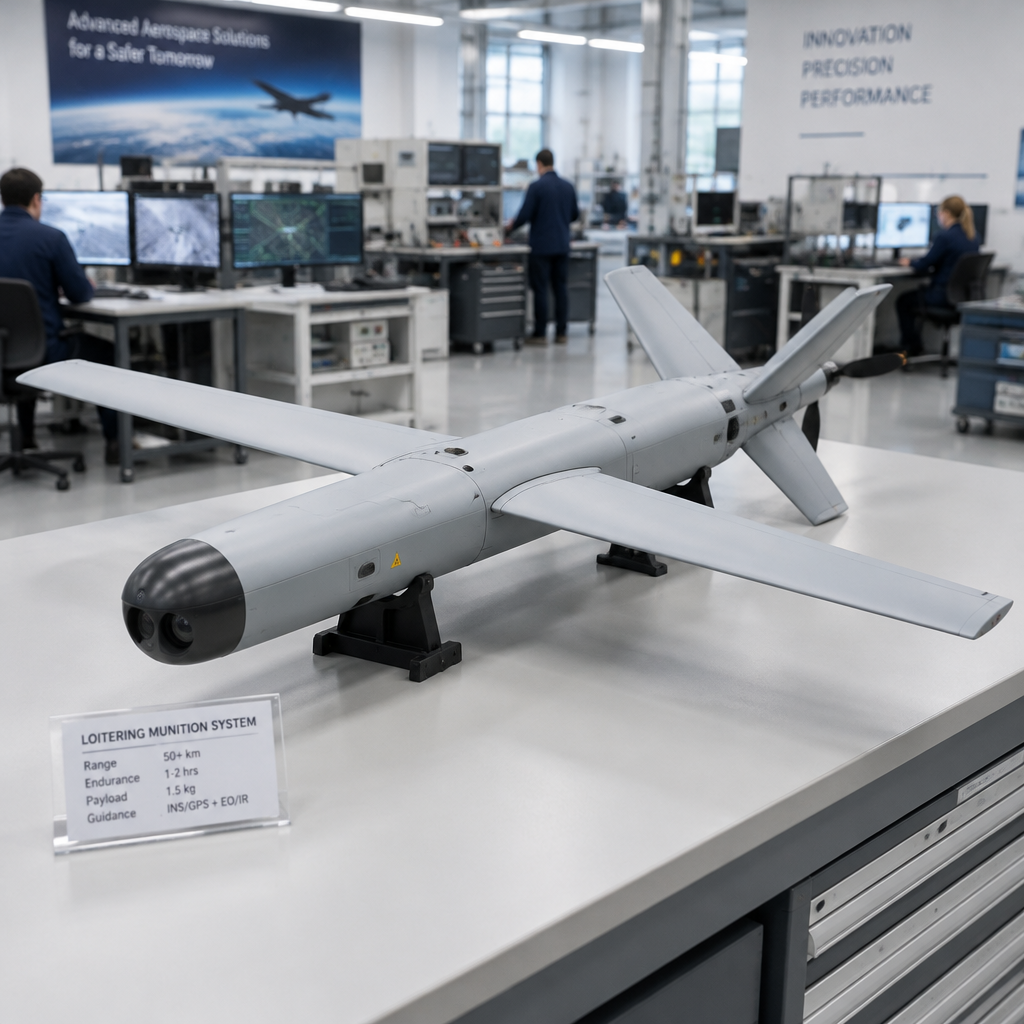
The choice is not framed as SSNs versus leaving Australia undefended, but as SSNs versus alternative portfolios: long-range strike; conventional and autonomous underwater systems; maritime surveillance; anti-submarine warfare capacity; stockpiles; and supply-chain diversification. None of those options duplicates every capability SSNs offer, which is precisely why the source argues the unique benefits of AUKUS submarines must be demonstrated against their high cost, possible delayed delivery and capabilities forgone elsewhere.
The strategic case, the source insists, cannot rest on the uncontroversial observations that SSNs are powerful weapons and that Australia is an island nation dependent on trade. Advocates must show what additional deterrence and trade protection Australian-owned SSNs would provide, and why comparable outcomes could not be achieved sooner, more reliably or at lower cost.
What this means for the Australian government, defence experts, and trade policymakers
- The Australian government must explain the A$368 billion cost and justify why SSNs are preferable to other equipment purchases or economic-security measures such as subsidising domestic production.
- Defence experts and planners will watch operational availability, the pace of US SSN production, and whether the forward-basing assumptions for HMAS Stirling — including regular US and UK deployments — materialise.
- Trade policymakers and economic analysts, informed by the Productivity Commission’s finding about import vulnerability, will continue to press for measures — stockpiles, supply-chain diversification and economic resilience — that SSNs cannot substitute for.
The record assembled here leaves decision-makers with a clear checklist: detail the expected contribution Australian SSNs will make to deterrence and trade protection; explain why those contributions cannot be secured faster, more reliably or more cheaply by other means; and show how basing and allied force generation will deliver the forward presence whose numbers the ambitious claims assume. Until those items are answered publicly, political certainty — “AUKUS is happening” — risks substituting for the strategic accounting Australians are being asked to pay for.
https://www.aspistrategist.org.au/more-details-please-the-case-for-australian-ssns-is-incomplete/