“Ukraine conducted this naval attack roughly 1,840 km (in a straight line) away from its own shores in Odesa.” That single fact, reported after the 22 November strike that sank the Russian corvette Merkury in Benghazi, frames why an apparently local naval incident now matters to navies and planners far beyond the eastern Mediterranean.
The Benghazi strike: the mechanics and immediate effects
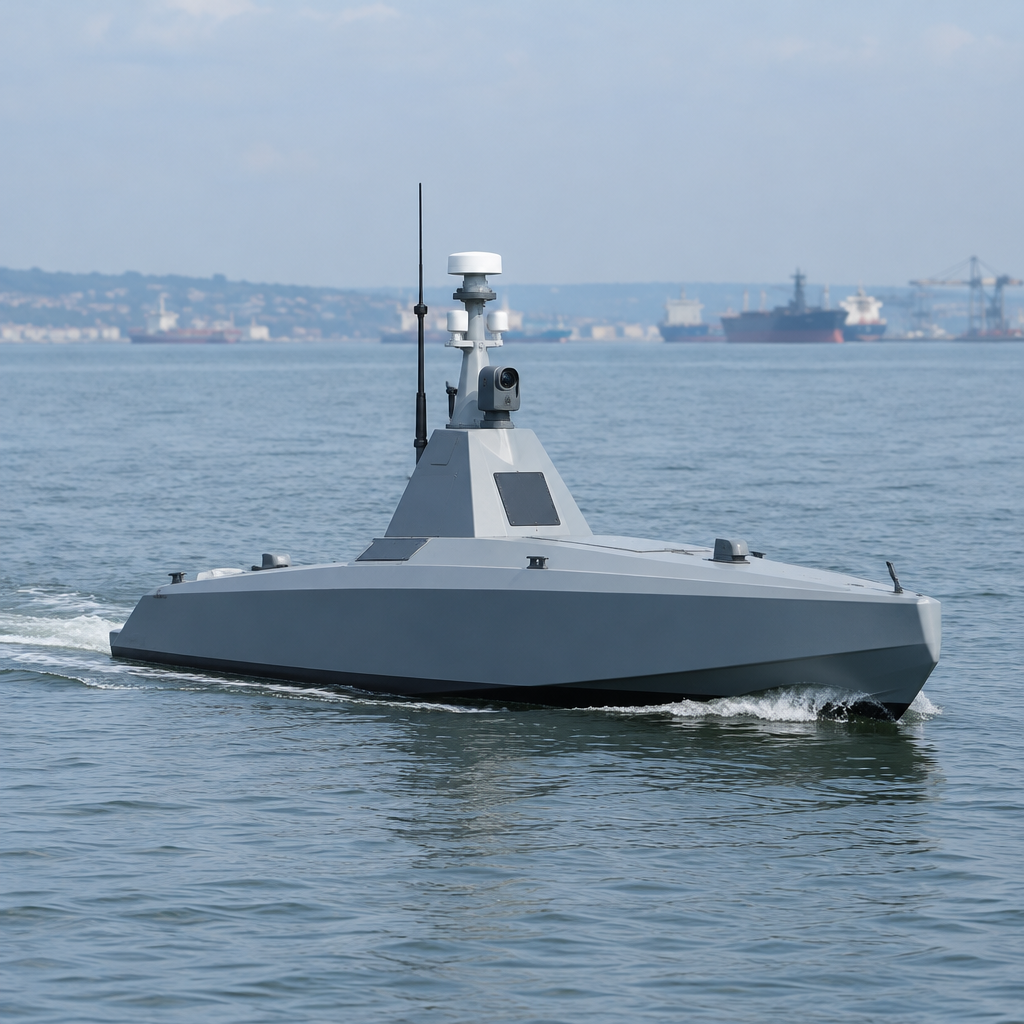
On 22 November, Ukrainian unmanned surface vessels (USVs) struck and sank the Project 20380 Steregushchiy-class corvette Merkury at its berth in Benghazi, with Ukrainian President Volodymyr Zelenskyy confirming the attack the following day. Satellite imagery assessed by Vantor showed the corvette capsized and sunk, with only the forward bow visible above the water. According to Zelenskyy, the attack destroyed a Ka-27 helicopter aboard the corvette and struck the MV Angara, a Russian cargo ship the Merkury had been escorting.
The Security Service of Ukraine (SBU) released footage showing its Sea Baby USV striking the ship. Libyan authorities and the SBU offered differing launch narratives — the SBU said USVs were delivered and launched from a ‘mother ship’ near the target, while Libyan officials claimed a Ukrainian-controlled base in western Libya had been used. At least seven USVs were reportedly deployed; Libyan authorities said four were intercepted before two reached the corvette.
Cost asymmetry and the vulnerability of modern corvettes
The strike underlines a stark cost asymmetry between low-cost unmanned systems and modern surface combatants. The Merkury, a recently commissioned (2023) reduced-radar-cross-section corvette with two quad Kh-35 Uran ASCM launchers and a 12-cell Redut VLS for SAMs, was rendered inoperable while moored. Footage suggests the explosions even triggered VLS launches. By contrast, Ukrainian USVs in classes like the Magura V5 have been estimated at roughly USD $250,000–$300,000 per unit; earlier Ukrainian strikes credited the Magura V5 with multiple kills, and Ukraine’s one-way drones struck the Boikiy and other Russian vessels earlier in 2026.
Ukraine’s approach shows that kamikaze or one-way USVs can absorb heavy attrition yet still impose disproportionate effects: losing several low-cost unmanned boats is fiscally small relative to the loss or disabling of a multi-hundred-million-dollar corvette.

Audit-ready is a season. It shouldn't be.
Evidence in spreadsheets, controls drifting between audits, frameworks multiplying on flat headcount. Nubivance runs continuous compliance on Rapid7 Cyber GRC - SOC 2, HIPAA, ISO 27001, PCI, CMMC.
End the scramblePakistan’s emerging space and communications layer (PIESAT, PakSat, Pak‑SBAS)
Pakistan has been assembling a satellite-led ISTAR architecture that would be central to any long-range naval drone campaign. As of October 2026, Pakistan operates at least seven satellites: two GEO communications satellites (PakSat-1R and PakSat-MM1) and five remote-sensing satellites (PRSC-EO1, EO2, EO3, hyperspectral HS-1, and PRSC-S1, Quwa’s first identified SAR satellite for Pakistan). In September 2025 Pakistan signed a USD $406 million PIESAT deal with China for a first phase of 20 interferometric SAR (InSAR) satellites designed in co-orbital quartets to deliver near-hourly revisit over priority areas and imagery delivery within about 20 minutes.
PakSat-MM1 carries 48 C-, Ku-, and Ka-band transponders and supports SATCOM use by naval platforms; Pak-SBAS broadcasts correction signals to sharpen positioning accuracy and reportedly extends coverage across the Arabian Sea and much of the Indian Ocean. Pakistan is also integrated into China’s BeiDou navigation system and reportedly is the only foreign user granted access to BeiDou’s encrypted military service.
Pakistan Navy (PN) drone and USV programs
The PN is pursuing a multi-domain unmanned architecture. Chief of the Naval Staff Admiral Naveed Ashraf told Quwa the service is pursuing “capability-based development rather than platform-based modernization.” On the surface domain, at least four Pakistani USV programs are underway: GIDS’s Muhassir, Woot‑Tech’s Corsair, Stingray Technologies’ armed USV, and a five-ton, 40‑knot design co-developed by Woot‑Tech and the PN’s Platform Design Wing for surveillance.
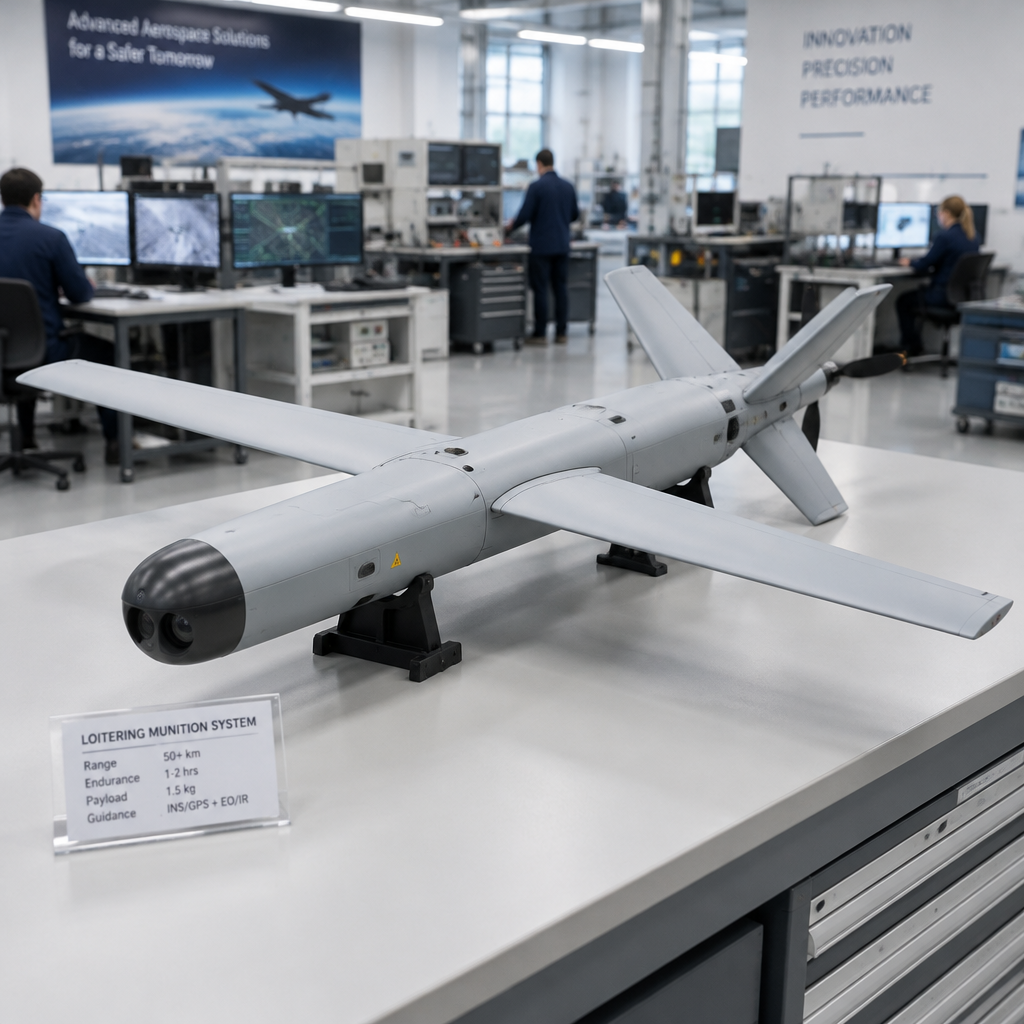
GIDS lists the Muhassir as 10 m long, 2.5 m beam, 7.3 tonnes displacement, a range of 400 nautical miles (740 km), and speeds above 35 knots. Ukrainian long-range USVs that executed attacks — the Sargan‑3000 and the SBU’s Sea Baby — are larger and longer‑ranged on paper: the Sargan‑3000 is about 7 m with up to 450 kg payload, a combat radius up to 1,600 km and speeds of 40–55 knots; the SBU’s Sea Baby reportedly can cover over 1,500 km and carry up to 2,000 kg. Pakistan is also building airborne unmanned capabilities — the Shahpar‑3 naval MALE program with a KPM‑6030 SAR, sonobuoy pod, Eghraaq lightweight torpedo, and Rasoob 250 cruise missile — and experimenting with one-way loitering munitions (Mudamir‑LR), turbojet OWAs (HiMark‑25TJ), and longer‑range airframes (HIT D‑248 potentially covering up to 3,000 km).
The PN is linking these platforms with mesh networks, manned–unmanned teaming, autonomous GNSS‑denied operations, and SATCOM to extend sensor and targeting reach.
What this means for the Pakistan Navy, the Indian Navy, and China
- Pakistan Navy: With PIESAT, PakSat assets, SATCOM, and multiple USV and UAV programs, Pakistan “has most of the necessary inputs” to emulate long‑range, sensor‑driven USV operations within the Arabian Sea and Indian Ocean. The PN could also employ Hangor‑class SSPs as long‑range stalkers and develop UUV/AUV extensions; the lead Hangor boat arrived in Karachi in June 2026 and test‑fired a CM‑708UNB ASCM in September.
- Indian Navy: The IN’s SSBN force — the third boat INS Aridhaman was commissioned in April 2026, and INS Arighaat exists alongside a 3,500 km-range K‑4 missile that is “not yet operationally deployed” — will be a principal monitoring and potential target set for any Pakistani long‑range USV/ISTAR effort, especially when SSBNs transit from Bay of Bengal bases.
- China: Chinese transfers underwrite key dual‑use ISTAR and SATCOM capabilities in Pakistan — PIESAT, PakSat procurement, BeiDou integration — enabling the PN’s increasing unmanned and long‑range options while raising questions about how similar enablement might travel elsewhere.
Ukraine’s Benghazi strike demonstrated a simple operational arithmetic: low-cost unmanned systems, persistent satellite sensing, and beyond-line-of-sight communications can translate into outsized effects against modern surface combatants. Pakistan has assembled many of those same inputs; how it shapes doctrine around them — whether for layered deterrence, forward staging, or maritime surveillance — will determine whether the strike in Benghazi becomes a singular lesson or a broadly imitated model for naval conflict in the region.
Source: Quwa — Ukraine’s USV Strike in Benghazi: What It Means for the Pakistan Navy