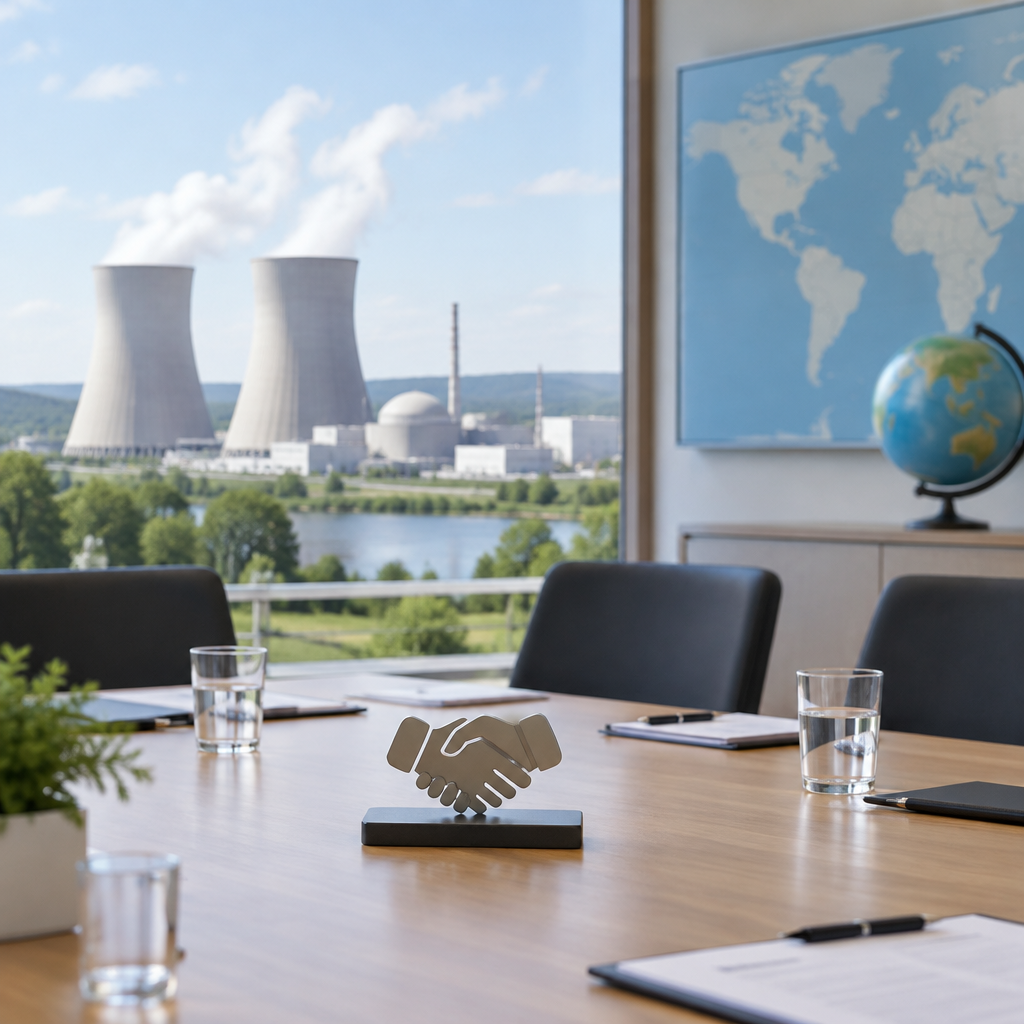
In March 2025, Russia and Myanmar signed an intergovernmental agreement to develop a 110‑megawatt nuclear power plant, possibly expanding to 330‑megawatt capacity, using two small modular reactors built and designed by Russia.
The Russia–Myanmar agreement and the construction timeline
The initial agreement, inked in March 2025, envisions small modular reactors supplied by Russia with a possible later expansion to 330 megawatts. In August 2026, Russia’s State Atomic Energy Corporation, Rosatom, said it expected to sign a contract for initial engineering surveys within the year and that construction work would begin in 2027. Potential sites cited in planning discussions include areas near Naypyitaw, in central Bago, and inside the Dawei special economic zones in southern Myanmar, where the junta and Russia have also announced plans for a port and an oil refinery. In return for nuclear infrastructure, Russia would gain access to Myanmar’s offshore oil and gas.
Why Canberra sees safeguards and oversight as urgent
The proposal arrives amid Myanmar’s ongoing civil war, fragmented governance and entrenched illicit trafficking networks — conditions the source says complicate “determining how to prevent malicious actors from acquiring nuclear materials, and how to neutralise any actions they might take.” To date there has been no public statement from Canberra on the proposal. Australia has applied targeted sanctions to Russian entities involved in nuclear energy as part of its response to Moscow’s invasion of Ukraine, but the source judges that sanctions alone are likely insufficient.
The article notes the wider geopolitical backdrop: Russia and Myanmar publicly describe their relationship as one of “trust and friendship,” while United Nations reporting in May 2023 recorded US$406 million worth of Russian weapons supplied to Myanmar since the coup. The junta’s relations with Russia, North Korea, Iran and China, together with domestic instability, are cited as the principal reasons safeguards inside Myanmar could prove inadequate.

Audit-ready is a season. It shouldn't be.
Evidence in spreadsheets, controls drifting between audits, frameworks multiplying on flat headcount. Nubivance runs continuous compliance on Rapid7 Cyber GRC - SOC 2, HIPAA, ISO 27001, PCI, CMMC.
End the scrambleTrafficking precedent: the Takeshi Ebisawa case
The source highlights a concrete criminal precedent. Japanese national Takeshi Ebisawa pleaded guilty “last year” to trafficking nuclear materials from Myanmar to a purported Iranian buyer; he attempted to exchange that material for military‑grade weapons, including surface‑to‑air missiles, for ethnic armed organisations inside Myanmar. A New York district judge sentenced Ebisawa to 20 years in prison in March for offences involving nuclear materials, narcotics, firearms and money laundering; he was also attempting to sell methamphetamine and heroin. The piece uses that prosecution as evidence that transnational criminal networks already link Myanmar’s illicit markets to nuclear‑sensitive material flows.
How Australia, ASEAN and the Quad could act together
The article urges Canberra to use regional forums — specifically this month’s ASEAN summit and Quad meetings in Manila — to press for both prevention and preparedness. Suggested measures include: sharing intelligence on nuclear trafficking; coordinating financial investigations and forensic analysis; and linking nuclear expertise with arms, drug and money‑laundering probes. The Ebisawa investigation, the piece notes, was led by the United States with assistance from India, Japan, Indonesia and Thailand, offering a model of multilateral operational cooperation.
Institutional channels proposed include engagement with the ASEAN Network of Regulatory Bodies on Atomic Energy, the International Atomic Energy Agency (IAEA), and Australia’s own nuclear agencies — the Australian Radiation Protection and Nuclear Safety Agency (ARPANSA) and the Australian Nuclear Science and Technology Organisation (ANSTO). The Philippines, as ASEAN chair, and Indonesia, as Australia’s ASEAN country coordinator for 2024–27, are named as practical partners to advance regional nuclear preparedness and oversight.
What this means for Australia, ASEAN members, and criminal networks
- Australia and Quad partners: expected to offer technical expertise, forensic resources and intelligence‑sharing to help ASEAN regulators assess and prepare for nuclear safety, security and illicit‑trafficking risks.
- ASEAN regulatory bodies and regional authorities: positioned to propose mechanisms for nuclear safety, emergency preparedness and safeguards through the ASEAN Network of Regulatory Bodies on Atomic Energy and to seek IAEA cooperation.
- Criminal trafficking networks: already implicated in cross‑border transfers of nuclear‑sensitive material and narcotics; the Ebisawa prosecution demonstrates how such networks could seek to monetise or barter illicit material for weapons.
The report frames the Russia–Myanmar plant proposal as both a prevention challenge and a preparedness problem: prevent the project where possible, but — if it proceeds — strengthen transparency, oversight and regional readiness before construction advances. The coming ASEAN summit and Quad meetings in Manila are offered as immediate opportunities for Canberra to move beyond sanctions and to match technical, regulatory and investigative capacities with regional partners.