"the 'supreme discipline' of laser weapon technology," MBDA wrote, describing the difficulty of mounting high-energy lasers on aircraft.
MBDA awarded a demonstrator contract by BAAINBw
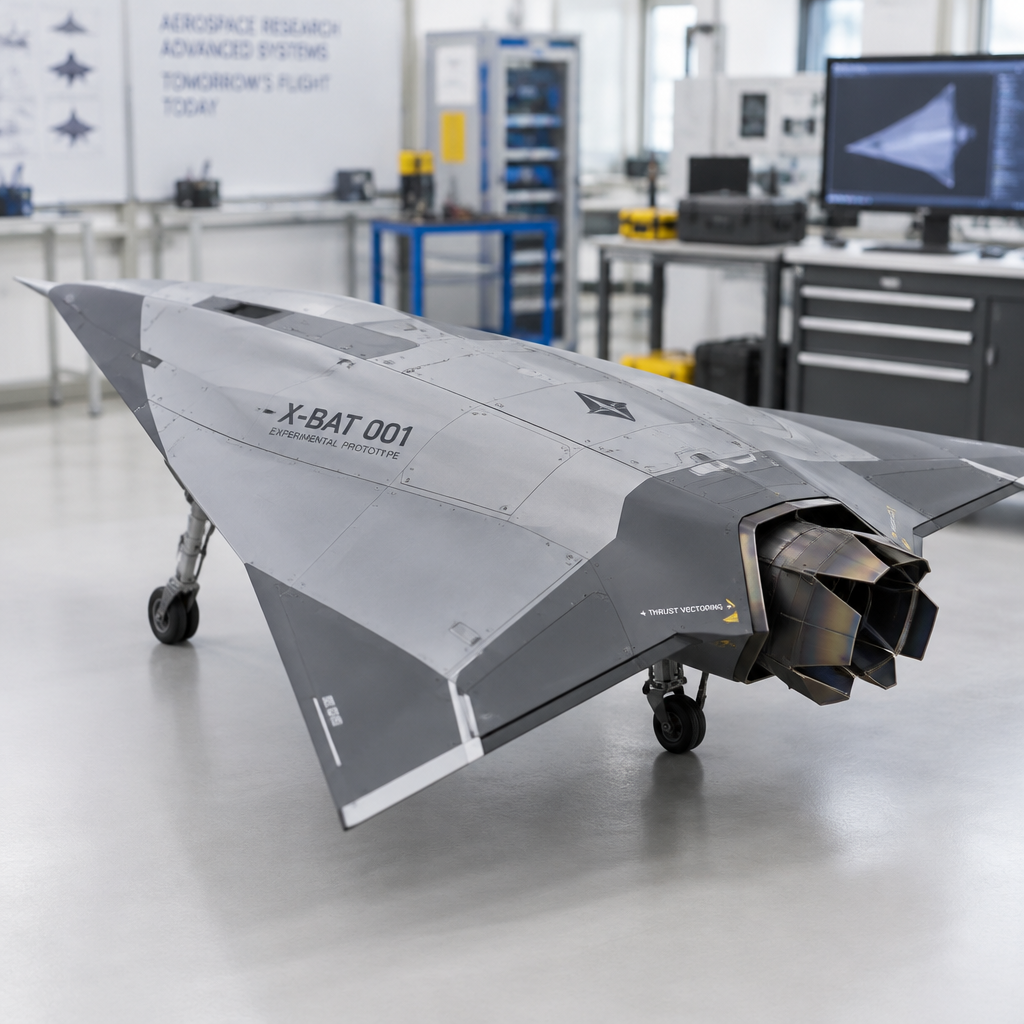
MBDA Deutschland announced on November 2, 2026 that the Federal Office of Bundeswehr Equipment, Information Technology and In-Service Support (BAAINBw) has contracted the company to build a pod-based airborne laser demonstrator. The stated objective is to lay technological foundations for a future capability that could be used to shoot down enemy drones and cruise missiles; MBDA also published a rendering showing a pair of large, stealthy, fighter-like uncrewed aircraft fitted with under-fuselage laser pods. The announcement gave no details on the demonstrator’s technical specifications, intended host aircraft, laser output, contract value, or development timeline.
How this project builds on Germany’s directed-energy work since 2008
MBDA framed the new airborne effort as part of a longer-running German push into directed-energy weapons. According to the company, Germany has treated laser technology as a strategic priority since 2019 and MBDA has been developing necessary technologies since 2008, claiming to have demonstrated a complete laser weapon system as early as 2012. A high-profile milestone in that pathway was a 2021 BAAINBw contract awarded to MBDA and Rheinmetall to develop a maritime laser demonstrator. That system was installed aboard the F124 frigate Sachsen in June 2022 and underwent six test campaigns stretching through September 2023, during which it fired more than 100 times under progressively complex conditions and successfully engaged a drone during a demonstration.

Audit-ready is a season. It shouldn't be.
Evidence in spreadsheets, controls drifting between audits, frameworks multiplying on flat headcount. Nubivance runs continuous compliance on Rapid7 Cyber GRC - SOC 2, HIPAA, ISO 27001, PCI, CMMC.
End the scrambleTechnical constraints that make airborne lasers especially hard
MBDA — and the source reporting this contract — emphasize that translating maritime demonstrators into a compact, airborne pod represents a much greater engineering challenge. The constraints listed include size, weight, vibration, aerodynamic loads, and the need to package laser emitters, power-generation and conditioning equipment, cooling systems, beam directors, tracking sensors, and electronics into a constrained pod. Waste heat and thermal management are singled out as particularly critical; high-energy lasers generate substantial thermal loads that must be removed without impairing either the weapon or the host aircraft’s systems. The reporting also reiterates atmospheric limits — moisture, dust, and turbulence can absorb, scatter, or distort laser energy — and points out that metrics such as nominal power tell only part of the performance story: beam quality, tracking accuracy, engagement range, atmospheric conditions, and dwell time are equally important for achieving a kill.
Intended uses: counter-drones, cruise missiles, and limited surface effects
MBDA describes countering drones and cruise missiles as the primary missions for a podded airborne laser. The technology’s attraction, the company notes, is the potential for a functionally unlimited magazine so long as electrical power and cooling capacity are available — an advantage against large waves of inexpensive, longer-range one-way attack drones. The source also lists other possible uses: limited attacks on soft surface targets (noting such effects would be constrained), self-protection against surface-to-air and air-to-air missiles, and protecting high-value aerial assets such as airborne early warning aircraft or tankers when mounted on crewed or uncrewed platforms.
What this means for MBDA engineers, the Luftwaffe, and German procurement officials
- MBDA engineers and German-directed-energy researchers: their near-term task is integration — proving that the laser, beam director, tracking system, power supply, and cooling equipment can operate together inside a practical airborne package rather than as separate demonstrations.
- The Luftwaffe and platform operators: they will be watching for which host aircraft are selected and whether the aerodynamic, vibration, and thermal loads of an externally mounted pod can be resolved without compromising flight performance or mission systems.
- BAAINBw and procurement officials in the German Defense Ministry: with no value or schedule disclosed, their immediate decisions will center on the demonstrator’s performance in flight tests and its ability to meet operational thresholds before any move toward acquisition or wider fielding.
Germany’s contract with MBDA is a tangible step from maritime demonstrations toward airborne directed-energy experimentation, but the path ahead remains concrete and narrow: the reporting identifies the pivotal milestones as demonstration of integrated subsystem operation in a practical pod, followed by flight testing and engagements against representative targets. Those forthcoming tests — and the questions the announcement left open about host aircraft, power and cooling solutions, performance metrics, and timing — will determine whether the demonstrator moves beyond a technology exercise to a credible operational option.
https://www.twz.com/air/airborne-laser-weapon-for-tactical-aircraft-being-developed-by-germany