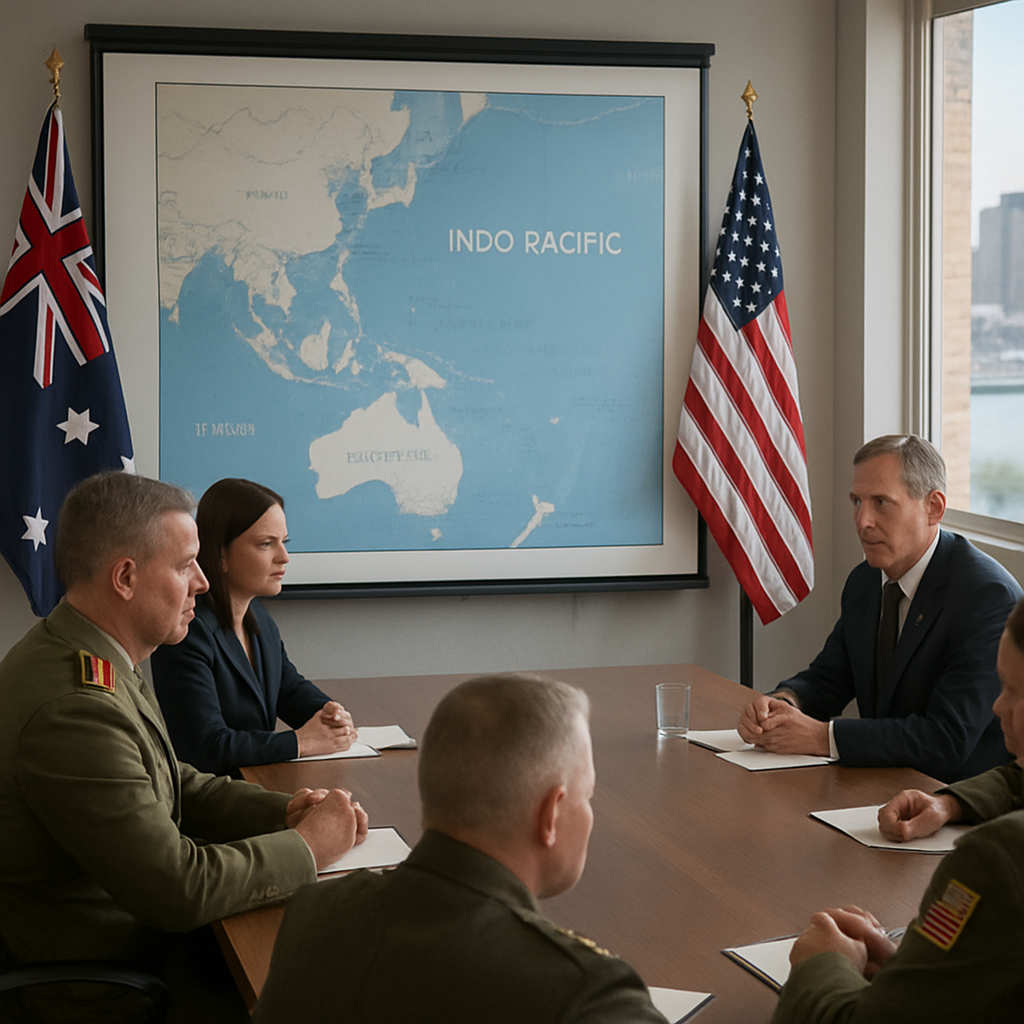
"Any effective balance of military power in the Indo‑Pacific will require the presence and role of the United States," the 2026 National Defence Strategy states, and the text that follows treats that sentence as doctrine rather than diplomacy.
From rules to balance: what the 2026 NDS changes
The 2026 National Defence Strategy (NDS) replaces the 2024 strategy’s emphasis on maintaining a rules‑based order with an explicit political objective: actively contributing to a favourable regional balance of power. Defence of Australia’s interests remains tied to protecting its economic connection to the world, but the 2026 NDS reframes that defence in terms of shaping regional power dynamics. The strategy elevates three interlocking drivers— the Australia–US alliance, the role and presence of the United States in the region, and Australia’s strategy of denial—making Defence an active participant in balancing regional forces rather than a passive guarantor of norms.
How the 2026 NDS aligns with recent US strategy
The Australian shift mirrors a broader change in US policy. The US National Security Strategy released in November 2025 frames a balance of power as a central objective, declaring that "the United States cannot allow any nation to become so dominant that it could threaten our interests," and committing Washington to work with allies to maintain global and regional balances of power. The 2026 US National Defense Strategy operationalises that aim by prioritising deterrence of China and by directing US efforts to build, posture and sustain a denial defence along the First Island Chain. Australia’s NDS explicitly absorbs this logic, aligning Canberra with a denial‑based, collective approach to regional deterrence.

The cyber insurance questionnaire just landed. Now what?
SOC 2, HIPAA, insurance renewals - someone has to own security strategy. Nubivance provides fractional CISO leadership without the full-time salary.
Get a security leadDenial, deterrence, and the First Island Chain logic
Australia’s adoption of a denial posture is not new: the 2023 Defence Strategic Review introduced denial as a means to prevent coercive use of force. The 2026 NDS sharpens that concept to support regional security and prosperity by contributing to a favourable regional strategic balance. The US framework described in its strategies clarifies the operational contours: preserve overmatch, deny aggression along the First Island Chain, and urge regional allies to invest in capabilities and provide access to ports and facilities. Canberra’s strategy now defines success as deterring threats to Australia’s interests and regional stability through credible capability, capacity and resolve to hold adversary forces at risk, in concert with the US and key partners.
Self-reliance, sovereign industry, and the alliance
The 2026 NDS adds a new concept of "self‑reliance," signalling responsibility for Australia’s own security to its key ally. That self‑reliance is to be reinforced through investment in sovereign defence industrial capability so Australia can ensure credible military power even when ally or partner support is limited. At the same time, the NDS makes plain that an effective Indo‑Pacific balance will require the US presence—positioning Australia as a middle power contributing to a US‑led network of allies and partners in a shared denial‑based posture.
What this means for the Australian Defence Force, defence industry, and regional partners
- The Australian Defence Force: The ADF is reframed from defender of a rules‑based order to an active contributor to a regional balance of power, with a clearer mandate to develop denial capabilities and to operate in closer concert with US posture and collective deterrence efforts.
- Australian defence industry and procurement leaders: The NDS signals increased emphasis on sovereign industrial capability and investment, creating pressure to prioritise programs that deliver sustained capacity for denial and crisis resilience.
- The United States and regional partners: Canberra’s strategy accepts a US‑led balancing approach as central to regional security, creating expectations that Australia will both enable US posture (through access and interoperability) and sustain its own capabilities to shoulder responsibilities when partner support is limited.
The 2026 NDS thus marks more than a doctrinal tweak; it recasts Australia’s strategic identity. It accepts that Beijing’s power and influence will continue to grow and treats competition as a persistent, long‑term struggle rather than a series of episodic crises. The theory of victory is explicit: contribute to a US‑led counter‑balancing coalition, build capability, and deepen partnerships to support Australian and regional deterrence, defence and security. That realignment will shape force structure, industrial priorities and alliance politics — and, as the strategy itself acknowledges, will raise fundamental questions about how Defence contributes to balance and how Australia defines its China strategy.