“We now know that our domestic electric grid is potentially at risk in a conflict. We also know that we will not necessarily be able to move fossil fuels easily wherever we need them to go,” said Jeff Waksman, the Army’s principal deputy assistant secretary for installations, energy and environment, summing the security logic behind a new push to bring nuclear microreactors onto U.S. Army bases.
Project Janus and the $2.2 billion contract framework
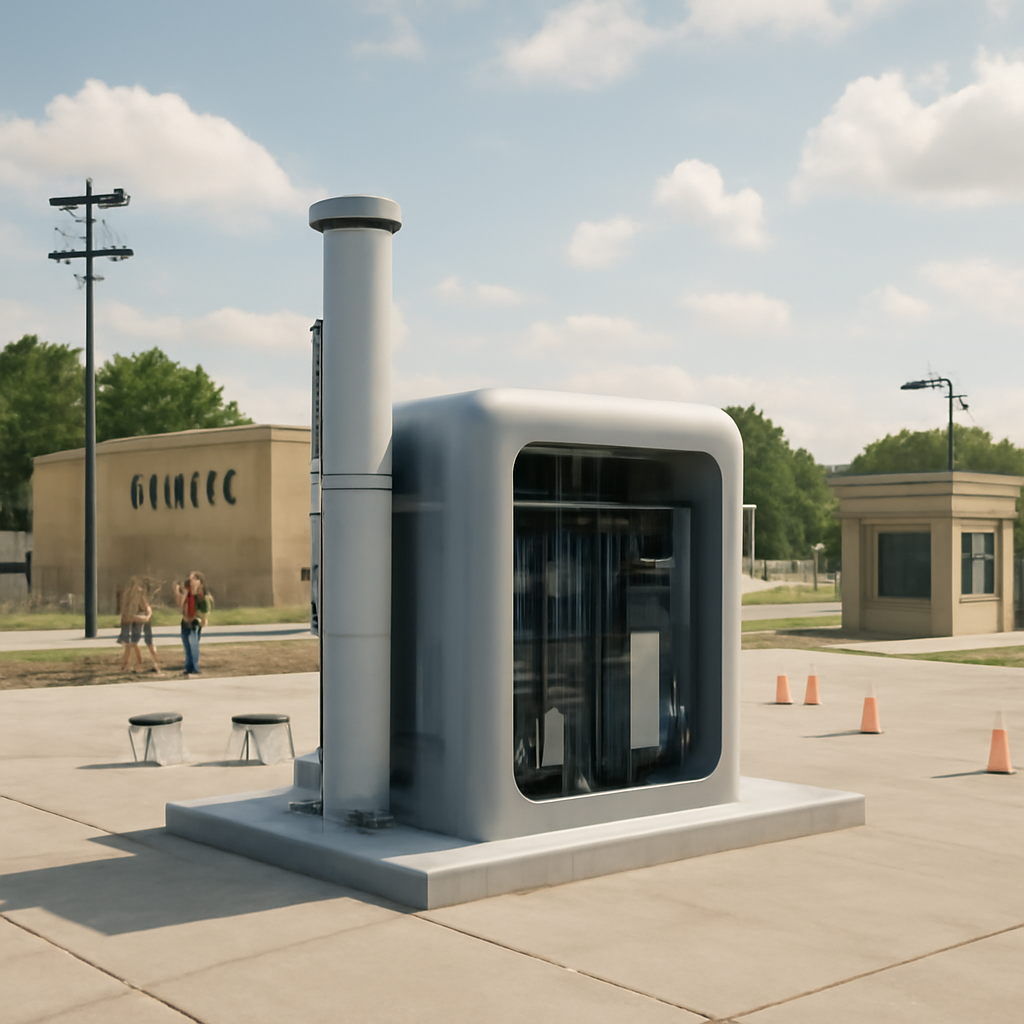
The Army and the Defense Innovation Unit are advancing Project Janus, a program to develop on-base nuclear microreactors. Officials announced a milestone-based Other Transaction Authority (OTA) contract that can award up to $2.2 billion to a pool of five firms. The OTA is structured around fixed-price milestones intended to accelerate deployment and reduce traditional procurement friction.
Project officials say private investment by the companies will supplement the Army contribution, and that the combined funding could support as many as 20 microreactors across the selected bases if the program advances as planned.
Selected companies and their paired bases
On Wednesday the Army named the five companies and the Army installations they will pair with under Project Janus:
- Antares Nuclear, Inc. – Fort Bragg, North Carolina
- BWXT Advanced Technologies, LLC – Fort Campbell, Kentucky
- General Atomics Electromagnetic Systems – Fort Hood, Texas
- Radiant Industries, Inc. – Fort Benning, Georgia
- Westinghouse Government Services – Fort Drum, New York
The selections followed a November decision that had identified nine finalist bases; Fort Wainwright (Alaska), Holston Army Ammunition Plant (Tennessee), Joint Base Lewis‑McChord (Washington) and Redstone Arsenal (Alabama) were not among the final five pairings. Army officials described the matching as a “matching process” driven in part by where contractors prefer to work because of existing relationships with nearby utility companies.

Audit-ready is a season. It shouldn't be.
Evidence in spreadsheets, controls drifting between audits, frameworks multiplying on flat headcount. Nubivance runs continuous compliance on Rapid7 Cyber GRC - SOC 2, HIPAA, ISO 27001, PCI, CMMC.
End the scrambleHALEU, enrichment capacity, and the supply constraint
The Army’s microreactor timeline runs up against a national limit: the United States currently enriches only a small percentage of the world’s uranium supply, and the Energy Department and the National Nuclear Security Administration (NNSA) are still working to expand capacity and produce high-assay low-enriched uranium (HALEU).
Waksman acknowledged the limits directly, saying the effort is “probably going to push beyond what our supplies are as a nation,” but added that the Army expects “sufficient prioritization” and is coordinating “very closely with the folks at DOE and NNSA” to secure needed uranium. He said the Army will draw from stockpile allocations where necessary and hopes for new enrichment capacity to serve later reactors in the program.
Program timeline, precedents, and inter-service coordination
The Army intends for Project Janus to pave the way for a program of record that would deliver a small nuclear powerplant to an Army installation by 2028. That is notable against the backdrop that the U.S. “doesn’t have operational nuclear microreactors” today, according to the program announcement.
Officials framed Janus as inheriting lessons from existing defense efforts: planners are drawing from Project Pele, the Defense Department’s mobile reactor project, and used the contracting approach modeled on NASA’s Commercial Orbital Transportation Services program. The Army also noted an Air Force microreactor initiative at Eielson Air Force Base near Fairbanks, Alaska, and Waksman said the Army expects an announcement in the “not too distant future” about how the services are coordinating those projects.
What this means for the Army, DOE/NNSA, and the selected companies
- The Army (installations, energy and environment): Will prioritize domestic demonstrations and choose “the lowest hanging fruit” sites that the service thinks will be the cheapest and fastest to deploy, focusing first on U.S. states rather than overseas or remote islands. The service is explicitly using the initial deployments to prove the technology and reduce vulnerability to disrupted fuel lines and grid risks.
- DOE and NNSA: Are expected to expand enrichment capacity and manage prioritization for HALEU supply; the Army says it is “tied in very closely” with DOE and NNSA and will use stockpile allocations as part of interim supply plans.
- The five selected companies: Will follow fixed-price, milestone-based work under the OTA and are expected to bring private investment. Their site matches reflect existing relationships with local utility companies and an interest in faster, less complex deployments.
The Army’s plan is straightforward in ambition but conditional in practice: it promises a pathway to energy independence on bases and an initial deployment by 2028, while acknowledging the nation’s limited HALEU supply and the need for interagency coordination. The program’s near-term litmus test will come as firms meet fixed-price milestones and DOE/NNSA expand enrichment capacity — tangible checkpoints the Army will need to clear if it is to turn Project Janus from planning into operating powerplants on U.S. soil.