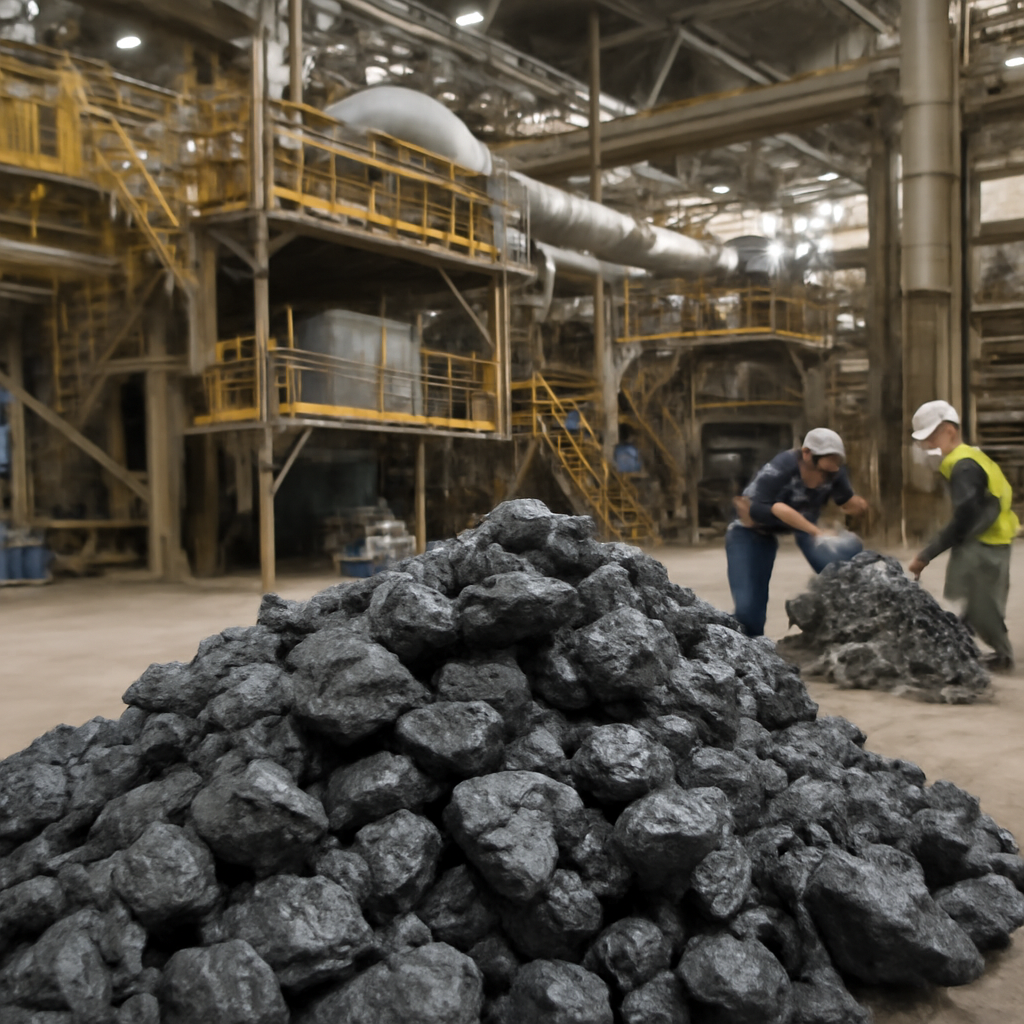
China produces up to 98 percent of the world’s processed gallium and germanium, 95 percent of refined magnesium, more than 90 percent of rare earths and battery‑grade graphite, 80 percent of cobalt and tungsten, and 70 percent of titanium.
China's production dominance and its strategic implications
The raw numbers are stark and central to the argument advanced in this commentary: one country has consolidated an exceptional share of the global processing capacity for a broad set of critical minerals. The piece lists specific concentrations — processed gallium and germanium (up to 98 percent), refined magnesium (95 percent), rare earths and battery‑grade graphite (more than 90 percent), cobalt and tungsten (about 80 percent), and titanium (70 percent). It also notes that China is the top producer of several metals that are nonetheless mined elsewhere, underscoring that control over refining and processing, not just extraction, is the critical choke point.
Immediate battlefield demand: the Payne Institute’s 96‑hour accounting
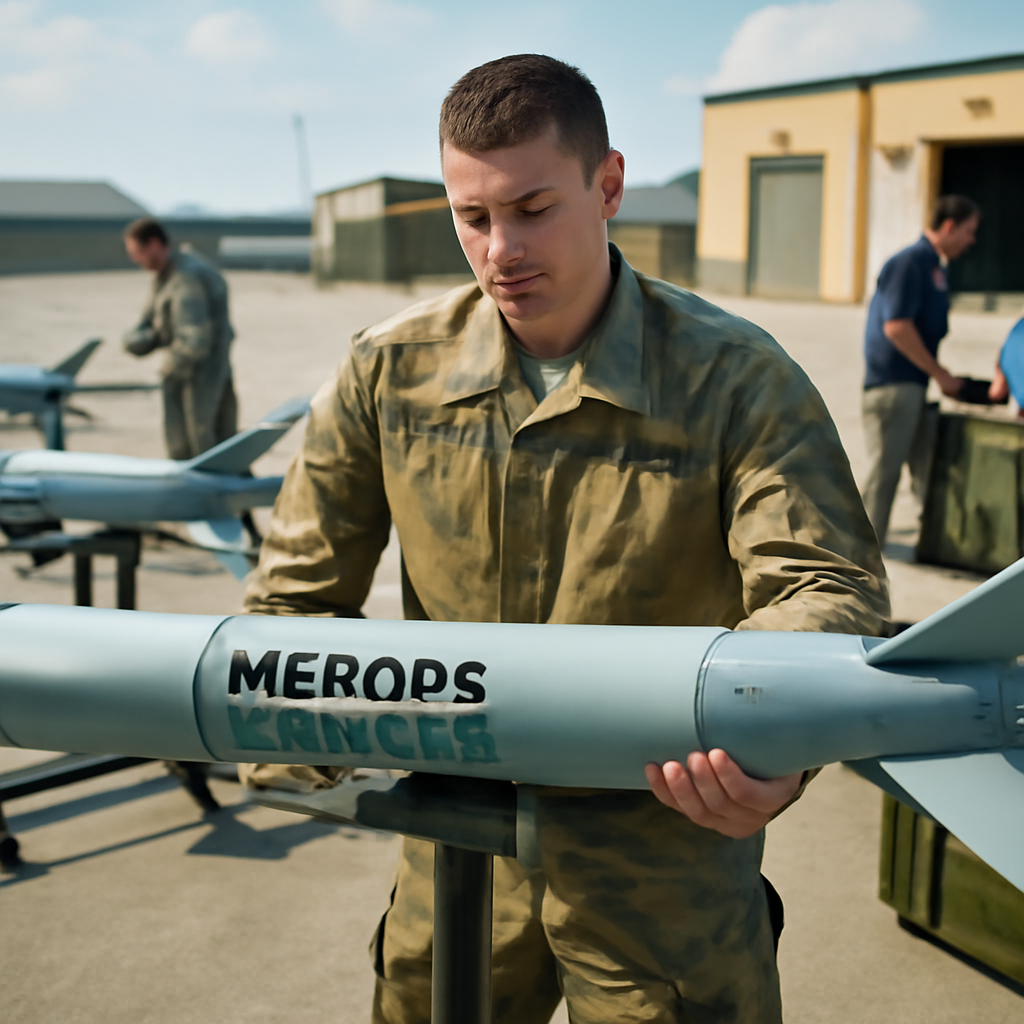
Reality on the battlefield underscores the strategic risk. Researchers at the Payne Institute for Public Policy at the Colorado School of Mines examined the first 96 hours after a war launched on Feb. 28 and estimated U.S. and Israeli forces deployed 5,197 offensive and defensive munitions in that window. Their accounting attributes consumption of about 2,197 kg of cobalt and 11,444 kg of tungsten to that initial period — materials the commentary notes China controls roughly 80 percent of the supply. The authors highlight an important technical point: metals used in armaments are single‑use in conflict and “cannot be readily recovered or recycled,” meaning demand during combat directly depletes inventories rather than cycling back into supply.

This site is the portfolio.
OSINTSights runs on Cloudflare Workers, D1, R2, and Vectorize, with an AI pipeline on Hetzner ARM. Nubivance designed, built, and operates it. We do the same for clients.
See what we buildPolicy moves at home: Executive Order 14415
Responding to the strategic squeeze, the commentary cites Executive Order 14415 issued by President Trump. According to the source text, the order restricts defense contractors’ use of waivers to source critical minerals and other material inputs from foreign adversaries; it expands oversight over supply chains of subcontractors; and it instructs the Secretary of War to fast‑track efforts to identify alternatives and other remedies to supply‑chain gaps. The framing presented is explicit: reducing dependence on a geopolitical competitor underpins those policy steps.
G7 targets from Évian‑les‑Bains and the geopolitics of partners
The G7’s joint declaration from its June summit in Évian‑les‑Bains is quoted in urgent terms: “In light of the high degree of market concentration, the need to reduce vulnerabilities regarding those resources and the growing use of arbitrary trade restrictions, we recall the urgency of diversifying our supply chains and building our collective resilience.” Crucially, the G7 committed to specific, quantifiable targets: reducing members’ dependence on the unnamed “single supplier outside the G7 and partner countries” to less than 60 percent by 2030 for rare earth elements and permanent magnets and thereafter “to half as soon as possible.” The summit expanded the circle of consultation — Australia, Brazil, and South Korea were included in discussions — but notably no representatives from Africa participated, even though the continent holds one‑third of the planet’s mineral resources and a majority share of some key commodities such as cobalt, manganese, and the platinum group metals.
What this means for policymakers, military planners, and technologists
- Policymakers: The G7 numeric target and Executive Order 14415 indicate a strategy focused on diversification, oversight, and accelerated domestic or allied processing capacity; success will require political commitments to offtake guarantees, investment in large‑scale energy and processing infrastructure, and expanded diplomatic ties to source countries.
- Military planners: The Payne Institute’s munitions tally illustrates that wartime consumption can rapidly exhaust specific mineral stocks. Planners will need to translate inventory metrics into material procurement and industrial surge plans rather than relying solely on production capacity metrics.
- Technologists and data‑center builders: The commentary links the AI revolution and data‑center expansion to heightened competition for two dozen minerals, calling out copper, gallium, germanium, graphite, lithium, cobalt, and rare earths — and identifying grain‑oriented electrical steel as an especially constrained enabling material for transformers.
The takeaways are practical and structural. The author argues that any durable response must look beyond short‑term boosts in mining to the full value chain: processing capacity, guaranteed offtake arrangements, large‑scale and affordable energy, specialized personnel, and transport and refining infrastructure. Those components, the piece says, will shape the political composition of the alliances that emerge.
As Walter Lippmann once described alliances as resembling chains, the commentary concludes that prevailing in the 21st century will depend on forging new links — not merely military pacts, but commercial and industrial partnerships that secure the critical materials underpinning modern economies and modern warfare.